CHRIS HEWETT
THINKING ALLOWED

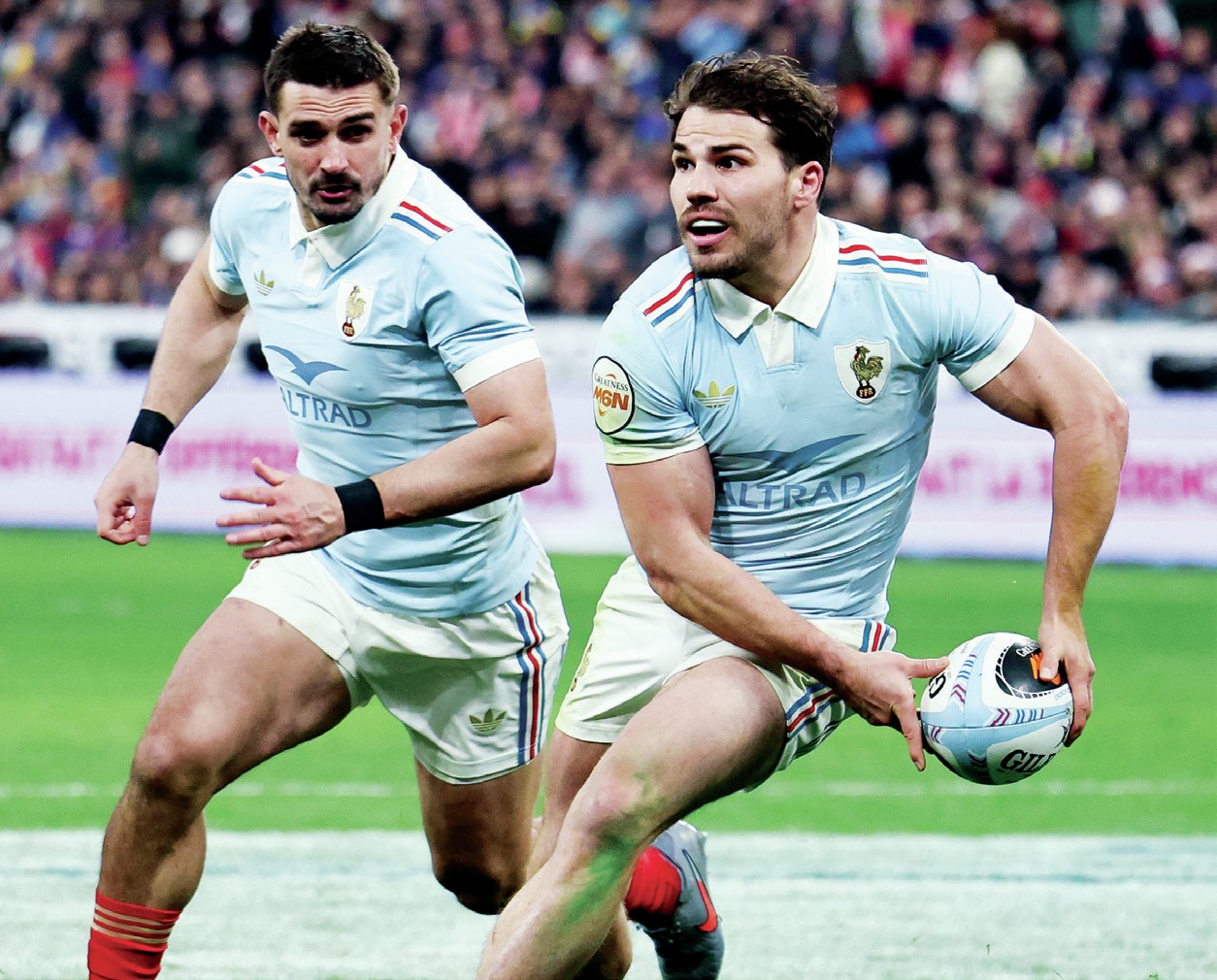
Among the rugby sentences you never thought you’d read – “I was wrong about everything,” says Eddie Jones; “I’m overrated,” says Henry Pollock – comes this one from Joe Simpson, who knows a thing or two about the art and science of half-backery. “Maxime Lucu is a better scrum-half than Antoine Dupont,” he wrote in last week’s paper. Crikey. According to Joe, the modern-day superhero of the union code is not even the best No.9 in France, let alone the world.
Many of you will condemn this as rank heresy, infinitely worse than the line about Ringo Starr not being the best drummer in The Beatles (once attributed to John Lennon but since credited to the comedy writer Geoffrey Perkins) and well worthy of a burning at the stake. But there is logic to the Simpson argument, rooted in the distinction he draws between Dupont the all-round rugby player and Lucu the positional specialist.
Of course, Dupont at his best – and it is possible to argue that his best was better than anything produced by any previous No.9, including Gareth Edwards – will carry the day against anyone, whatever marginal gains his rivals might bring to the debate in specific areas of the scrum-half skillset. The real question ahead of next year’s World Cup in Australia is whether the France captain will arrive at the tournament in peak condition.
When Muhammad Ali returned to the ring in 1971 after more than three years out of the sport and beat Jerry Quarry in short order, the sharpest-eyed American boxing writers reported that he had “lost a step”. Might the same be true of Dupont, who fell victim to rugby’s version of the plague – ruptured knee ligaments – during last year’s Six Nations and has since been hampered by groin and calf injuries? None of these setbacks will have dulled his instincts or narrowed the scope of his imagination, but if it turns out he no longer has the physical capacity to turn his extraordinary ideas into something tangible, he will be a different player to the one who so mesmerised us in the early years of this decade.
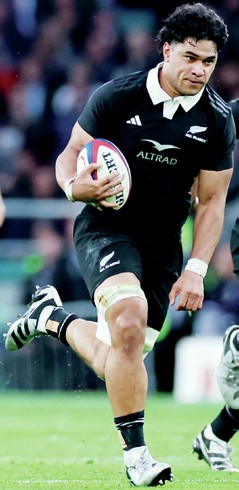
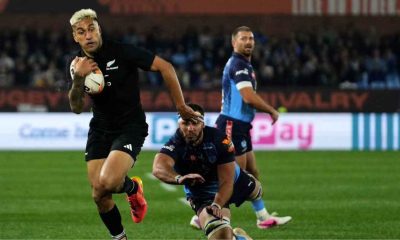
Dupont is not the only so-called “generational talent” to find himself wrestling with the consequences of orthopaedic trauma. Wallace Sititi, the New Zealand back rower who wowed the living daylights out of us in 2024 and ended the year with more awards than he could count but no more than he deserved, has struggled to deliver performances of similar quality since undergoing surgery on his ankle a little over a year ago.

Sititi, below, is back in the All Blacks mix and playing a part in his country’s tour of South Africa, but he was nowhere to be seen when the Test side took the Springboks to the cleaners in Johannesburg last weekend. Ardie Savea was always going to be picked in the starting back row, but would Wallace circa 2024 have found himself trailing the likes of Peter Lakai, Simon Parker or the converted lock Tupou Vaa’i in the pecking order? That’ll be a “no”. Next year’s global gathering in Wallaby land will be a lot less fun without the likes of Dupont and Sititi scaling the high mountaintops of their God-given talents. Happily, there is a solid body of evidence to support the theory that the finest players react more positively to the woes of long-term injury than many of their less gifted brethren and are more resourceful in adapting their games to fit whatever fresh realities they may face.
Lawrence Dallaglio, who suffered his fair share of musculoskeletal misery, went from being an elephant-lunged, waterfront-covering flanker of the footballing variety to a close-quarter street fighter of a No.8, completely comfortable in the claustrophobia of a role forced upon him. Simon Shaw had an even grislier injury history, yet more than once, he proved himself a master of reinvention – not just of himself as a lock forward, but of second row play in general.
And what of Daniel Carter, indisputably the finest outside-half of the century to date? The British and Irish Lions didn’t see his black-shorted backside for dust in 2005, but when the injuries kicked in, many of us feared that he would end his career unfulfilled. When the New Zealander finally laid hands on the Webb Ellis Trophy a decade later, he was a very different No.10: less fleet of foot, definitely; less elusive with ball in hand, for sure. But when it came to game management, the sensing of a momentary weakening in the opposition mindset, the ability to detect the slightest fracturing of a defensive line and the capacity to execute skills under the most extreme pressure, he was out there on his own.
“The World Cup will be a lot less fun if Dupont and Sititi are not scaling the mountaintops”
Coaches the world over are fond of saying that pace is everything, and when you watch Louis Bielle-Biarrey or Immanuel Feyi-Waboso in the flesh, it is a difficult argument to knock back. But when individuals as blessed as Dupont and Sititi lose their original points of difference, they at least have the wherewithal to replace them with something equally potent. Here’s hoping.


Latest News
Sanderson can give Sharks bite, says van Rhyn

Latest News
Kolisi’s SA make amends

Latest News
Sloot setting his sights on making Club history

Latest News
Koroibete joins Ospreys


Brendan Gallagher
Brendan Gallagher: Are today’s players fit? Not in my book



The best betting sites