
PAUL REES TAKES A CLOSE LOOK AT WHAT THE LATEST ENGLAND SQUAD SIGNALS

Eddie Jones is like a Michelin star chef con- stantly scouring for fresh ingredients. He is never slow to discard those who do not pass his taste test but those who suit his palette tend to linger on the menu. England’s head coach has been criticised for an excess of loyal- ty since taking over at the end of 2016, seen as favouring experience over form, but half of the squad that assembled in Jersey this week to pre- pare for the Autumn International campaign has won nine caps or fewer.
The withdrawal of Anthony Watson following the knee injury he sustained playing for Bath against Saracens, means England have only six players who have reached 50 caps, although Maro Itoje needs two more to join them. If experience wins World Cups England, who reached the final in 2019 despite having one of the youngest squads in the tournament, are again taking the alternative route.
England also have a new-look man- agement team with Richard Cockerill working with the forwards alongside Matthew Proudfoot, who was appointed last year, and Anthony Sei- bold last month replacing John Mitchell as the defence coach. In August, Martin Gleeson joined as attack coach from Wasps, replacing Simon Amor.
It means there are no survivors in the assistant management ranks from the 2019 World Cup. Jones is known for the demands he places on those working under him who can expect a call at any time during the day or night but Seibold, who like Gleeson has a Rugby League background, may be a more comfortable fit than Mitchell, the head coach of the All Blacks in the 2003 World Cup who decided to get out this summer rather than steel himself for another two years up to France 2023.
The squad bears Jones’s imprint with only the Northampton full-back Tommy Freeman and the Leicester hooker Nic Dolly called up for the first time. Each position gives England the option of a battle-hardened campaigner or rookie, from the onecap George Martin and Courtney Lawes who is 13 shy of his century in the back five of the pack to outsidehalf where Owen Farrell has 91 more caps than Marcus Smith.
“Selection comes down to assistant coaches having their say, but at the end of the day it is about the head coach’s judgement,” said Jones. “The process has not changed with the new set of coaches. Anthony (Seibold) has been watching games and communicating with players by Zoom and the others have been going to matches and contributing really well. Everyone has had their say and we made a decision after discussing things. There were differences, but we had a debate and came up with the squad.
“Every assistant coach looks at it from their point of view but the head coach has to consider the whole picture. I heard a great story about Gary Kirsten: as the head coach of India, he had to shoulder all the problems in the world but as an assistant in the IPL he could come up with ideas and then have a beer while the bloke at the top dealt with the issues.”
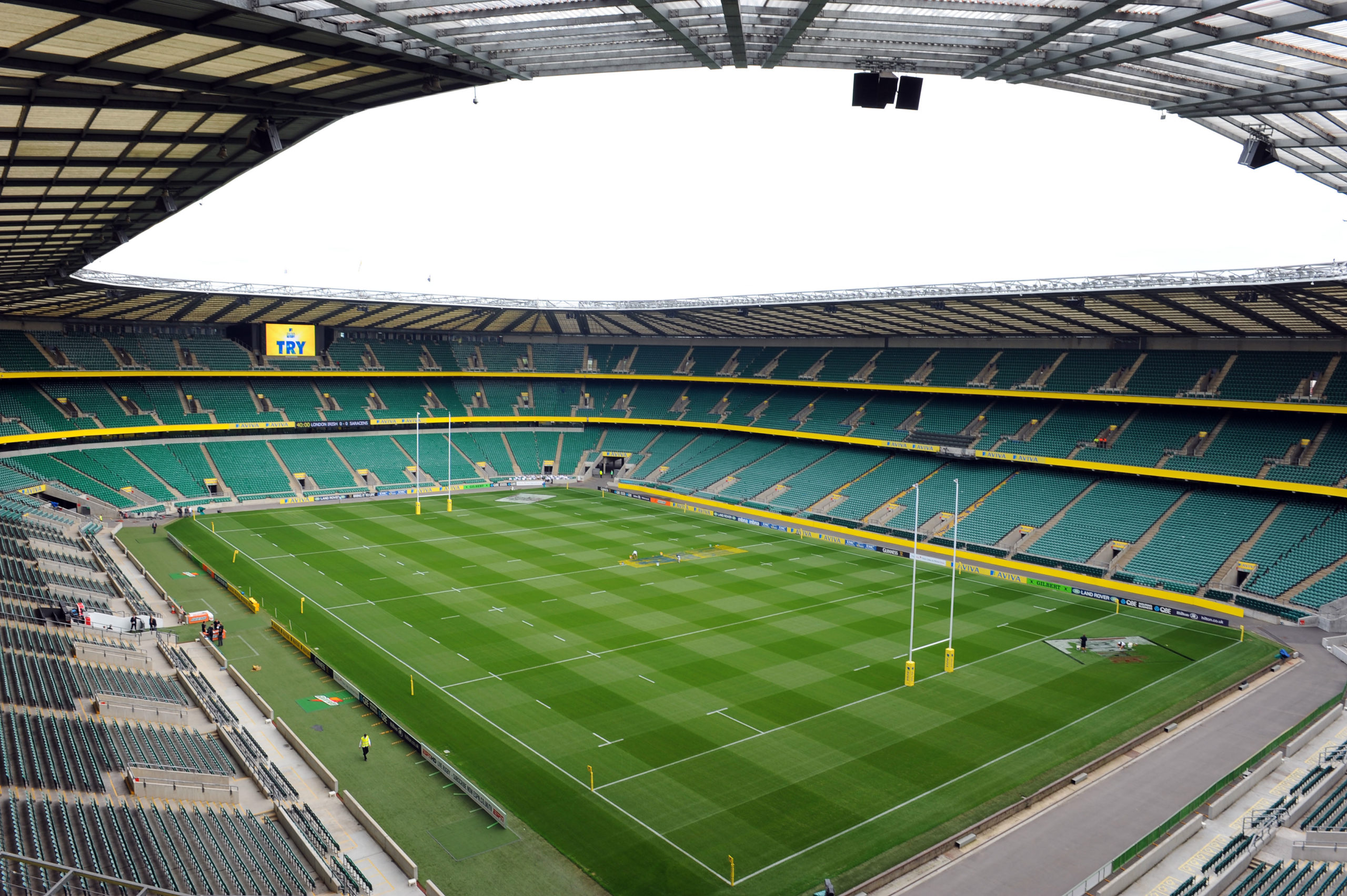
England’s autumn schedule is different from normal. The campaign usually starts with one of the Rugby Championship sides, but Tonga are the first opponents at Twickenham. Tonga will be without their head coach Toutai Kefu after a violent invasion of his home in Brisbane that left him requiring an operation after he was stabbed in the stomach while his wife Rachel had specialist surgery on an arm.
Tonga have a makeshift coaching team and will not be at full strength. They lost to New Zealand 102-0 in Auckland at the beginning of July.
“I briefly did some work in Tonga,” said Jones. “They always struggle with player availability, but the one thing you know is they play with an enormous amount of pride. I am sure they will against us.”
Jones usually uses the fixture against the emerging nation as a means of assessing his undercard, but with Australia and the World Cup holders South Africa following, the opening match offers the chance to remove rust with many of the squad not having played for England since the end of the Six Nations in March.
Having blooded the likes of Smith, Harry Randall, Alex Dombrandt, Adam Radwan and Jamie Blamire in the summer, when the United States and Canada provided the opposition at Twickenham, what would he learn by starting them against Tonga and then going back to the tried and tested for the following two weeks?
Jones has said his gaze is firmly on the next World Cup and going one better than England did in Japan when they lost to South Africa in the final. He qualified that by adding that did not mean he would not be taking the two autumn and Six Nations campaigns before then lightly, but he wants his players to arrive in France at their peak.
“Every campaign is a dress rehearsal for the World Cup,” he said. “Jersey gives us the chance to get together before we face sides who have been together for three months. The main thing in getting the squad right is the balance between experience and the players coming through.”
Jones has added energy after lacklustre campaigns last season, but in retaining Owen Farrell as captain and jettisoning Dan Robson at scrumhalf while retaining Ben Youngs, he has seasoned back-up should he start with Smith and Randall, not forgetting Raffi Quirke, at half-back against the Wallabies.
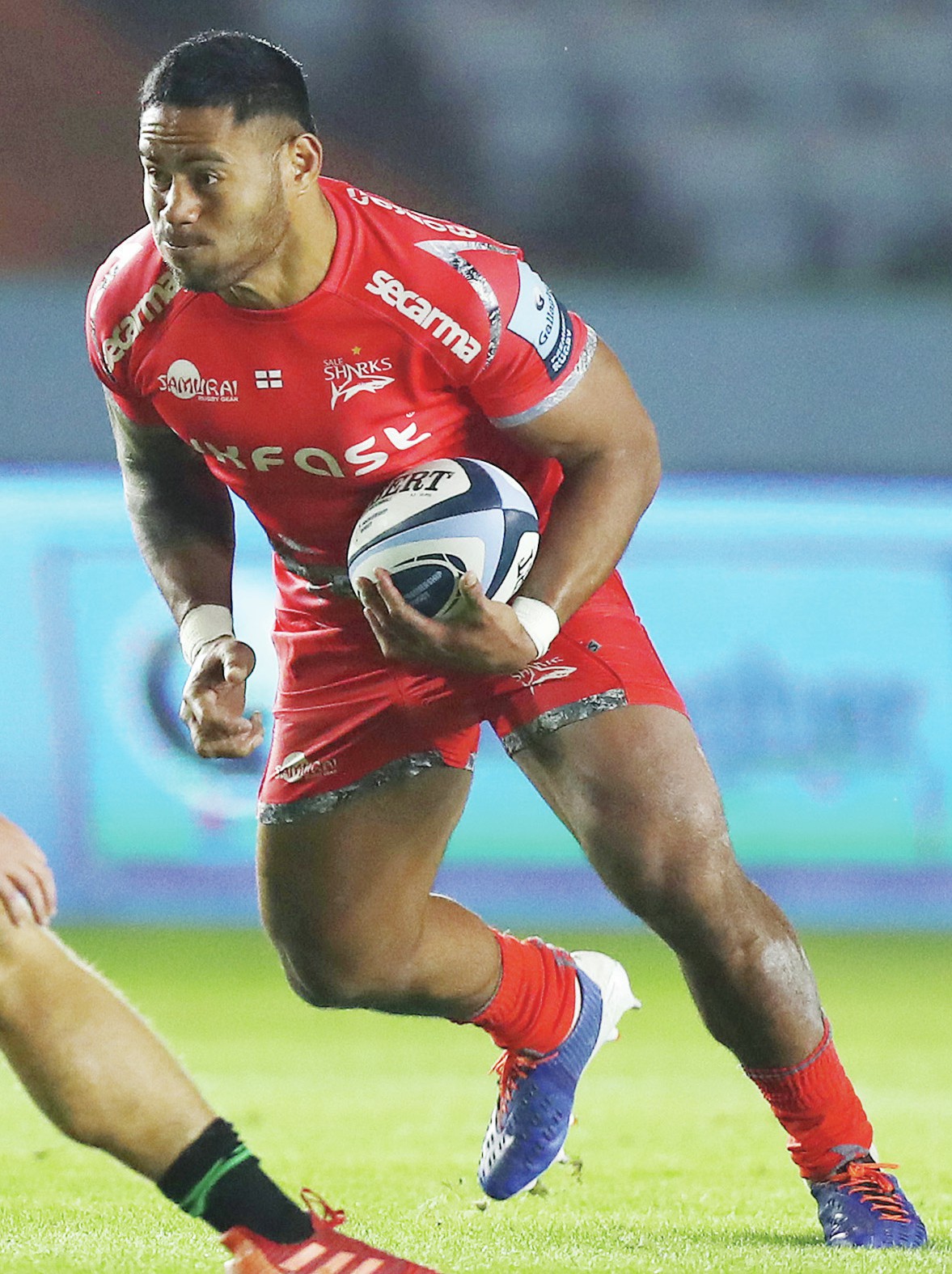
There is a clamour for Smith to start and add a spark to England’s fire which barely smouldered last season, but the Harlequin will need quick ball from the breakdown and by excluding Billy Vunipola, Jones has turned away from his most reliable gainline breaker. In the summer, he used Ellis Genge, Sam Underhill, Ollie Lawrence and Joe Cokanasiga as tackle-bursting carriers, but if Farrell starts at inside-centre, Manu Tuilagi would have to fill the role Andre Esterhuizen does for Smith at Harlequins.
Tuilagi is one of six England players in Jersey who played in Jones’s first Six Nations in 2016. He made one appearance off the bench and as the head coach nears the end of his sixth year in charge, the Sale centre has won only 18 caps in that time, 13 in 2019, with injuries rationing his availability England need Tuilagi to enjoy a change of fortune because his presence would optimise Smith’s chances of making a telling difference. There are few midfielders better able to turn slow possession into profit and with the pace England have out wide, even if a Farrell-Tuilagi midfield combination would leave no room for the footballing option of Henry Slade, they have the capacity to attack off their own possession rather than rely on the counter.
Jones will be demanding more from his forwards and will not have forgotten the limp display in Dublin last March which finished off a forgettable Six Nations campaign. Only three of the starters that day are likely to take the field against Australia, Kyle Sinckler, Maro Itoje and Tom Curry, and by recruiting Cockerill, someone who demands total effort and more, no one will be lounging in the comfort zone.
There were mitigating factors behind England’s slip from first to fifth in last season’s Six Nations, including the presence of six Saracens who at that time were playing their club rugby in the Championship, and the lack of a pre-season for Premiership players. Had a Lions tour not been looming, Jones might have reduced their number, as he has now done by excluding the Vunipolas and injured Elliot Daly and calling on Jamie George only when Luke Cowan-Dickie pulled out of the squad with an ankle injury.
Jones survived a review of that campaign when the Rugby Football Union stood firm against calls for the Australian to be sacked. The governing body will not be expecting more of the same and the radical overhaul of the squad, where the emphasis behind is on speed and athleticism rather than size, suggests they will not be subjected to it.
The focus has been on Smith, the player who lit up the end of the Premiership season before making an impressive Test debut and being called up by the Lions, showing that for all his tricks he is no maverick but someone driven by winning, but the likes of George Furbank, a more assured player than the one who was first capped in the 2020 Six Nations, Freeman, Radwan, Max Malins, Randall, Quirke and Mark Atkinson, a skilful centre whose time appeared to have gone, merit attention, complementing the outside-half.
England’s forwards have to deliver, starting with Genge and Sinckler, two props who on their day set the tone. Cockerill should ensure they are revved up with the likes of Itoje, Lawes, Underhill and Curry behind them. At No.8, it looks to be a shootout between Dombrandt, who has an almost telepathic understanding with Smith, and Sam Simmonds, a forward who returned from the Lions tour showing greater awareness and variety.
What is not clear is who the alternative captain to Farrell is. Jones said the leadership group would be decided in Jersey, but it is a subject he will have given considerable attention to. Farrell came to personify Jones’s England, heart and soul, but the head chef is changing the menu to nouvelle cuisine. Old dogs and new dishes.
ENGLAND SQUAD
Forwards: Jamie Blamire, Callum Chick, Tom Curry, Trevor Davison, Nic Dolly, Alex Dombrandt, Charlie Ewels, Ellis Genge, Jamie George, Jonny Hill, Maro Itoje, Courtney Lawes, Lewis Ludlam, Joe Marler, George Martin, Sam Simmonds, Kyle Sinckler, Will Stuart, Sam Underhill
Backs: Mark Atkinson, Owen Farrell (c), Tommy Freeman, George Furbank, Max Malins, Joe Marchant, Jonny May, Raffi Quirke, Adam Radwan, Harry Randall, Henry Slade, Marcus Smith, Freddie Steward, Manu Tuilagi, Ben Youngs