

THE FORMER AUSTRALIA,QUEEN SLAND REDS ANDWORCESTER FULL-BACK ANDCURRENT HEAD COACH OFUTAH WARRIORS
MYLIFEINRUGBY
CHRIS LATHAM
I was a huge, huge soccerfan growing up -I loved itand still support Manchester United. I kind of fell into rugby at the age of 17and that was my passageout of a smallcountrytown and into the city.
Coming into the game so late,I was very immature from askills and knowledge point ofview. It may sound strange froma full-back who won 76 caps forhis country, but I didn’t knowhow to kick the ball out of handproperly when I started. Virtu-ally every day in my 14-yearcareer I practised it. If I everslackened off, everything wouldleave me as it wasn’t a naturalskill, it was a learnt skill, and Ineeded to keep doing it.
I didn’t know what my gamewas or who I was as a rugby player at that stage, and that’swhat I wanted to discover. I wasalso very ambitious to get as faras I could and stamp my mark. Iknew the harder I worked, theluckier I got and people still sayto me, ‘you were the first intotraining a couple of hoursbefore everyone else and the last the leave’. I ran into John Con-nolly the other week and here called how he rememberedme being at Ballymore on ourday off practicing catching andkicking on my own.
I wanted to be a player that was unpredictable, that player the opposition would analyseand think, ‘we just don’t knowwhat he is going to do’. Some-times the things I tried didn’tcome off and, if you look backat my career, I don’t know ifthere is such a stat, I’d be proba-bly one of the most dropped players in Wallaby history, even though my first nine caps forthe Wallabies were all wins.
I’m sure there was always avalid reason for being droppedand that made me work harderat my game. Had it not been thatway, I may not have played asmany Tests and got to where Igot to. The things that I wantedto do and tried to do, I didn’t seethem as impossible or low-per-centage things, because I’dtrained and practiced to make sure the skill was there but ifyou are someone who skates on the edge, sometimes thesethings don’t come off.
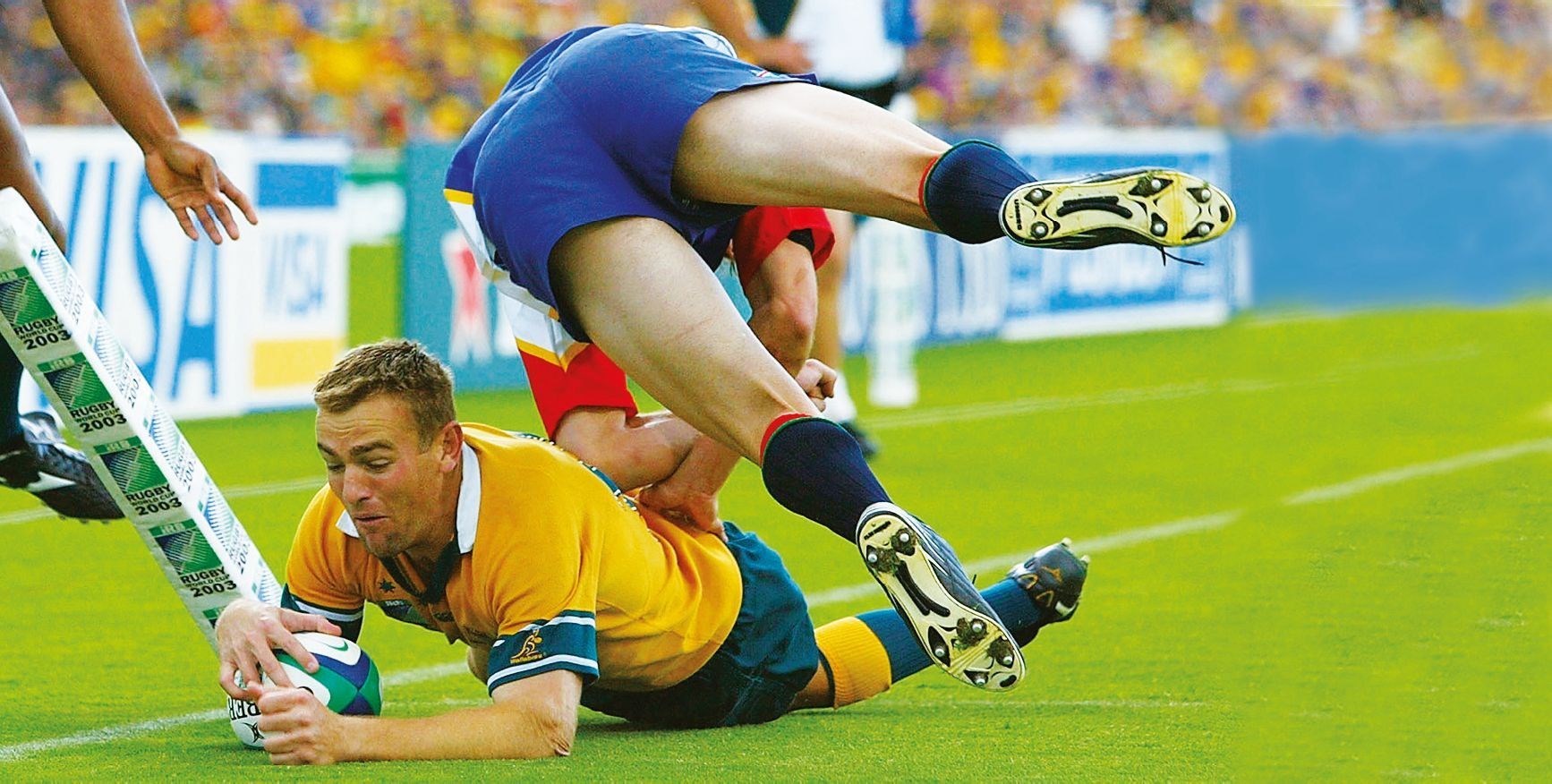
The first of my three WorldCups was in 1999. I only playedin one game, against the USA inLimerick, but I was very youngand raw to the environment soto get the opportunity just to beinvolved was amazing and one Icherish a lot. To only play onegame at the next World Cup,when I had five years of inter-national rugby behind me, wasbitterly disappointing, however.I was devastated – even though Iscored five tries in the match!
Like with most things in life,there’s a story behind it. Leading up to the 2003 World Cup, Ithink it was a couple of monthsout, we played a Test matchagainst New Zealand in Auck-land and before I ran out, I had a39-degree temperature. We hadno one to cover so I played. Ialways felt I was fortunate toplay Test matches so when youare on against the All Blacksyou don’t shy away, you justman up and get on with it. Afterthe game, I went home and wentto bed and woke up really, reallysick the next day. I flew back toAustralia and my wife wasreally concerned and called thedoctor. He said I needed to go tohospital straight away. I endedup getting pneumonia. I hadthree super bugs in me and Ispent the next two weeks hang-ing upside down draining mylungs of fluid and recovering.
Two days after I got out ofhospital, I had to be in Darwen for a World Cup camp. My lungsweren’t any good, I couldn’tcomplete most of the trainingsessions, and as a result I sat outthe first few games. The Namib-ia game was really about meproving my fitness; I wanted toshow that I would run myself tovictory or death. The by-prod-uct was the five tries.
In between those World Cups,I had two amazing rugby experi-ences, even though I was on thelosing side in both. The first wasin 2000, when a Jonah Lomu-inspired New Zealand beat us39-35 in what is reckoned to bethe best Test ever played. At thetime, I didn’t feel that way.Rugby is a results business andthe feeling in the changingroom wasn’t, ‘that was a greatgame’, it was one of disappoint-ment. Plus I’d gifted them 14points! No matter where wewere, or who we were playingagainst, we were there to win.
The stadium in Sydney was purposefully built for the Olympics that year, and we’dbeen told during the week thatthey’d left portable seats in thestadium and there was anopportunity for a world record crowd of 109,000. So that was thebuild-up and then there was theTest match itself against NewZealand, which is always a spe-cial occasion. Thankfully, thegame lived up to the hype.
The following year, we playedand beat the British & IrishLions after we’d come back from losing the first Test inBrisbane. My main memory ofthe 2001 Lions series is seeingthe back of Jason Robinson’sheels – that and the incredibleLions support.
When Jason ran towards me,I thought, ‘five metres, surelythat’s enough to cover myself,he’ll step inside as he alwaysdoes’. He started to come in andrevved up those little legs of hisand took off again. If you lookback on your career and you’reashamed of things like that, youhave got to take a hard look atyourself because you’re just ina very long queue of peoplewho’ve been burnt by Jason andrun over by Jonah.
Not only did that Lions seriespush rugby into the hearts andminds of all Australians, it alsoshowed Australians how to sup-port rugby, given what theylearnt and saw from the Lionsfans. They ambushed us that dayin Brisbane with the volume ofnoise. It was just amazing. Ithink it really shocked Australian fans that you could be sonoisy and passionate and getlost in the game itself for itspurity as a contest. In the age ofsocial media, there are all thesebells and whistles when you goto a game: fireworks, dancers…you name it. We are starting tolose the essence of the game. Ifyou could package one situationfrom my whole experience ofrugby in how it should be sup-ported and showcased, thatLions Test was it
My participation at France2007 was in doubt for some time.I’d returned home from our November tour to Europe andwent straight into training withthe Queensland Reds a monthearly. But I blew my knee out inmy first session back. It neededa reconstruction and, back then,the recovery time was 12 monthsand the World Cup was only sixmonths away. However, I had agood medical team around meand we did it in six … just!
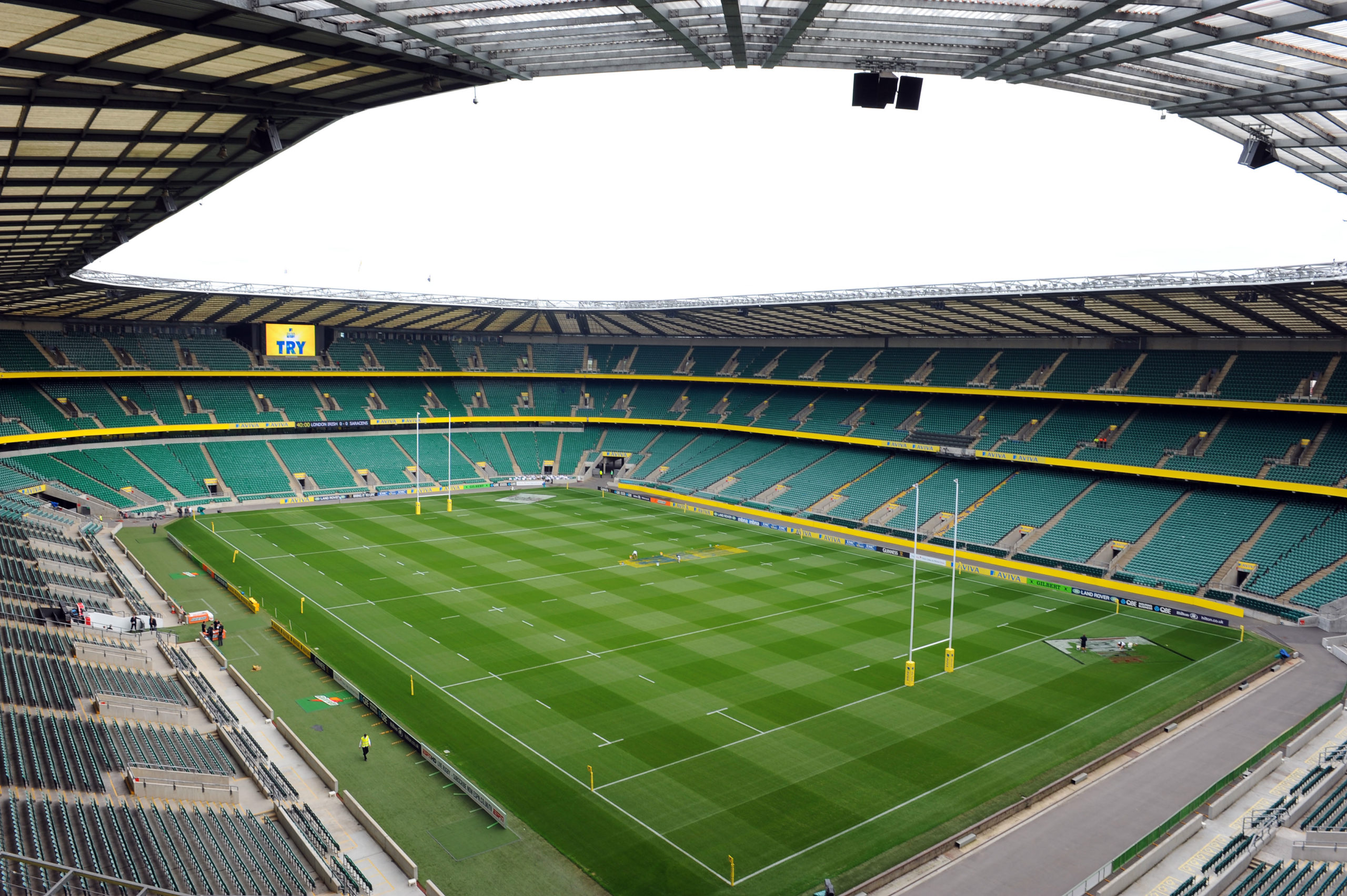
People would probably saymy career took off after I joinedthe Reds in 1999. For me, the highlight of my time was everytime I got to play at Ballymore.I’ve played in some the best sta-diums in the world – the Stade deFrance, where I made my debutis amazing; there’s Twicken-ham with its history, wonderful playing surface and the singing of the England fans; the Millennium Stadium and its surround sound-type atmosphere whenthe roof is on; and a jam-packedEllis Park in Jo’burg is electric.But Ballymore tops the lot forme personally, with its hooli-gans on the hill and threestands tight to the pitch right ontop of you. It was what I reallylived for back then to run out atBallymore and see that hill. Itmade me come alive. I justwanted to bust my ass to makesure I got a try down there.
In 2008 I decided to go to Worcester and experience what it was like to play in Europe. Iwas fortunate the new standhad been built at Sixways andthe fans generated a brilliantatmosphere there, and alsoaway from home. I enjoyed mytime at Worcester, it opened myeyes to a different style of rugby.
Why did I retire? I’d just hadenough, I became bored of rugby. At that stage I was inJapan and I could have stayedon at the club -Kyuden Voltex -if I’d have wanted to, but rugby,for me, was never about financeit was all about enjoyment andgrowth and I’d had enough. Six months later, I missed it andthat reinvigorated me to getinto coaching. Coaching has its own unique challenges, butoverall I really enjoy it. It’s fas-cinating to see how different players learn and react as youtry and find different ways toget to a common goal.
I’m back home in Brisbanedue to Covid but the three months I had in Utah, as headcoach of the Warriors in the MLR, were enjoyable. Resultsfor Utah hadn’t been good forthe previous two seasons so itwas an exciting challenge andwe were starting to see somegood results and play some nicefooty. Hopefully, we can pick upfrom where we left off when thenew season starts.