













JON NEWCOMBE talks to Paul Caddick about the sad demise of his former club
FORMER Leeds Tykes/Carnegie owner Paul Caddick admits that changing the club’s name to Yorkshire Carnegie four years ago has not worked out as planned but argues the root cause of the Championship club’s troubles go far deeper than that, down to the way the Premiership Rugby model was designed to prevent people challenging the founder members’ cartel.
Caddick bankrolled Carnegie, then known as Leeds Tykes, as they climbed up through the divisions to reach the Promised Land in 2001.
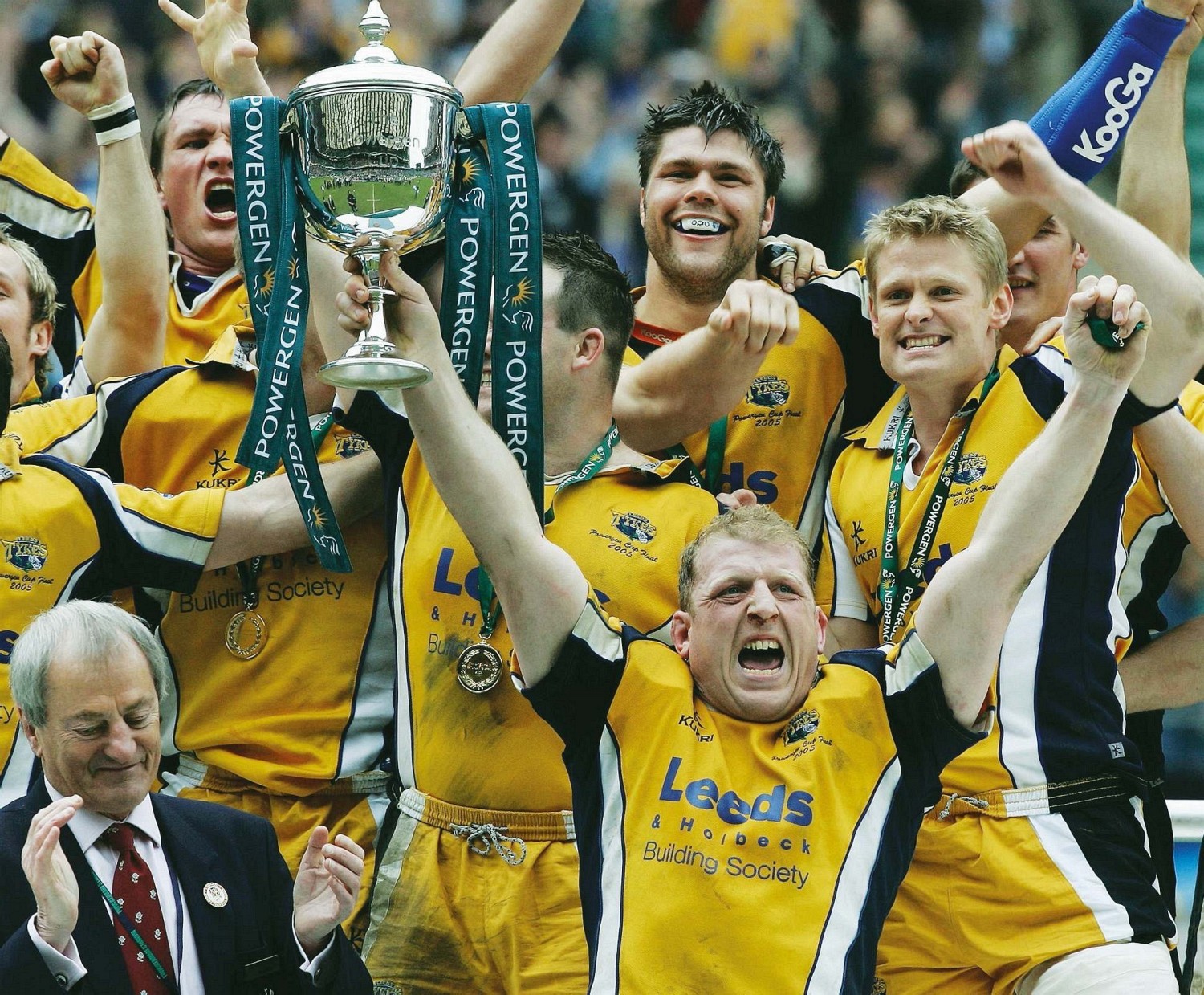
A shock opening day victory over Bath in front of a crowd of 5,000 gave cause for optimism, but while the club enjoyed further moments in the sun, notably finishing fifth in 2003 to qualify for the Heineken Cup and beating Bath again in the Powergen Cup final two years later, keeping apace with English rugby’s big hitters has proved a nigh on impossible task.
With next season’s budget set to be slashed to around £1.3m, and people fearing for the very future of the club that Caddick helped to build up, Carnegie look further away from making a return to English rugby’s top table than ever before, a sad state of affairs for Yorkshire and English rugby as a whole given the county’s pedigree in producing internationals.
This saddens Caddick who points the finger of blame not at his successors, but the protectionists within Premiership Rugby who have helped to widen the gap between the haves and the have nots, and also the apathy and parochialism of Yorkshire’s Rugby Union fraternity.
“It is almost impossible for anybody but a multi, multi-millionaire who is playing with his pocket money to compete with them”, Caddick told The Rugby Paper.
“The gap between the Premiership clubs and the Championship clubs has become so big it has become a yo-yo effect. The relegated club get about 70 per cent of the Premiership money when they come down plus a parachute payment, so they come into the Championship with £7m, or whatever it is, fighting against clubs with a million pound budget at best. As much as it is interesting, in reality it isn’t like a competition.
“The structure was designed that way to protect the founder clubs. It is very difficult to join the party when the people in the party don’t want you.
“I’m surprised the Championship clubs haven’t said enough is enough and refused to play the club that comes down and just give them the game. I know we beat them (London Irish) at the weekend but that’s only because the investors and owners of Carnegie put some more financial muscle into it.”
Carnegie’s owners spent around £200,000 bringing in additional players in October, mainly from abroad, to bolster a wafer-thin squad that had won only one of their first nine games. An instant upturn in results and the promise of a £3.3m budget for next season, raised spirits but, a few months down the line, the investors are no longer in a position to fund a push for promotion.
“The investors have stood up to the mark so far and invested in the club but sadly it hasn’t worked out for either them or the club and the debate is going on at the moment to see if anything can be done to support the club”, says Caddick.
Caddick knows what a hard sell Rugby Union is in these parts – even without both hands tied behind your back, as he feels was the case during his 19- year ownership of the club.
“The day we joined the Premiership, they cut our money in half. Had that not happened, we’d have been able to attack the other teams with a lot more ammunition in our belt”, he argues. “I remember suggesting we play only with 13 players at a Premier Rugby board meeting seeing as we’re only being paid half of the central funding, it was that unfair.
“It was all based on Tom Walkinshaw’s Formula 1 meritocracy concept where basically the bigger clubs get bigger and the small get the crumbs at the bottom of the table.
“We had no chance in reality of recovering from it. The structure of Premier Rugby and the so-called ‘founder’ members have really excluded every other club in England from participating.
“I played second row for Headingley, with Ian McGeechan and John Spencer. If you look at the power base in the game – Nigel Melville is an Otley man – there are a lot of Yorkshire people around but sadly, it’s like playing a game of chess and losing, the pieces are all there but in the wrong place”, he adds.
“The RFU have allowed this to happen because they don’t control the players, and they need the clubs to provide the players.”
Without Premiership rugby Carnegie are unable to retain the best players that come through their superb academy, and Caddick believes it will take some form of intervention for the situation to change.
“You never know, CVC (partowners of Premiership Rugby) may decide that the largest county in England should have a representative in Premiership Rugby but at the moment each club is protecting itself and rightly so. I don’t blame them for doing so, and it’s probably the right thing to do because the clubs in Yorkshire are not supported.FORMER Leeds Tykes/Carnegie owner Paul Caddick admits that changing the club’s name to Yorkshire Carnegie four years ago has not worked out as planned but argues the root cause of the Championship club’s troubles go far deeper than that, down to the way the Premiership Rugby model was designed to prevent people challenging the founder members’ cartel.
Caddick bankrolled Carnegie, then known as Leeds Tykes, as they climbed up through the divisions to reach the Promised Land in 2001.
A shock opening day victory over Bath in front of a crowd of 5,000 gave cause for optimism, but while the club enjoyed further moments in the sun, notably finishing fifth in 2003 to qualify for the Heineken Cup and beating Bath again in the Powergen Cup final two years later, keeping apace with English rugby’s big hitters has proved a nigh on impossible task.
With next season’s budget set to be slashed to around £1.3m, and people fearing for the very future of the club that Caddick helped to build up, Carnegie look further away from making a return to English rugby’s top table than ever before, a sad state of affairs for Yorkshire and English rugby as a whole given the county’s pedigree in producing internationals.
This saddens Caddick who points the finger of blame not at his successors, but the protectionists within Premiership Rugby who have helped to widen the gap between the haves and the have nots, and also the apathy and parochialism of Yorkshire’s Rugby Union fraternity.
“It is almost impossible for anybody but a multi, multi-millionaire who is playing with his pocket money to compete with them”, Caddick told The Rugby Paper.
“The gap between the Premiership clubs and the Championship clubs has become so big it has become a yo-yo effect. The relegated club get about 70 per cent of the Premiership money when they come down plus a parachute payment, so they come into the Championship with £7m, or whatever it is, fighting against clubs with a million pound budget at best. As much as it is interesting, in reality it isn’t like a competition.
“The structure was designed that way to protect the founder clubs. It is very difficult to join the party when the people in the party don’t want you.
“I’m surprised the Championship clubs haven’t said enough is enough and refused to play the club that comes down and just give them the game. I know we beat them (London Irish) at the weekend but that’s only because the investors and owners of Carnegie put some more financial muscle into it.”
“It’s very difficult to join the party when the people in the party don’t want you”
Carnegie’s owners spent around £200,000 bringing in additional players in October, mainly from abroad, to bolster a wafer-thin squad that had won only one of their first nine games. An instant upturn in results and the promise of a £3.3m budget for next season, raised spirits but, a few months down the line, the investors are no longer in a position to fund a push for promotion.
“The investors have stood up to the mark so far and invested in the club but sadly it hasn’t worked out for either them or the club and the debate is going on at the moment to see if anything can be done to support the club”, says Caddick.
Caddick knows what a hard sell Rugby Union is in these parts – even without both hands tied behind your back, as he feels was the case during his 19- year ownership of the club.
“The day we joined the Premiership, they cut our money in half. Had that not happened, we’d have been able to attack the other teams with a lot more ammunition in our belt”, he argues. “I remember suggesting we play only with 13 players at a Premier Rugby board meeting seeing as we’re only being paid half of the central funding, it was that unfair.
“It was all based on Tom Walkinshaw’s Formula 1 meritocracy concept where basically the bigger clubs get bigger and the small get the crumbs at the bottom of the table.
“We had no chance in reality of recovering from it. The structure of Premier Rugby and the so-called ‘founder’ members have really excluded every other club in England from participating.
“I played second row for Headingley, with Ian McGeechan and John Spencer. If you look at the power base in the game – Nigel Melville is an Otley man – there are a lot of Yorkshire people around but sadly, it’s like playing a game of chess and losing, the pieces are all there but in the wrong place”, he adds.
“The RFU have allowed this to happen because they don’t control the players, and they need the clubs to provide the players.”
“No doubt the academy will fall away and English rugby will be worse for it”
Without Premiership rugby Carnegie are unable to retain the best players that come through their superb academy, and Caddick believes it will take some form of intervention for the situation to change.
“You never know, CVC (partowners of Premiership Rugby) may decide that the largest county in England should have a representative in Premiership Rugby but at the moment each club is protecting itself and rightly so. I don’t blame them for doing so, and it’s probably the right thing to do because the clubs in Yorkshire are not supported.
“When we won the Powergen Cup and finished fifth in the league, and were playing all the top clubs in Europe in the Heineken Cup, people still didn’t come.”
Even though Caddick passed over ownership of the club, debt free, in 2017, he remains a very influential person at Headingley, as chairman of Carnegie’s landlords, Leeds Rhinos, and owner of the construction company behind the £44m redevelopment of the famous multi-sports stadia. On average, 1,500 Carnegie fans rattle around it on matchdays.
Rebranding the club ‘Yorkshire’ was supposed to have brought all the disparate parts of the Broad Acres together but, if anything, it has driven them further apart.
“The idea was to get the county behind it”, he explains.
“The feeling was the clubs didn’t like the Leeds name so if you took the Leeds name out of it and you called it Yorkshire, they’d take some ownership, but it went the other way. We play with a white shirt, trying to make it look like the old Yorkshire as much as possible, but we didn’t fool anybody, in fact they liked it even less; they thought it was a fudge, maybe a bit arrogant, and perhaps we should have anticipated that.
You don’t get everything right, do you? “Personally, I wouldn’t mind it if it was Rotherham, Doncaster or Leeds who got into the Premiership in a sustained situation.
We discussed with the Rotherham and Doncaster owners about bringing the clubs together to push one club forward.
But everyone is parochial in Yorkshire, they have got their own clubs and that’s how they like it.
“But sadly there is no Premiership representation and very shortly they’ll be nowhere for the youth of Yorkshire to go because, no doubt, the Yorkshire academy will fall away, and English rugby, I suspect, will be worse off for it.”
A warning English rugby’s rulers would do well to listen to.“When we won the Powergen Cup and finished fifth in the league, and were playing all the top clubs in Europe in the Heineken Cup, people still didn’t come.”
Even though Caddick passed over ownership of the club, debt free, in 2017, he remains a very influential person at Headingley, as chairman of Carnegie’s landlords, Leeds Rhinos, and owner of the construction company behind the £44m redevelopment of the famous multi-sports stadia. On average, 1,500 Carnegie fans rattle around it on matchdays.
Rebranding the club ‘Yorkshire’ was supposed to have brought all the disparate parts of the Broad Acres together but, if anything, it has driven them further apart.
“The idea was to get the county behind it”, he explains.
“The feeling was the clubs didn’t like the Leeds name so if you took the Leeds name out of it and you called it Yorkshire, they’d take some ownership, but it went the other way. We play with a white shirt, trying to make it look like the old Yorkshire as much as possible, but we didn’t fool anybody, in fact they liked it even less; they thought it was a fudge, maybe a bit arrogant, and perhaps we should have anticipated that.
You don’t get everything right, do you? “Personally, I wouldn’t mind it if it was Rotherham, Doncaster or Leeds who got into the Premiership in a sustained situation.
We discussed with the Rotherham and Doncaster owners about bringing the clubs together to push one club forward.
But everyone is parochial in Yorkshire, they have got their own clubs and that’s how they like it.
“But sadly there is no Premiership representation and very shortly they’ll be nowhere for the youth of Yorkshire to go because, no doubt, the Yorkshire academy will fall away, and English rugby, I suspect, will be worse off for it.”
A warning English rugby’s rulers would do well to listen to.

TOP TYKES…
Leeds/Yorkshire Carnegie Academy’s has produced some outstanding players over the years. Here’s a matchday 23 of graduates who have gone to play for other Premiership clubs.

15 DAVE DOHERTY
Still holds the record as the youngest player to play in the Premiership, a feat he achieved aged 17 at Leeds. Also played for Sale and Wasps in the top flight. Now DoR at Harrogate RFC.

14 TOM BIGGS
Highest try scorer in the club’s history who also played England Sevens and had stints at Newcastle, Bath and Worcester.

13 ROB VICKERMAN
Gifted midfielder who had a distinguished England Sevens career. Also had a spell at Newcastle.

12 LUTHER BURRELL
Won 15 caps for England before controversially axed for the 2015 World Cup. Left for Sale but best moments have come in a Northampton Saints jersey. Will go back to his first love, RL, at the season’s end after agreeing to join Warrington.

11 MAX WRIGHT
Ex-England U20 star who’s starting to make a name for himself at Bath. Normally a centre but picked on the wing for this team.

10 ALEX LOZOWSKI
Had been at Wasps academy but found his feet in the Championship with Leeds. Joined Saracens and has so far won five England caps.

9 DANNY CARE
Arguably the best of the lot. Has made over 250 appearances for Quins and held the record for most England caps at scrum-half until Ben Youngs overtook him against Scotland a fortnight ago.

1 LEWIS BOYCE
Highly-rated prop who developed massively under Carnegie head coach Steve Boden before earning a move to Harlequins. Joins Bath in the summer.

2 ROB WEBBER
Hard-as-nails hooker who enjoyed a spell at Wasps, initially as a flanker, Bath and now Sale after moving on from Leeds.

3 PAUL HILL
Another Prince Henry’s, Otley old boy like Care. Northampton came calling after one season in the Carnegie first XV. Won five England caps in 2016

4 TOM PALMER, below
The first Leeds/Yorkshire player to be capped by England. Enjoyed a hugely successful career at Wasps before moving to Gloucester and then into French club rugby.

5 DOM BARROW
No-nonsense lock who has the distinction of playing for both Leicester and Northampton as well as Newcastle. Recently released by Saints.

6 KEARNAN MYALL
Athletic loose forward who crossed the Pennines to join Sale before joining Wasps, for whom he is approaching 100 Prem appearances.

7 JACOB ROWAN
Brilliant over the ball and a superb leader for Carnegie, Rowan was unlucky to have Matt Kvesic ahead of him in the Gloucester pecking order.
8 JORDAN CRANE
Left around the same time as Care to pursue a successful career with Leicester. Spent ten seasons as a Tiger and made over 250 appearances. Now proving equally popular at Bristol.
REPLACEMENTS: Jack Walker, Phil Swainston, Gareth Denman, James Craig, Tom Denton, Max Green, Craig Hampson, Joe Ford