Sometimes you just have to step back and take note of what is really happening out there, especially as the new enlarged 24-team World Cup looms large, the reality is there is no conceivable way rugby can stage a global World Cup without the largesse, generosity and scope of professional rugby in France.
French rugby is the driver of the global game and has been for a while now with the actual administrators for the sport – the laughably named World Rugby – reduced to impotent passengers.
Consider these facts, and I am indebted to the splendid Tier 2 website and its X account for them.
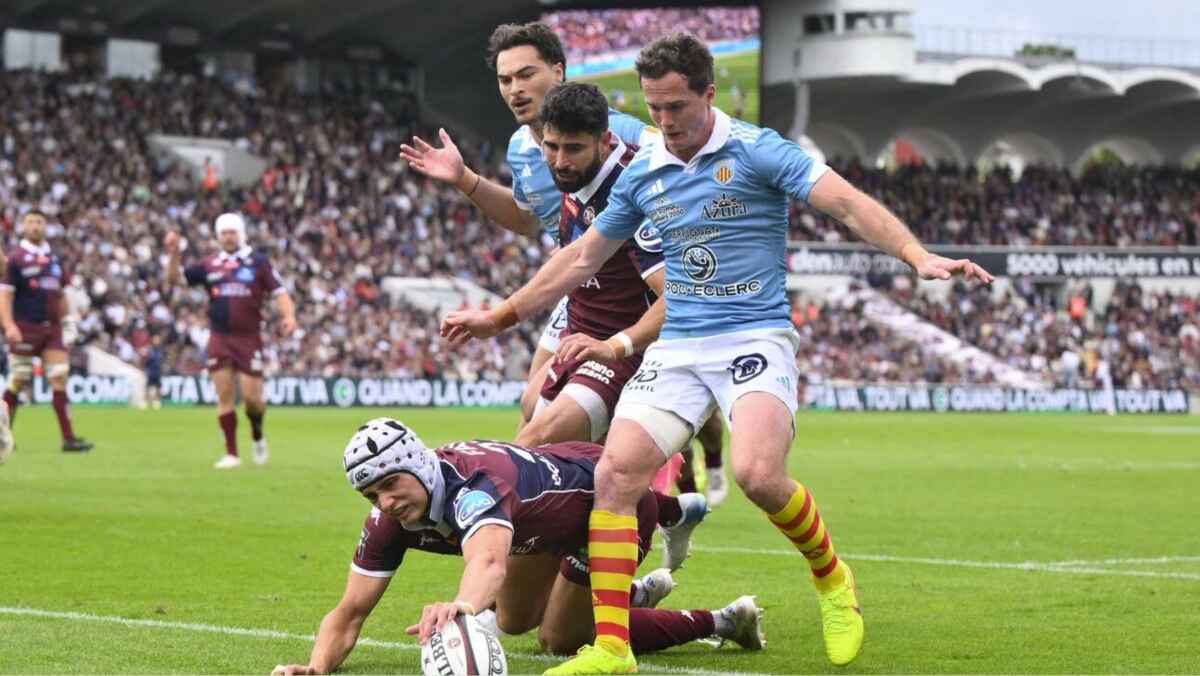
At the end of last season, 90 capped Tier 2 players were earning a living in the Top 14, a whopping 136 in the brilliant ProD2, arguably the most entertaining league in the world, while there are a further 93 in Nationale 1, France’s now fully professional third tier.
Heavy lifting
To confirm all this, I have just spent a morning scouring various French club websites and I strongly suspect these numbers will be significantly up this season with a major recruitment drive on in Nationale 1.
By way of comparison, there were just 17 Tier 2 players gainfully employed in the Premiership and 20 in the Championship, while there were a measly 13 in the URC, seven in Super Rugby and five in Japan.
The figures offer a stark comparison, with France clearly doing all the heavy lifting here on behalf of the world’s smaller nations but why should that be the case?
Tier 2 players almost to a man represent outstanding value for money; they come cheap and are extremely ambitious and hungry.
Every match is a big match for them, an opportunity to make a name for themselves.
As an investment they are sound, while if you take the overview – and alas the suits rarely do – they add interest to a fairly inward-looking league which would be slightly more cosmopolitan as a result.

PICTURE: Alamy
Reluctance
I have never understood the Premiership’s reluctance to cast the net wider, ditto the URC, but what we can say without fear of contradiction is that without that extraordinary gathering of T2 players in France where they can train and play professionally around the year and immerse themselves in the rugby lifestyle, there simply wouldn’t be a World Cup next autumn. Not one with any integrity.
There might be a gathering of say 12 teams but it would be all the usual suspects playing each other again just 12 months after they contested the Nations Championship.
It would be groundhog day all over again, a sport in retreat. So thank god for France but what on earth have World Rugby, the non-governing world body, been doing to strengthen the game worldwide?
Twiddling their thumbs and diving down blind alleys is the answer.
As previously discussed ad nauseam World Rugby, with its rigged voting system, is set up to preserve the status quo at all times, to protect the founder nations in perpetuity while occasionally throwing a bone to the great unwashed.
Only this last summer they threw up their arms in surrender and just let the big boys organise their in-house earner – the Nations Championship – with no regard to the next tier of nations who are trying to get up to speed in an attempt to be something other than cannon fodder in Australia next summer.
The world looks to France
A series of tough, learning, incoming tours from the big boys is what they needed to make next year’s World Cup more viable; what they got was a low-profile second tier tournament amongst themselves with hardly anybody watching, nothing to stretch their minds and bodies before they tackle the best in the world.
Sometimes you think perhaps World Rugby are onto something, like for example the creation of Moana Pacifika to compete in Super Rugby and provide an outlet for aspiring Tongan and Samoa players.
That was the theory but of course what happened in practice is that dual-qualified Kiwis, still with an eye for the fame and fortune of representing the All Blacks, also used the franchise for their own purposes.
The project, to which World Rugby contributed £1m a year, has now been discontinued and has certainly benefited the New Zealand careers and credentials of Timoci Tavatavanawai, Levi Aumua, Tupou Ta’eiloa and Kyren Tuamoefolau.
It did offer a diet of testing rugby to a decent number of islanders but ultimately fell well short of the conveyor belt of talent the authorities had hoped for.
To stay even remotely competitive, the rest of the world still looks to France.
READ MORE: Brendan Gallagher: When Bill Oddie dreamt of winning a Blue