













NICK CAIN
READ HIS EXPERT OPINION EVERY WEEK

ARE marquee players, or coaches, worth it, or are they just a Premiership owners’ vanity project?
Judging by the social media vitriol and anger from Leicester fans after their loss to Bristol at Welford Road two weeks ago, their answer is thumbs down.
Even the more balanced comments were critical of the displays under new Australian coach Dan McKellar – whose wage is outside the current £5m Premiership salary capand of a team perceived by Tigers supporters as lacking top tier fitness, tactical nous, and mental fortitude.
Given that Leicester’s marquee flyhalf Handre Pollard has demonstrated all those qualities in spades for South Africa on the way to becoming a double World Cup winner, it is understandable that there is frustration that, so far, he has been unable to make them count in the same way in his two-season stint in the East Midlands.
Last season, when Leicester finished third in the table, before losing their semi-final play-off to Sale, there were at least some reasons to be cheerful with Pollard, and Leicester’s two other main overseas signings, Springbok No.8 Jasper Wiese and Argentina‘s hooker and captain, Julian Montoya, leading the charge.
This campaign, however, with Leicester out of it in eighth place after going down to Sale 31-22 on Friday night, the mood has hardened, with value-for-money questions over the club’s marquee players surfacing.
With Wiese moving on, Leicester fans will focus on Pollard and Montoya – and they will need all the help they can get from the club’s England cohort, including Freddie Steward and George Martin, given that the supporters at Welford Road are not of the long-suffering variety.
The Premiership marquee rule this season is one star player per club whose wage is excluded completely from the salary cap, although it was reduced from two last season.
Premiership salary cap regulations prohibit clubs disclosing who they are, and therefore speculation is rife. However, it is clear that they are currently a mixed bag of overseas and domestic stars, and that the impact they make is also variable.
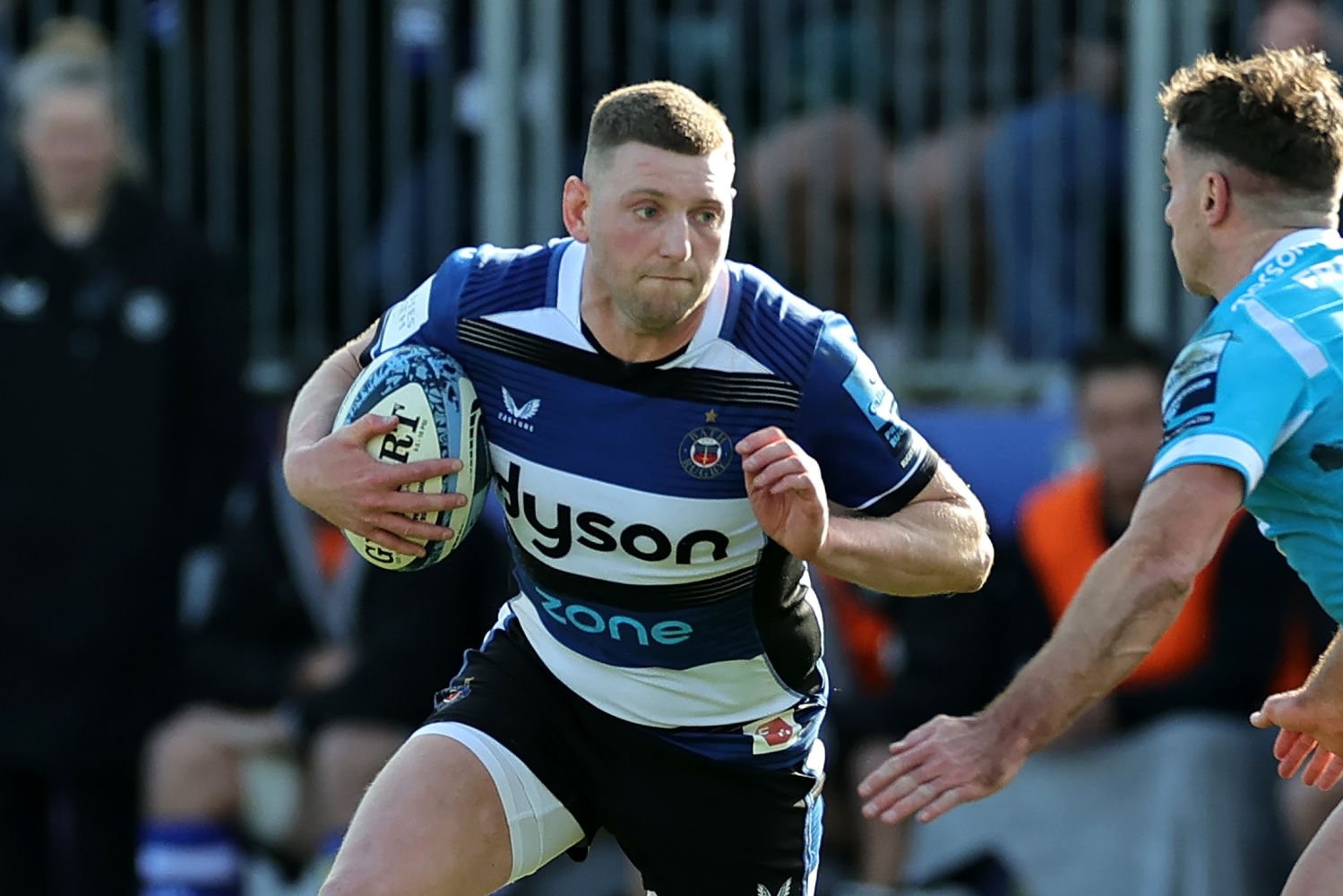
For instance, Bath owner Bruce Craig has not had much joy with previous marquee signings – but this season his luck seems to have changed. Scotland fly-half Finn Russell and South African tighthead Thomas Du Toit have been fundamental to Bath’s resurgence after the club’s long years in the doldrums. Whether consistent success and silverware is now within Bath’s reach remains in the balance. However, Craig’s act of faith in giving the club’s South African coach, Johann van Graan, a contract extension until 2030, is that of someone who thinks he’s cracked the code.
At other Premiership clubs striking the right marquee player balance is elusive, with so many different factors at work. Owen Farrell’s exit from Saracens to Racing 92 this summer reflects this, because while it will leave the club with an extra c.£750,000 in the bank, selecting whether, say, Maro Itoje, Jamie George, or Ben Earl, gets the marquee contract is potentially divisive.
Exeter’s clear-out of a platoon of English and Scottish internationals over the last year has left them with two marquee candidates in Wales lock and captain Dafydd Jenkins, and former Wallaby loosehead Scott Sio. Although, given Henry Slade‘s standing at Sandy Park, or that of a shooting star like England wing Immanuel Feyi-Waboso, the calculation becomes complex.
The same applies at Northampton, where the departures of Courtney Lawes and Lewis Ludlam to France, could lead to Saints director of rugby Phil Dowson having to juggle with which of his new England internationals, Alex Mitchell, Tommy Freeman, George Furbank, or Fin Smith, gets the marquee mantle.
There is a similar conundrum at Harlequins with inside-centre Andre Esterhuizen’s return to South Africa after an outstanding four-year stint, potentially leaving an annual marquee contract of around £450,000 to be reallocated. Does it go to Marcus Smith, Alex Dombrandt, Chandler Cunningham-South – or to a new midfield signing?
It could be a similar marquee story at Bristol, between, say, former All Black back row Steven Luatua and England loosehead Ellis Genge – or at Sale, with George Ford and Tom Curry vying for the big bucks contract.
The reality about marquee players is that Premiership owners have made a rod for their own backs. They conceived the concept as a way of getting around the salary cap, but instead it became a crankshaft that kept driving up the wage bill of every club, due to the inflationary factor of players and agents using marquee player salaries as their yardstick.
Instead of Premiership owners introducing a strong regulatory framework to keep clubs from spending more on player and coach salaries than they could afford, they proved incapable of policing themselves.
The RFU was equally culpable in failing to put in the necessary checks and balances on salary spending before handing over millions of pounds in funding to the Premiership clubsand it was a major contributory factor in Wasps, Worcester, and London Irish going bust.
It is why no PGP can be passed with the Premiership marquee mess that exists at the moment. Clear, transparent regulation has to be put in place, and a straightforward solution is to scrap the marquee exemption and add £1 million to the salary cap for each club to contract two key players.
It could be on the basis of £500,000 each, or any split to a limit of £700,000 to £300,000, with each club making it a transparent process by naming their key players. That way we could at least start talking about a Premiership that wants to be solvent and open, rather than a dangerously debt laden ring-fenced league.