


Rugby Matters by Brendan Gallagher – A weekly look at the game’s other talking points

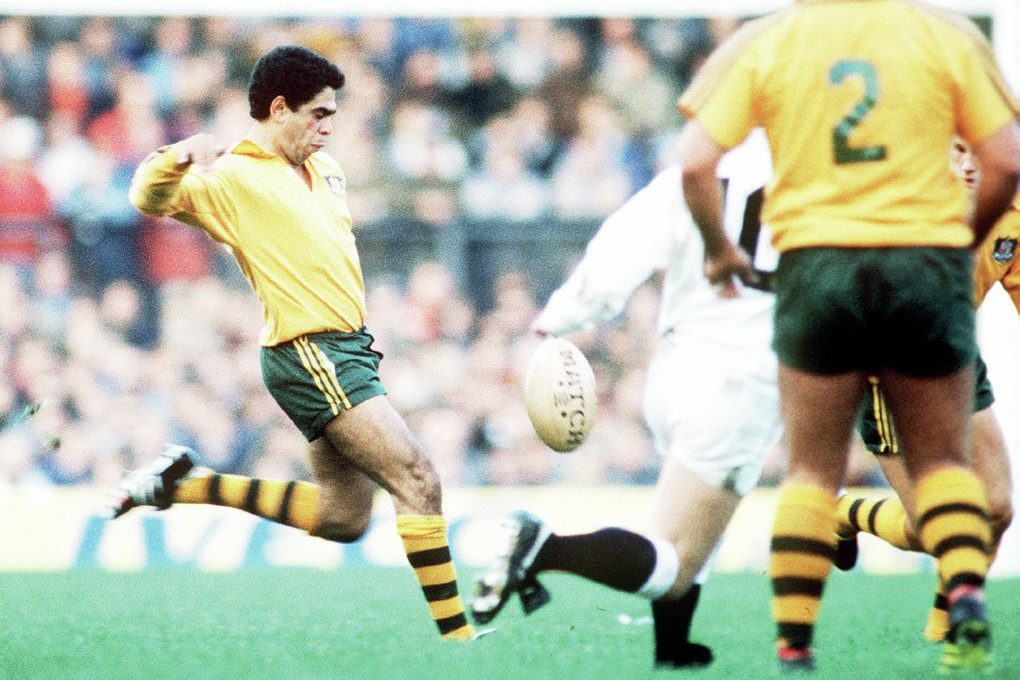
Nineteen eighty four might have been one of the most anticipated, celebrated and feared years in political history… but in rugby terms the year conjures up just one image, namely a Mark Ella-inspired Australia running riot against the Home Unions and completing the most resounding of Grand Slams.
Unfairly – because there have been many very good Aussie sides not least two World Cup triumphs on these shores – it’s the one Aussie team we all remember. And with good reason.
They were brilliant and their short, incredibly quick no-look passing in midfield from a back division that chose to line up flat rather than on a steep angle revolutionised the way the game was played.
It’s football equivalent would be Barcelona’s tiki-taka style passing.
Ultimately there were some downsides to that as well, as we might discuss later, but initially it was all good.
A brave new world as envisaged by those innovative lateral thinkers from down under headed up by Alan Jones, a political speech writer and breakfast time DJ in real life.
As well as Ella this was the tour that gave us Michael Lynagh David Campese, and Nick Farr-Jones to name just three.
Campese’s Magic
The tour which ended with Campese turning the Barbarians defence inside out in that memorable game at the Arms Park – the second-best Barbarians game ever? – which served as a metaphor for the entire trip really.
It was, to slightly misquote Orwell, a bright cold day in October and the clocks were striking thirteen, when the Aussies started their revolutionary tour with a win over London Counties 40 years ago this week.
That victory was followed, as some forget, by a pretty average performance in drawing 12-12 with the South West Counties at Exeter’s historic old Country Ground with the speedway track around the pitch perimeter.
And then came a thumping 26-12 defeat at Cardiff which gave many across the bridge the false impression that this, like the 1981-82 tour party, were a less than formidable Aussie squad and were there for the taking. They were to learn the truth soon enough.
It was essentially a young Aussie squad and they had to learn on the hoof but the big plus was that the rump of the group had toured Britain and Ireland before with victorious, nay mesmerisingly brilliant, Aussie schools teams in 1977-1978 and 1981-82.
18 Game Tour
They were already good experienced tourists and although the ’84 trip was advertised as the first modern day in and out Aussie tour of the Home Unions it was still 18 games long.
There was time to make the adjustments and improve. Was there ever…
It all started to come together with wins over the Combined Services and Swansea and then came the first sign of greatness, a doddle as the fast-maturing Aussies really flexed their muscles.
Wales were thumped 28-9 at the Arms Park – four tries to one – with a wet slippery ball seemingly not affecting their handling one jot.
Ella was of course one of the try scorers as he was again two weeks later when the Aussies thumped Scotland 37-12.
There is a reason Ella is particularly revered in this part of the world despite an international career encompassing just 25 Tests and his dual role of creator and strike runner on this tour is that reason. Veteran hack John Reason, a harsh critic who dished out praise with some reluctance, called him the perfect rugby player.
Campese, a regular these days on The Rugby Paper podcast, still places Ella atop the pile as does Poidevin and Rugby League legend Wally Lewis who was a member of that 1977-78 Aussie schools side.
Transformational
It was a transformational tour in other ways. Overnight Australia – who had hitherto always batted third bea commanding 19-3, three tries to nil win over England with two of the scores being particularly memorable.
Ella scored the first as he drifted across the field hinting at switch passes to Roger Gould, Lynagh and Campese before spying a small gap and sliding through himself for a memorable try. Ella also played a fine hand the memorable third try, a startling team effort finished off by Simon Poidevin.

Ella was the mainstay in their next Test in Dublin, their hardest game on tour, when it needed a second-half try from the great man to see his team home. The rest of the tour though was hind New Zealand and South Africa in terms of box office appeal among the southern hemisphere giants – were suddenly equal billing. That was a status they were to enjoy for three decades or more before the recent drop off.
Falling Short at the World Cup
The surprise is that the rump of this team didn’t go on to win the inaugural World Cup in 1987 when they started as strong favourites after their 2-1 series win in New Zealand in 1986.
A Serge Blanco-inspired France did for them in that classic semi-final in ’87 and the Aussies then slipped to a last minute defeat against Wales in the play-off.
The likes of Campese, Lynagh, Farr-Jones, Tommy Lawton and Poidevin had to wait another for years for World Cup glory.
And the downside? Well you know what’s coming. With their brilliant short, popped passing the Aussies started pressing the envelope with regards to forward passes.
I would stress started. To reinforce my memories of the time, I revisited some of their games this week and so brilliant were Ella and the young Lynagh, and so precise was the timing of those running onto their short, popped balls, that I don’t think many were illegal at all.
Copying their DNA
As much lesser players copied them though skill levels dropped off.
Referees started to allow the marginal calls and then bottled out on the big forward passes and midfields started to get away with murder.
Coaches loved the system because it was simpler, easier to coach and seemingly less could go wrong.
Fast forward 40 years and you can still see the technique in the DNA of many sides … but it’s often so clunky and laboured compared with the ’84 Aussies.
As a technique and skill it’s regressed and with defences long ago working out that the best way to counter it is to move up in a similar flat line which often results in a tedious midfield stalemate.
What we have now is a million miles away from what the ’84 Aussies were about – their version was exhilarating and cutting edge but that’s progress for you.
READ MORE: George Furbank – I can’t wait to take on All Blacks