
MY LIFEIN RUGBY BOB HILLER
THE FORMER BRITISH & IRISH LIONS, ENGLAND, SURREY AND HARLEQUINS FULL-BACK
IPLAYED 19 games and scored 219 points for the Lions, on the tours to South Africa in 1968 and New Zealand in 1971, but I never played in a Test and that was fair enough. People thought I ought to be bitter about that but in the first one, Tom Kiernan was captain and he played magnificently, and on the second tour JPR was braver and better than me, so I didn’t mind.
Lions tours were fantastic, it was such a privilege to be on tour. They both lasted three-and-a-half months so for seven months I played with and enjoyed the company of some of the best players in the world. Even Chico Hopkins! Both tours were very happy tours, we had a great time and we played good rugby and we were reasonably successful. Looking back, that was the highlight of my rugby career. I couldn’t believe I’d been picked. We got a rand for daily expenses. As there was two rand to the pound, so that was the princely sum of 50p. We’d have all gone for nothing, though. It was during that tour that I acquired the nickname “The Boss”. Ronnie Dawson gave it to me and I still don’t fully understand the reasons why. It caught on though, and to this day none of the players that I went on tour with call me Bob, they call me Boss. It even caught on among the black people in the crowds. As they had the cheapest seats behind the goals, which were nearest to the pitch, I could hear them calling over to me, ‘Boss Hiller, Boss Hiller’. They hated the Springboks so I would gee them up even more. We needed all the support we could get.
One humorous interaction with the crowd in New Zealand came about when one of the locals took objection to my rather laborious goal-kicking routine. In South Africa, kids would run on with tins of sand for you to place the ball on because the grounds were so hard and you couldn’t get a heel in. But that wasn’t a problem in New Zealand where the pitches were often caked in mud. Arthur Lewis had just scored a try, he nearly wet himself. But I never got nervous when it came to goal kicking. That’s what I was in the team for: it was my job to kick goals. After spending quite a bit of time making sure the ball was teed up correctly, this bloke shouted out, Hiller, do you want a spade?’ To which I replied, ‘give me your mouth, that appears to be big enough.’
Funnily enough, I was slightly responsible for time limits being introduced for goal kicking. I was playing for Surrey against The Army at Esher RFC and Geoffrey Fenn was the referee. We scored a try and I was going through my rigmarole and it had got to the stage where I was just about to start my run up and he timed me out. He did that twice even though there we no laws about it at the time. After that, they introduced the regulation that you only had a minute to kick the conversion. If a shot clock had been around when I was playing I doubt I’d have ever completed a kick at goal. The sweetest kick I ever struck though was the second drop goal I kicked against Ireland. It went miles. It cleared the stands. They always used to pull my leg at Quins because I used to attempt a lot of drop goals and I missed more than I kicked. We had two wingers at Quins, John Coker and John Cox and they reckon they scored 20 tries a season chasing my failed drop kicks!
“If the shot clock had been around in my day, I doubt I’d have kicked a goal”
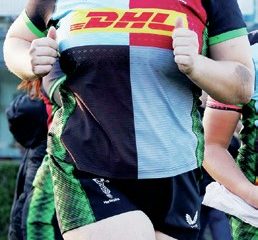
David Brooks was manager of the ’68 Lions Tour. He formed a big part of my life, and without him I would probably have never got involved with Quins. My big break came in 1962 when I was playing for Surrey against Middlesex in a schoolboys’ game at Old Deer Park, and as I walked off the pitch this tall bloke with a big overcoat approached me. It was David. He said to me, ‘I am David Brooks from Harlequins, would you be interested in joining us?’ I didn’t know anything about senior rugby at the time and hadn’t even heard of Harlequins. I said, ‘I think I would, sir, but I am rather committed to playing for Bec Old Boys’ (in Tooting). My headmaster asked me how it went when I returned to school and when I told him what I’d said, he said, ‘you bloody fool’ and he picked up the phone and told David, ‘of course he wants to be a Harlequin’. So from that point on, I was. It’s funny how one small moment like that can have a huge bearing on your life. I’ve been a member of the club for 62 years, and a President for 22 of them, having succeeded David when he passed away.
In those days, Quins had five sides. They had three equal strength A teams, and the seconds were the Wanderers and then you had the first team. I went off to Birmingham University but I must’ve done quite well in the Quins trial because they asked me to come back and play for them. They reimbursed my train fare which was £3 return. When I graduated I had a job with Surrey County Council as a Civil Engineer. But my Quins team-mate Joe McPartlin said to me I should do a Diploma of Education at Oxford University. So he got all the forms and I filled them in and sent them off. They wrote back saying I had missed the application deadline and when I told Joe, he said I’ll fix that. Sure enough, I got a letter of apology from Oxford not long later saying there had been a clerical error and I was welcome to a place. That was a wonderful experience, and I got Blues in rugby and cricket. We drew the rugby Varsity Match 5-5 but won the cricket Varsity Match. It was a three-day game at Lord’s. I was an opening bowler and batted lower down the order, at 8, 9 or it might have been 10. On the first day we scored a whole stack of runs and then someone was out and I was walking down the stairs of the pavilion looking forward to batting at Lord’s when the captain suddenly declared. We got them out twice and won by innings so I never got my chance.
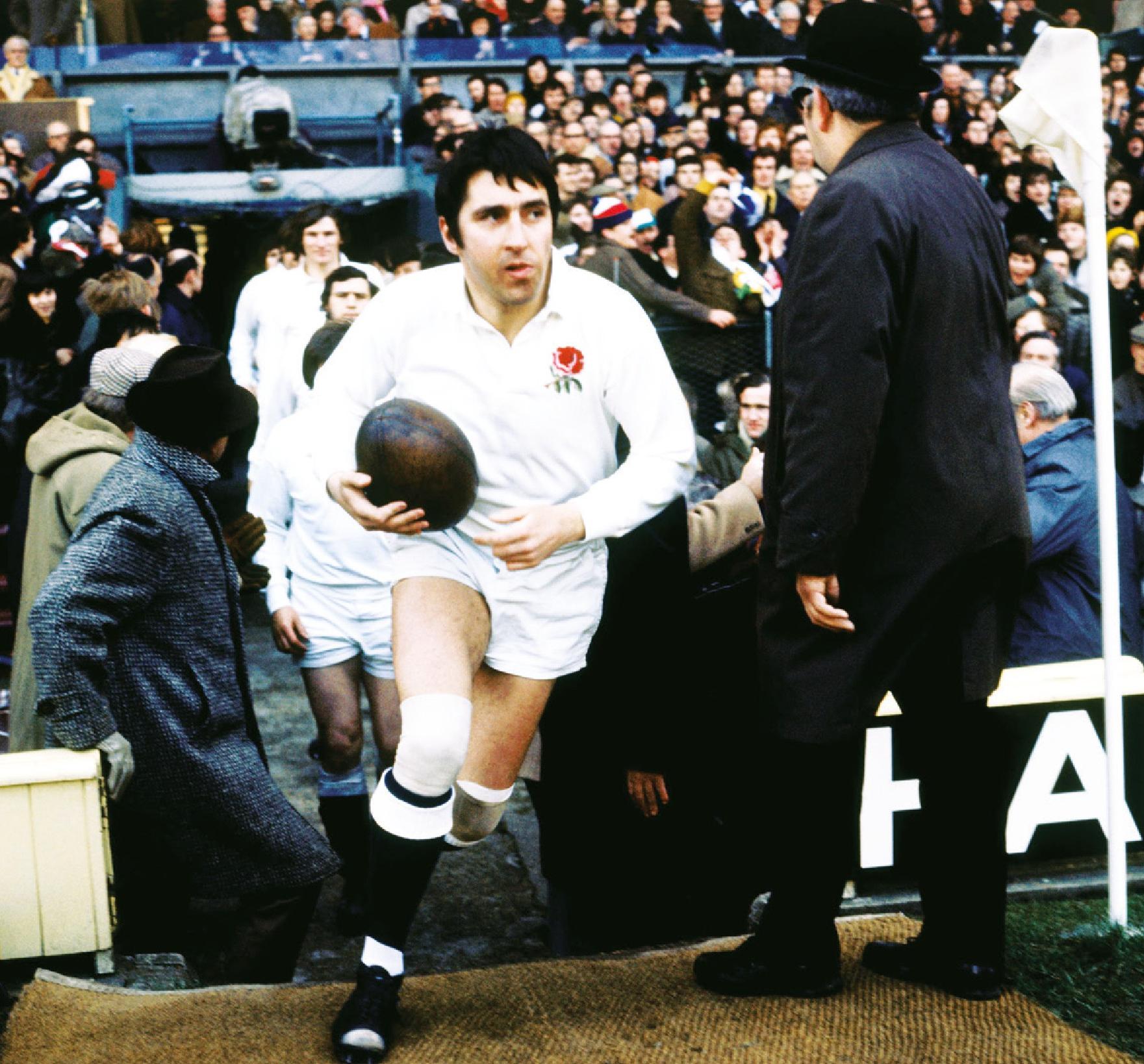
Playing for Quins and Surrey in the County Championship gave me the platform to go on and win 19 caps for England. I scored 138 points which was a record at the time. I think the try I scored against Scotland was voted the fourth best try in 100 years of international rugby at Twickenham, and it all came about because (winger) Jeremy Janion didn’t trust me under the high ball. I was preparing myself to make the catch and all of a sudden the ball disappeared. Jeremy had taken it and set a brilliant move in motion. I only had to run about 10 yards to finish it off.
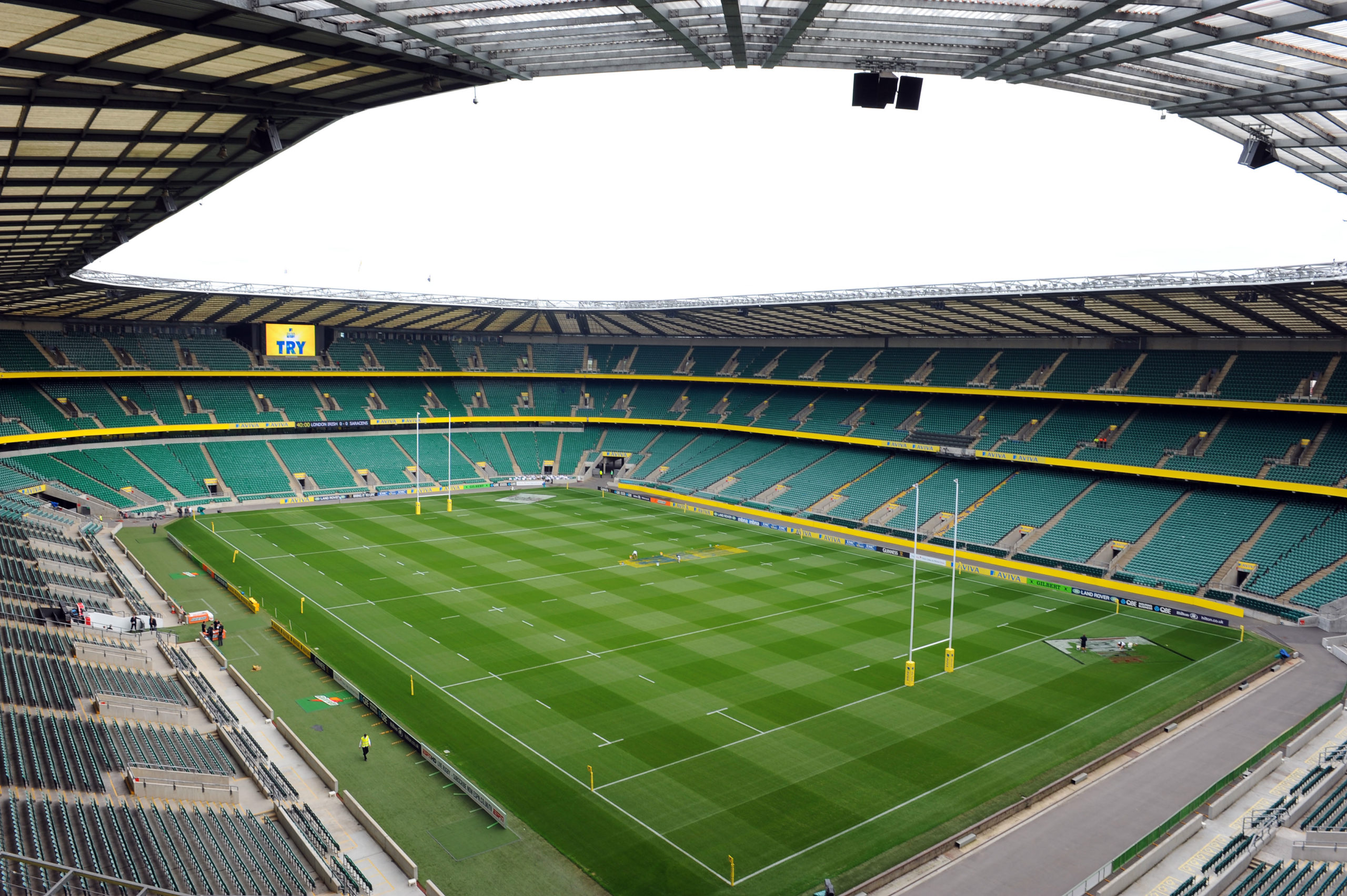
The old Twickenham Stadium was a wonderful place to play. The stands seemed to go straight up from the sides of the pitch. It was like an amphitheatre. But I also enjoyed trips to Wales, even though they thought we were all toffs and the fourth in line to the throne. They appreciated good rugby and I really used to look forward to playing at places like Stradey Park, where it felt as though everyone in the ground had rugby in their veins.
My last cap for England was against Ireland in 1972. I got dropped for the game in Paris, thank god, as we got thumped by 30-odd points. But I carried on playing for the Quins until about 1976. Rugby has given me a fantastic life. I have made stacks of friends and done things I would never have been able to do and I appreciate that. I love the game and people around it. In my darkest moments I fish out the old Lions books I’ve got of the tours that I went on or the DVD of the game where I dropped those two goals, they always bring back happy memories.