


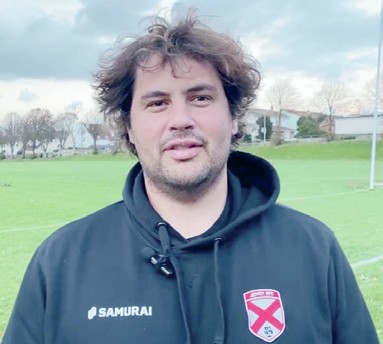
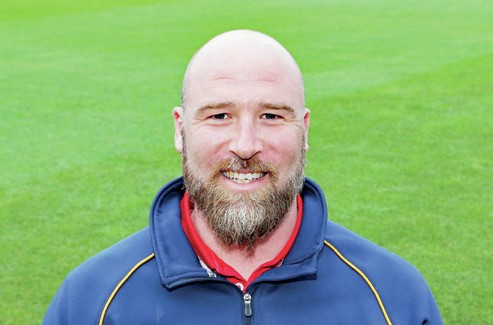
Steve Hill talks to Tony Hill, below, head coach of Somerset county men (Division 1) and Nailsea & Backwell RFC in Counties 1 Tribute Western North (Level 7)
What is your playing background?
I played my junior rugby at Yatton RFC in Somerset before heading off to university in Swansea. I played for the university as well as playing colts for Swansea RFC. After university I played for my hometown club Nailsea & Backwell RFC, during that time selected for the Bristol Combination.
How and why did you get into coaching rugby?
I was given an opportunity by Nailsea & Backwell as a player coach first. I liked the idea of trying to improve a group of players. I felt like I was going to be a better coach than I was a player…which wouldn’t be hard as I wasn’t that good!
How did you arrive at your current positions?
At 34 I hung the boots up and dedicated my time to learning how to coach. I signed up for as many courses and CPDs as possible and eventually became an advanced England rugby coach. Learning on the job at Nailsea & Backwell RFC at Level 7, my experience also includes Bristol Bears academy and now Somerset rugby.
What is your occupation outside of coaching?
Outside of rugby I work for a medical device company where I am a business development manager and can often be found in theatres supporting operations where our product is being used.
What is your coaching philosophy?
I always thought I was going to be an outcome or ‘winning’ based coach when I started. However, my philosophy for coaching has changed so much as my understanding of coaching has grown.
Coaching for me is about supporting the development and awareness of players to be the best version of themselves and help them achieve their goals. I also believe coaching is a lot about environment. If it is positive, fun and challenging people tend to work well.

What are the major differences/challenges between coaching at club level and coaching a county team?
With a club you have a long pre-season, plenty of time with the players and the ability to shape things. With a county team, you have three training sessions and a couple of games so for me it’s about ensuring you have clarity of calls and that everybody has bought in. The player leaders at county level are crucial.
How do you see the County Championship fitting into the current rugby landscape? Are there any changes in it you would like to see?
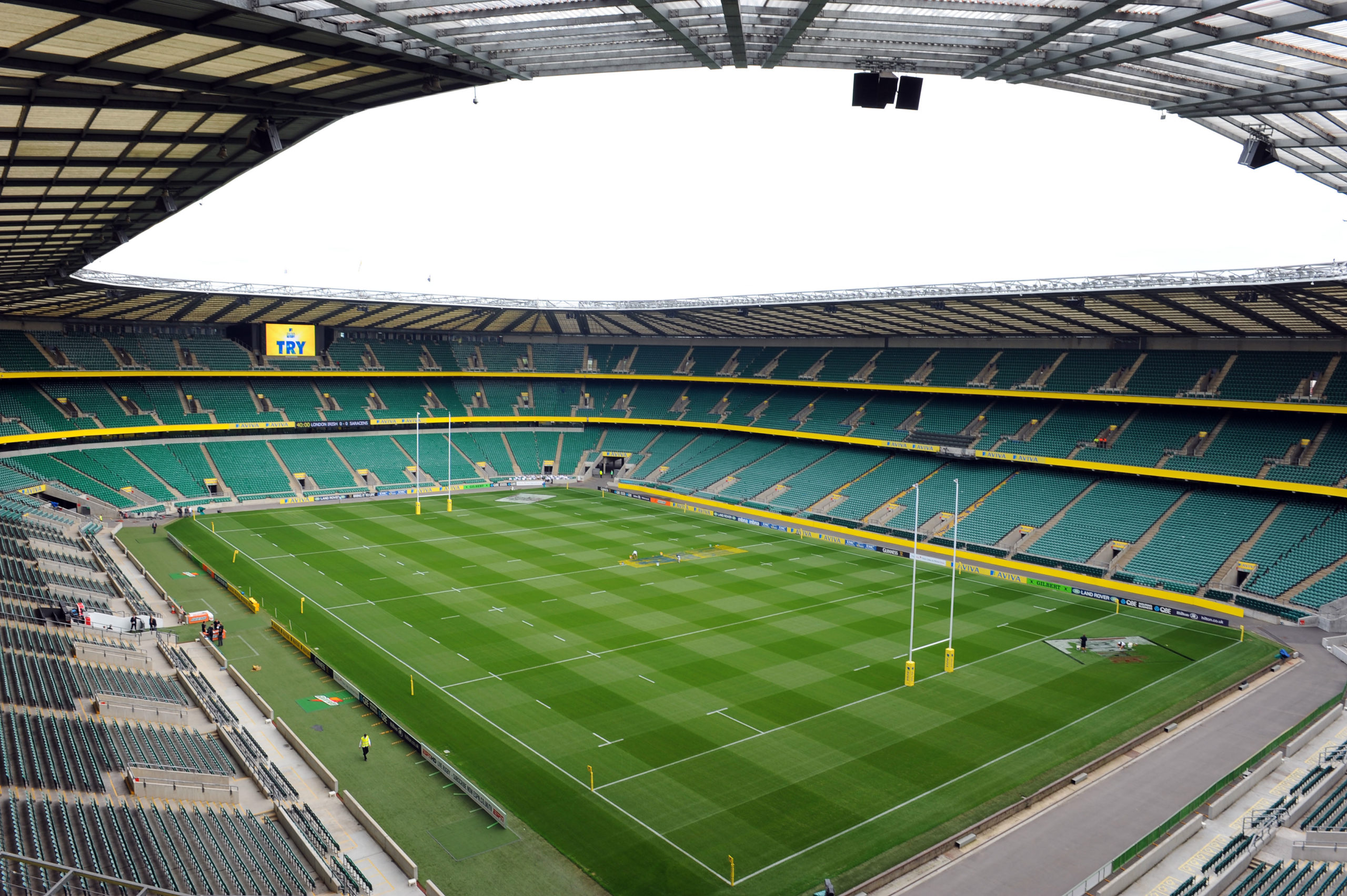
Without any doubt there is a true honour, tradition and pride in representing your county in a competition, coupled with the opportunity of being able to play at Twickenham (or Allianz as we are supposed to call it now). Perhaps the eligibility criteria could be slightly improved. Some national league clubs in Bristol have players who aren’t eligible for Somerset (outside county border) or Gloucestershire (Division 2, so only Level 5 and below). This means all those players miss out on representative rugby.

What would you count as your most significant coaching achievement and why?
So conventional wisdom says the recent Bristol Combination Cup win but that was an outcome of years of working with the players. I enjoy seeing a player ‘breakthrough’ from things we’ve been working on. For example, a goal kicker nailing big moments from hours on the training park or a player finding new confidence in the tackle from extra sessions that we’ve done. They are deeply rewarding moments.
What do you find the most challenging aspects of coaching?
Keeping things fresh and challenging. Rugby as a game doesn’t change that much so to keep finding innovative ways to make training sessions interesting has its challenges.
How do you measure your success as a coach?
Player retention, training attendance, player enjoyment.
Has anyone helped you on your coaching journey?
My wife is a massive support for me. I’ve got mates in teaching and business that offer great advice. Rugby wise Chris Hurd from the RFU has been excellent to lean on.
In Nailsea & Backwell’s RFU league you have the second teams of certain clubs. How has this impacted on the league if at all?
Well this is a bit of a bugbear of mine. One week you could be playing half a national league outfit and get smashed and the next you could get a walkover or win comfortably. There is no regulation in place to protect the level for 1st teams in that league. It needs more thought as everyone needs competitive rugby but if a 1st team club wants to progress from Level 7 they could be at the mercy of a national league club’s budget, priority and availability.
What more could the RFU do for community clubs?
Engagement and transparency. I actually told this to (chief executive) Bill Sweeney and (RFU board chairman)
Bill Beaumont on a recent Zoom call. I suggested it shouldn’t take a vote of no confidence for you to get out to the membership and work out why the game isn’t thriving as much as it could.
What two laws or aspects of the game would you change to make it a better experience for either yourself or your players?
I think the speeding up of the game is key. As a spectacle people want to see running, offloads, tackles and tries. Any laws that help this are going to help engagement. I also think we need a long look at the jackal to see if has a place in the game. It’s high risk high reward.
What advice would you give to anyone considering or just getting involved in coaching rugby?
Be okay with not knowing things. Do as many courses and upskill yourself to be the best you can be. If you think you are going to be a good coach because you played a bit, then think again. It’s a different skill. You need to understand how people learn and you need to be okay with getting things wrong and reflecting. I’ve really enjoyed it … it’s taught me a lot.


International Rugby
2026 Six Nations analysis: What we learned from this year’s tournament





The best betting sites















You must be logged in to post a comment Login