
Connect with us

Columnists

Jeremy Guscott: Foursome! I can’t pick out a winner for Six Nations

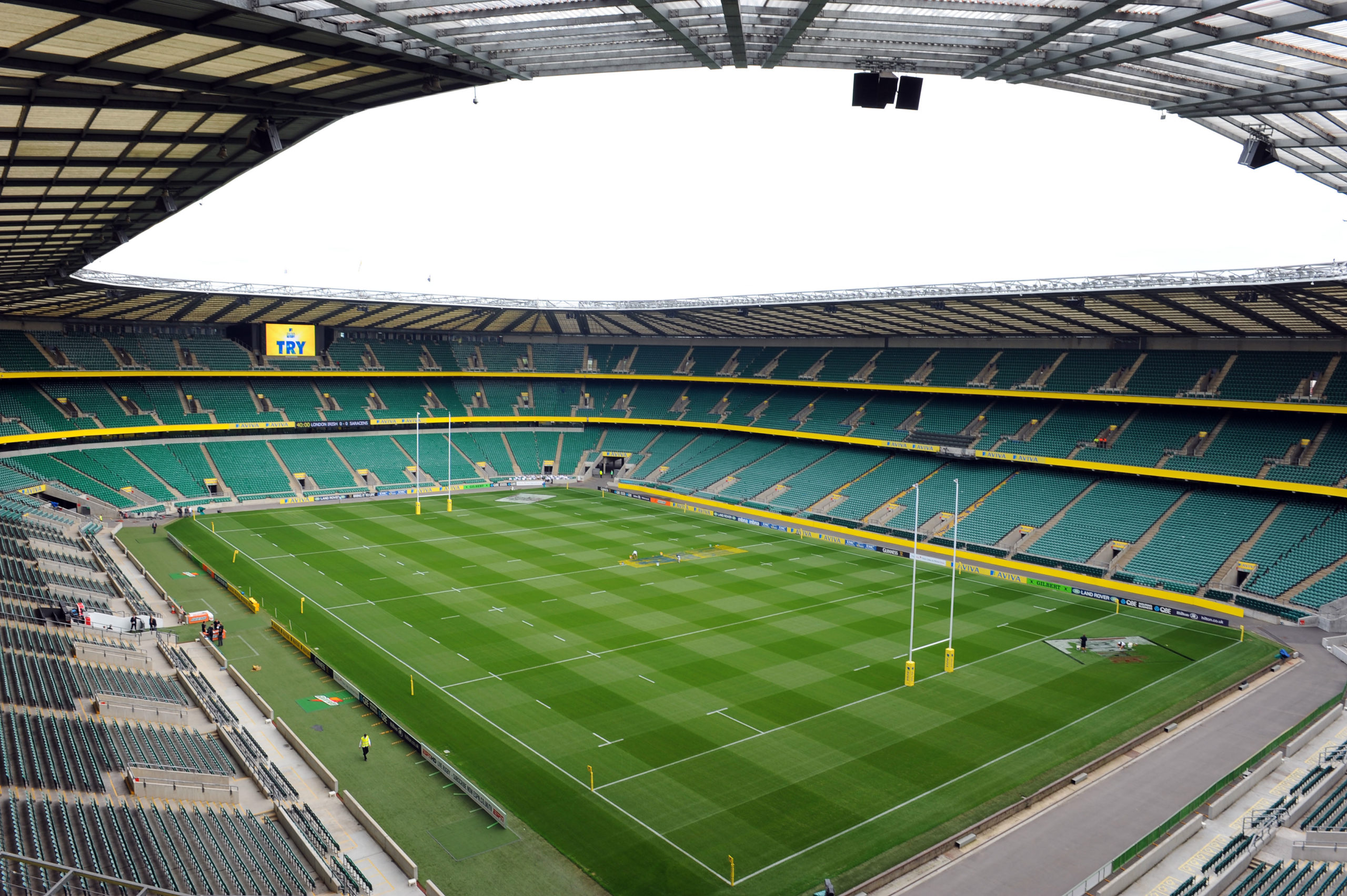
Based on where England have gone since the last year’s Six Nations fixture against Wales in Cardiff, and where the Welsh have gone, Maro Itoje’s team are overwhelming favourites at Twickenham on Saturday in the opening round of this year’s tournament.

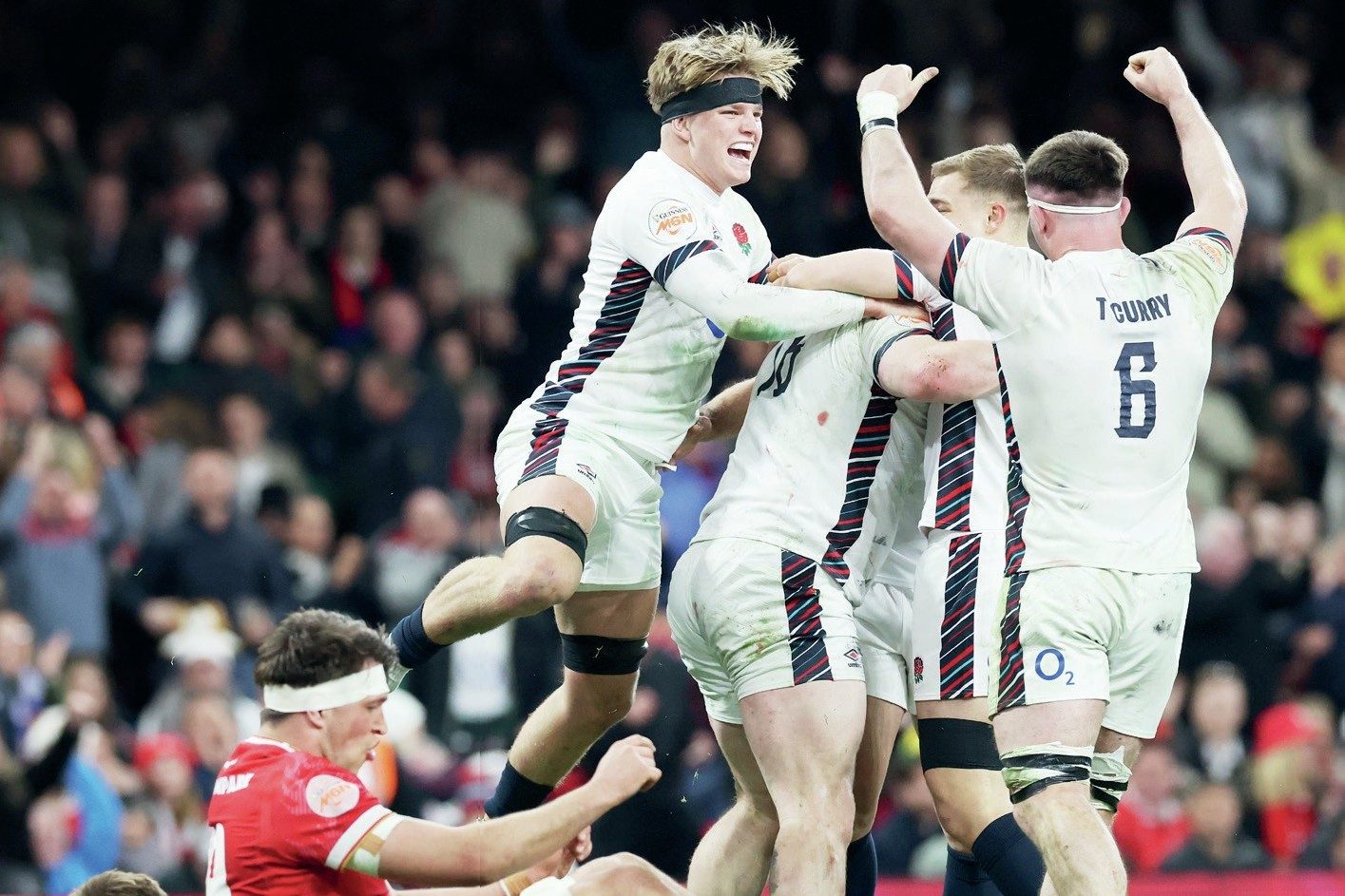
England celebrate scoring during their record win in Cardiff last season

Based on where have gone since the last year’s fixture against in Cardiff, and where the Welsh have gone, Maro Itoje’s team are overwhelming favourites at Twickenham on Saturday in the opening round of this year’s tournament.

The key for Wales is to find a firm psychological foothold after a 68-14 loss last time, and there is nothing more galvanising for a team of underdogs than to target bringing down an opposition considered to be a sure bet.

You can just imagine the talk inside the Welsh bubble is about springing the biggest surprise of the tournament, or getting so close on the scoreboard there’s nothing in it.

Wales head coach Steve Tandy will be asking each of his players to rise to the occasion and make a specific mark by outplaying their English opposite number.

Mindset

The questions will be a non-stop “is he better than you?”, and are they prepared to accept second best?

Tandy will want to develop a Welsh mindset which is part us-against-the-world, and part ‘what have we got to lose’?

The intention will be to take the pressure off themselves and turn it on England through a mentality of wanting to put the record straight after a very humbling 10-try beating a year ago.

It’s a hard ask when England are coming into the encounter on an 11-match winning streak, and are again turning Twickenham into a very difficult stadium to visit.

However, although the Welsh losses against and in the autumn were deeply disappointing, the four tries they scored against gave them seeds of hope.

Against most teams, England included, if Wales score four tries, they will be in it.

They have shown that they have the makings of an attacking threat, and that’s why the template for Wales is to repeat what they did against New Zealand, and unsettle England by breaking their defensive line.

Wales must remember not to put themselves under pressure by trying to play from inside their own half, and then coughing up the ball.

That will play into England’s hands, allowing them to box-kick, compete effectively for the high ball, and then punch hard, sometimes narrow, sometimes wide, to create openings.

Rout: England celebrate scoring during their record win in Cardiff last season
PICTURES: Getty Images

Resistance

The danger for Wales is giving away penalties or possession 10 metres inside their own half, which are kicked to touch deep in their 22, and give England the option of scoring from a lineout drive, or out wide once the defence has been sucked in.

Wales can override that by making very few mistakes in key areas, and building on that game against New Zealand.

They know what’s coming, and have to take a leaf out of ‘s book of defusing England’s aerial threat, with a back three which includes Josh Adams, Tom Rogers, and Louis Rees-Zammit as the main line of resistance.

England will concentrate on intensity and quality execution in attack, as they did in the autumn, and the best response is an intense defensive press to try to force England into over-complicating and making mistakes.

England will want to do more of what they did in the autumn, but maybe with a few more phases and greater continuity.

However, if the rumblings that Tommy Freeman could be at outside centre with Seb Atkinson at 12 prove to be accurate, it creates a whole new dynamic in the backline.

The main one is that it would leave Fraser Dingwall, Max Ojomoh, and Ollie Lawrence on the sidelines even though they were a big part of England’s autumn success.

It won’t change England being favourites against Wales, but it does make you think “Wow!”

Disruptive

Before that, reigning champions will have played Ireland in what should be a great first match on Thursday night in Paris.

We thought the old saying, “you never know with the French which side will turn up”, was a thing of the past under coach Fabien Galthie, but it re-emerged last week when he dropped three of his main players from his squad: top try scorer Damian Penaud, influential No.8 Greg Alldritt, and midfield stalwart Gael Fickou.

Galthie also has to find a tight-head to replace the massive Uini Atonio, who retired suddenly this week after suffering a cardiac problem.

These big French names being dropped, or stepping down, is disruptive, but as a rugby nation, their talent runs so deep that they are never short of players – and when these include superstars like Antoine Dupont and finishers like Louis Bielle-Biarrey, below, they can never be discounted.

Changes

If you look at the Ireland team since last year’s 42-27 defeat by France in Dublin, there are also plenty of changes, and it may partly explain why they were not overwhelmingly impressive in the autumn.

Veterans like Peter O’Mahony, Connor Murray, and Cian Healy have joined Johnny Sexton in retirement, while head coach Andy Farrell is also having to contend with Bundee Aki being ruled out of three matches by a disciplinary ban, and a long injury list which includes forwards Andrew Porter and Ryan Baird, and backs Mack Hansen, Hugo Keenan and Robbie Henshaw.

Even so, they still have a core of experienced players in the pack, with openside Josh van der Flier still an amazing player, lock/No.6 Tadhg Beirne equipped with such a great engine that, at 34, he still does as much running as he did 10 years ago, Tadhg Furlong battling on at tighthead, and No.8 Jack Conan still making dents.

Add younger guys like Caelan Doris, Dan Sheehan and Joe McCarthy, and that’s a decent pack.

Template

The main question is whether the Farrell template still works – which means scrum-half Jamison Gibson-Park managing to combine together with young fly-half Sam Prendergast as smoothly and effectively as he did with Sexton.

The main elements in the success of the Gibson-Park partnership with Sexton was how skilful it was, with Ireland playing out of their own half with great confidence and precision.

They were game-smart, squeezed the opposition with multi-phase moves requiring great ball retention, and then – with everyone on the same page – finished very efficiently.

Sexton was the ringmaster, and although Ireland still have their moments with Prendergast, they often look more clunky.

The jury is out on whether they are still the same team – and we’re about to find out in Paris.

In charge: Ireland’s Andy Farrell

Optimism

have had their moments over the last six or seven years, but have always been behind Ireland and France in the Six Nations, and overall have not come through to challenge.

This time, as they travel to Rome to face , there is genuine optimism because they are more of a team under Sione Tuipulotu’s captaincy, with a sharp Glasgow outfit which has emerged as a strong European Cup contender, at its core.

This Scottish group hasn’t quite clicked so far, but you sense they realise they have probably only got another couple of opportunities to push together for a Six Nations title.

A lot of people are saying reigning champions France are favourites to retain the title, mainly because of the logistics of playing home games against Ireland and England, the two other strongest teams in the competition.

But what makes this Six Nations so intriguing and exciting is that there are four teams who could beat each other, because Scotland, who have home advantage against England and France, are capable of sticking a spanner in the works.

Twist

Even so, there could be another twist, because the Scots have to go to Dublin to face their bogey team, Ireland.

The Irish still have a good pack, and a very good scrum-half in Gibson-Park, and although they have to go to Twickenham, it’s too soon to start writing them off.

That’s why winning Grand Slams, or predicting them, is always tough – and this season it’s even more difficult because there is not much separating France, England, Ireland, and Scotland.

As for France, any team that can leave out Alldritt, Penaud, and Fickou must have some very good players coming through.

My main reservation with the French is that, despite the brilliance of Dupont and the boot of Thomas Ramos, they do not have the organisation or shape of other good teams.

Change the script

They are still bishbosh with a big pack, and then the ability to attack with brilliant lines of running and great support play, but sometimes they lose their way and heads go down.

France are an emotional side, so, although they are favourites, I’m not going to predict they will win a Grand Slam, or the title.

We are about to find out whether France top the table, or whether England can beat them to it, or if Ireland or Scotland can change the script.

Nor can you completely rule out some impact by an improving Italy side, or a Welsh team picking itself off the floor.

Above all, let’s hope for a memorable Six Nations in which all teams play skilful rugby of the highest level, with great attacks stretching strong defences.

READ MORE: Jeremy Guscott: A fit Fin Smith gets my vote for the No.10 role with England

Click to comment
 

Tackle the News

- Sign Up for our weekly Rugby Newsletter
Your subscription could not be saved. Please try again.
Your subscription has been successful.

The Rugby Paper

The best betting sites

Globusbet

BetpackUK casinos on Slotozilla

the best minimum deposit £5 casinos casinobonusesfinder

Full list of UK betting sites at BookiesBonuses.com kasyna akceptujące paypal

MAN-v-FAT-Rugby

free bets

online bookmakerFull list of UK betting sites at BookiesBonuses.com

GGBetBanner Depicting Therealefl.co.uk an affiliate site for Licensed UKGC Football bookmakers.

More in Columnists