

PETER JACKSON
THE MAN TRULY IN THE KNOW

They were born in different centuries on different sides of the Atlantic, one in Philadelphia the year after President Lincoln’s assassination, the other in Merthyr Tydfil.
And yet, against all the odds, Jack Clowes and Kristian Dacey share a striking similarity due to a quirk of history. Both went to New Zealand on Lions duty, albeit 129 years apart, neither played a single match and yet the annals of sport’s most famous touring team records the name of one and not the other.
The most striking difference between the two lies not in their genealogy but in why the Lions see fit to include only one in their official number which stands at 835. Finn Russell brings up the rear as due recognition for a one-off appearance towards the end of the last tour, to New Zealand four years ago.
He was one of a handful of players summoned as late additions because they happened to have been in the vicinity on business with their national teams. Their shortcut into the Lions was purely a pragmatic measure in case of emergency.
Allan Dell, Scotland’s South African prop, was another who suddenly found himself a Lion, if only for ten minutes. He had been named on the bench against the Chiefs in Hamilton as loosehead cover and there he would have stayed had Joe Marler avoided adding to his collection of yellow cards.
With the Harlequins’ prop watching from his not unnatural habitat of the sin-bin, Dell kept one side of the scrum up for ten minutes. His career as a Lion started and finished on the same afternoon, long enough to earn him due recognition as Lion No. 834.
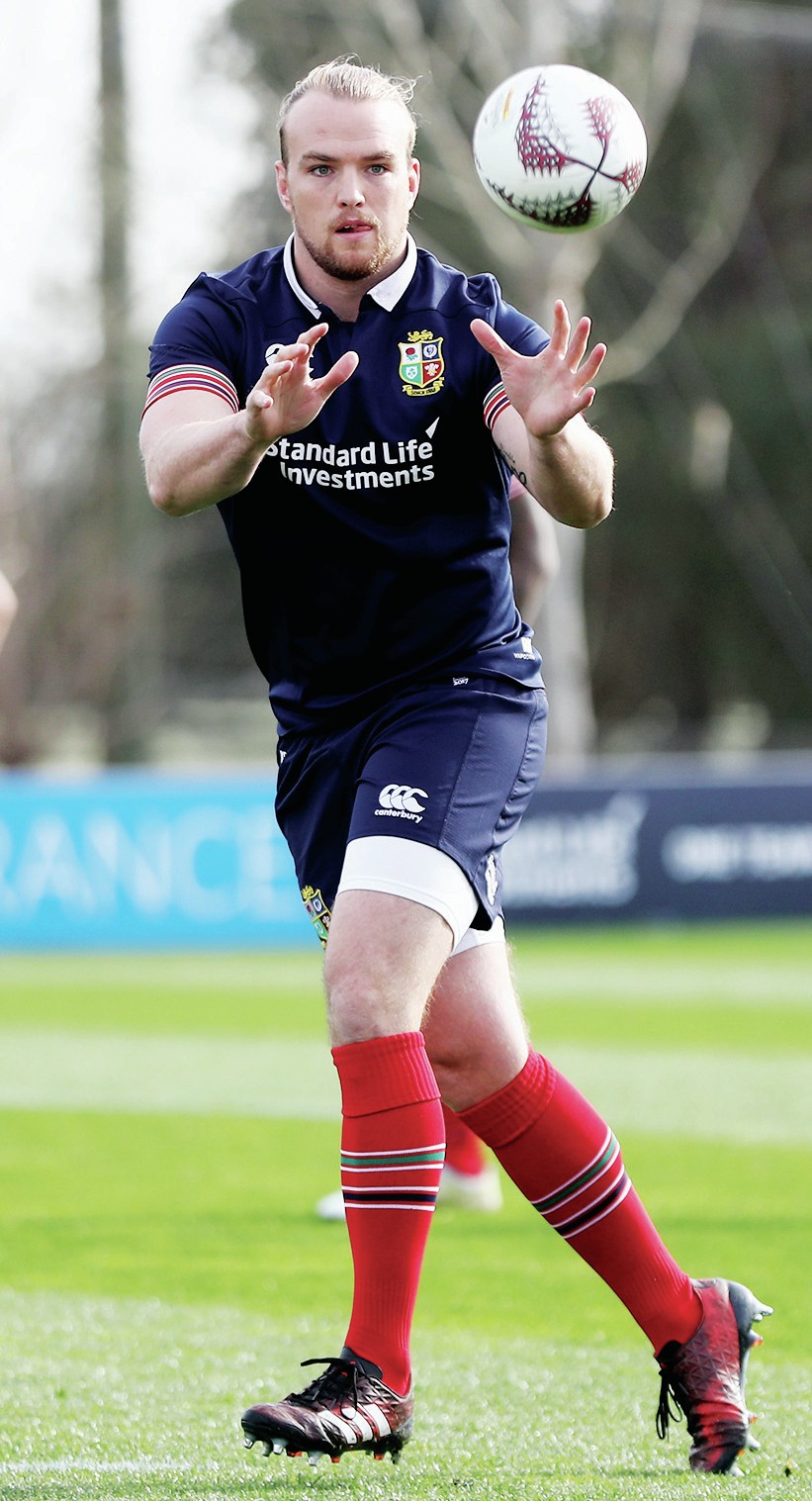
Dacey sat on the same bench that evening, resplendent in his Lions regalia but surplus to requirements. The Cardiff Blues hooker suffered the same fate on a different bench the following week, twiddling thumbs and kicking heels in Wellington while Rory Best went the distance, something which he rarely did for Ireland.
His improbable Welsh substitute could console himself with the knowledge that he had never expected to be there in the first place, all suited and booted in Lions’ finery for what might have been the entire match had early misfortune rendered Best lame.
Dacey had been picked but did not play and on that basis the Lions committee deemed him unworthy of a number. As the ultimate status symbol for any British and Irish rugby player, enrollment as a Lion is too precious to be given away for sentimental reasons but Dacey’s fate appears in a murkier light when compared with Clowes’.
He had left the City of Brotherly Love at an early age, sailing back across the Atlantic with his English mother who began a new life in Yorkshire. Clowes played his first game of rugby at 16 for Halifax Free Wanderers and six years later set sail with the first Lions for Australasia in March 1888.
“Dacey did not play and the Lions committee deemed him unworthy of a number”
The tour had been promoted by two ex-England Test cricketers Arthur Shrewsbury and Alfred Shaw. Clowes, an uncapped back row forward, had been given a £15 clothing allowance as had other players for an odyssey which would span nine months.
For reasons too Machiavellian to explain in a sentence or two, the unfortunate Clowes fell foul of petty politics swirling around Halifax’s Yorkshire Cup win at Dewsbury. The losers cried foul, shopped Clowes to the RFU who ignored the player’s promise to repay the £15 and banned him for life as a professional.
By the time they reached their decision, Clowes had set sail from Tilbury on the six-week voyage to Tasmania. Bob Seddon, the Swinton and Lancashire forward, had been made captain of a 20-man squad hopelessly inadequate for a schedule of 35 matches without one being permanently excluded.
“We cannot play Clowes at all,” he said at the time. “I think the RFU have dealt harshly with him. Had he known he would become a professional for accepting a comparatively small sum of money for his outfit he would not have taken it. He wanted to give the money back.”
The tour included 19 fixtures in Victoria, New South Wales and Queensland played under the laws of Australian Rules Football. Clowes is said to have appeared in one of those matches at Maitland on the Hunter river the day before Seddon drowned after his canoe capsized.
That Clowes took no part in any match under Rugby Union laws has never been disputed. The tour management were acutely aware that had he done so, the whole party would have been condemned on their return as professionals, such was the absurdity of the amateur regulations.
That the RFU reinstated Clowes as an amateur after the tourists returned late that year made it all the more absurd. They did so after the rest of the pioneering Lions signed affidavits declaring that they had ‘received no pecuniary benefit’.
JC Clowes is No. 25 on the official list of Lions, one reserved for those who have actually played for the best of British and Irish. Dacey didn’t play either but he got a damned sight closer as a tracksuited reserve and yet he is cast as the Lion who never was.
That explains Dacey’s absence but not Clowes’ inclusion. The same fate befell three other unused Welsh subs in New Zealand, including Tomas Francis and Cory Hill. The third, Gareth Davies, will at least get a shot in South Africa this summer of ensuring he returns with an official Lions number to his name.