
Connect with us

Features

My Life in Rugby: Matt Garvey – It’s bittersweet watching Bath win big prizes now

Matt Garvey, the former London Irish, Bath, Gloucester, Worcester Warriors and England Saxons second row, reflects on his life in rugby.

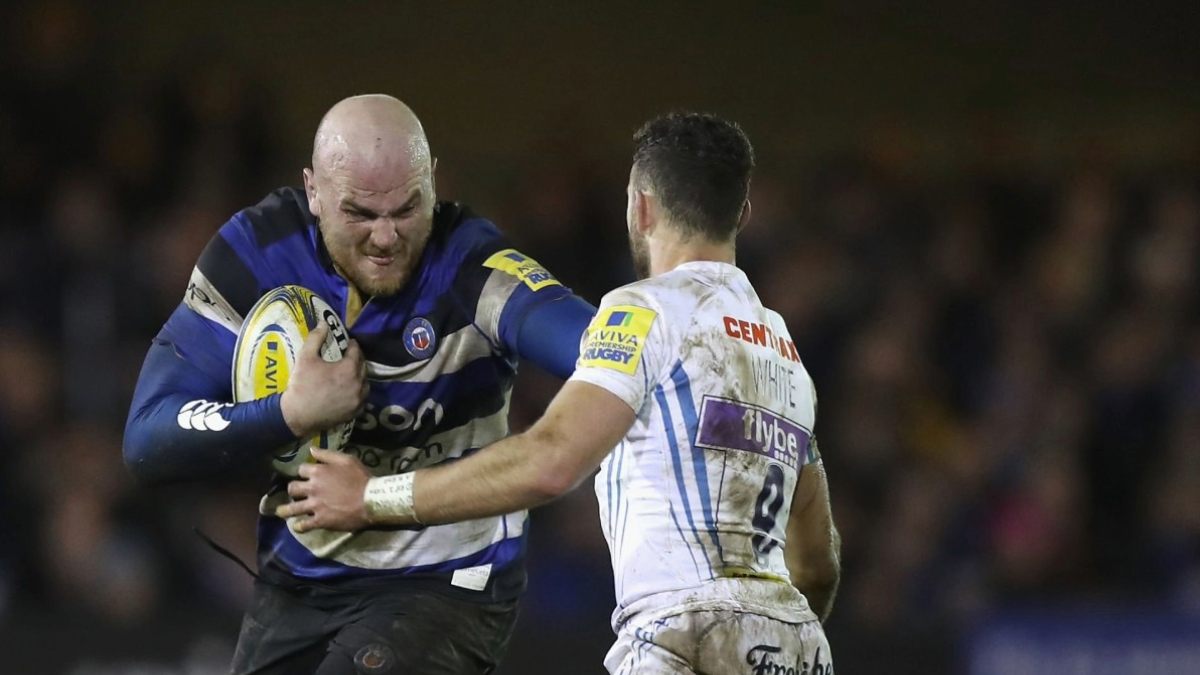
Matt Garvey in action for Bath

There are not many places in rugby quite like on a Friday night.

You drive down into the city, see the floodlights glowing over The Rec and suddenly realise just how much the club means to the place.

Coming from , I thought I understood what a big rugby occasion felt like, but Bath was different.

You could lose a derby against , stop for petrol afterwards and the bloke behind the counter would want to talk through the game.

Community

You could go for a coffee with your wife and somebody would stop you for a picture. Your neighbour knew the score, the postman knew how you had played.

At first I found that slightly strange. Then, the longer I lived there, the more I understood it.

Bath Rugby is a huge part of the community.

I spent seven years there, captained the club for two seasons, settled in the city with my wife and we had our two children there.

We reached three finals and although we never quite got over the line, it remains one of the biggest and most important periods of my life.

The frustrating thing is that I still cannot really explain why we didn’t win.

We had some brilliant players and all got on well. There was never an issue with egos.

But in seven years I played under four different directors of rugby and it often felt like every other season became another transition.

In 2015 we reached the playing a style of rugby that felt fresh and different.

Other sides adapted to it and perhaps we didn’t evolve quickly enough afterwards.

Matt Garvey in action for BathLeading the charge: Matt Garvey in action for Bath
PICTURE: Getty Images

Bittersweet

That is probably why watching Bath succeed now is slightly bittersweet.

I love seeing the club doing well because it deserves success, but part of you naturally thinks back to the quality we had and wonders why we couldn’t quite achieve the same.

My route into professional rugby was certainly not conventional. Until I was 16 or 17, I was a footballer.

My dad had been involved professionally in football as a coach and that was always my sport growing up.

Rugby only really entered my life when I moved into sixth form at The Campion School in Essex.

I turned up at about 6ft 4in and they basically wondered where this big bloke had appeared from.

The problem was that I was probably the worst rugby player anyone had ever seen.

I was competitive enough that I couldn’t accept being that size and being useless, so I worked at it.

As I got bigger and slower for football, rugby gradually became the obvious direction.

I then went to St Mary’s University in Twickenham.

One of the lads there was in the Academy and they needed a second row for an A League game.

He dragged me along and suddenly I was playing Monday night rugby for Saracens.

I played four or five games for them while still at university. Eventually I thought I needed proper men’s rugby, so I signed for , who were down in what was then the old National Three.

Best fit

The timing was ridiculous. I signed that contract on the Wednesday.

A couple of days later Saracens asked me to play against Bath at The Rec on the Monday night.

I played, got back home, went to bed and was in a nine o’clock university lecture the next morning when my phone rang.

It was the Saracens academy coach offering me a two-year contract. I had literally signed for Ealing a few days earlier.

After conversations with the clubs, London Irish ultimately became the best fit.

I was already in their geographical area and it was much closer to university. That was really where my professional career began.

Irish was an unbelievable environment for a young player.

There was a strong South African influence and everything was built around family, music and enjoying being together.

But there were also some serious players to learn from.

As a young second row, I had Nick Kennedy and Bob Casey ahead of me, while the wider squad had guys like the Armitage brothers and Topsy Ojo.

The calibre was enormous.

Influential

More importantly, there were people there who took an interest in helping younger players.

Toby Booth and Neal Hatley were hugely influential on me and when they later moved to Bath, that relationship played a big role in me making the same move.

Four of us left Irish for Bath around that period and suddenly I was going from one very different rugby environment into a city completely consumed by the game.

I loved it.

I also had the privilege of playing alongside and against some unbelievable forwards over the years.

Francois Louw was probably one of the best examples. At every breakdown he was an absolute menace.

You were simply thankful he was wearing the same shirt as you.

Then there were players like Alun Wyn Jones and Bakkies Botha, who I faced in Europe as a younger second row.

Alun Wyn was a master of all the dark arts and seemed to be everywhere.

Bakkies was different.

He was just a force you didn’t really want to make eye contact with. Playing against players like that when you were still establishing yourself was an education.

Injury

My final season at Bath was disrupted by injury and then Covid brought everything to a halt.

My contract was expiring and eventually Stuart Hooper was honest with me that the club was going in another direction.

That was difficult, particularly because there could hardly have been a worse time to be out of contract.

Then George Skivington rang. We had played together at London Irish and he was taking over at Gloucester.

He could only offer me three months initially because of uncertainty around their second row options.

It was not exactly the security you want with a family, but it put me back in the shop window.

I went there, made enough of an impression and earned another year.

The strange thing was spending seven years being taught that Gloucester were the enemy and then suddenly walking into Kingsholm and calling them team-mates.

Some of those Bath-Gloucester derbies had involved yellow cards, red cards and fights.

Now I was one of them.

Indentity

Unfortunately, Covid meant I never got the full experience of playing regularly in front of a packed Shed, which is something I would have loved.

But even with restricted crowds you could feel the identity of the place.

There are certain grounds where you could close your eyes and still know exactly where you are. Kingsholm is one of them.

From Gloucester I moved to .

By that stage I was 33 or 34 and you start viewing rugby through a slightly different lens.

I still trained and played as hard as ever, but you also become more conscious of helping younger players, challenging standards and leaving something behind.

We produced some really good results that season.

Steve Diamond came in and I thought he was brilliant for the environment.

Players responded to him because he knew how to get the best out of people.

Sad

Eventually I injured my back, needed surgery and knew that was it for me.

In some ways the timing proved fortunate because Worcester went into administration shortly afterwards.

It was desperately sad because once again there were great people throughout that club.

Retirement eventually led me into the Rugby Players Association.

My Player Development Manager knew I was still based around Bath and mentioned that his role working with Bath and was becoming available.

It felt like the perfect bridge out of playing. I had experienced contracts, injury, uncertainty, captaincy and everything else rugby can throw at you.

I wanted to use that experience to help current players avoid mistakes I had made and prepare properly for whatever came next.

I spent around four years as a Player Development Manager, eventually working with Bath and Gloucester, helping players around education, finances, mental health, contracts and life beyond rugby.

Rewarding work

I have now moved into the Head of Men’s Rugby role.

The most rewarding work the RPA does is often the stuff nobody hears about.

When somebody suffers what they think could be a career-ending injury, when somebody is in crisis or when a player suddenly finds themselves without a contract, those are the moments where support really matters.

We cannot tell those stories publicly because they are confidential.

But knowing you have helped somebody through one of the hardest periods of their life is hugely rewarding.

Players now have more of a seat at the table when decisions are being made about the game.

Having spent my career inside dressing rooms, that matters enormously to me.

READ MORE: My Life in Rugby: Kate Zackary – I was so proud to be captain of my country

Click to comment
 

Tackle the News

- Sign Up for our weekly Rugby Newsletter
Your subscription could not be saved. Please try again.
Your subscription has been successful.

The Rugby Paper

The best betting sites

Globusbet

BetpackUK casinos on Slotozilla

online casino
casinobonusesfinder

Full list of UK betting sites at BookiesBonuses.com kasyna akceptujące paypal

£5 deposit casinos UK

MAN-v-FAT-Rugby

free bets

online bookmakerFull list of UK betting sites at BookiesBonuses.com

GGBet
Banner Depicting Therealefl.co.uk an affiliate site for Licensed UKGC Football bookmakers.

More in Features