
“There’s an epidemic sweeping through the England team, but it isn’t catching.” Attributed to John Arlott (who else?), the exquisite one-liner sprang to mind as a flurry of butterfingered spillages helped India build their winning second innings total at The Oval last weekend.
On the other side of the world, meanwhile, there was something highly contagious about the British and Irish Lions and their selection policy: a condition best described as “rampant confirmation bias”.
Ireland claimed eight of the starting places for the first Test in Brisbane, with another three of their number on the bench.
By the time the circus pitched its tent on the Melbourne Cricket Ground square a week later, the emerald share had ticked upwards – nine starters, two “finishers” – and the story was broadly similar in Sydney.
Had the Leinster centre Garry Ringrose recovered from concussion in time to take his place in midfield, the sense of hegemony would have been overwhelming.
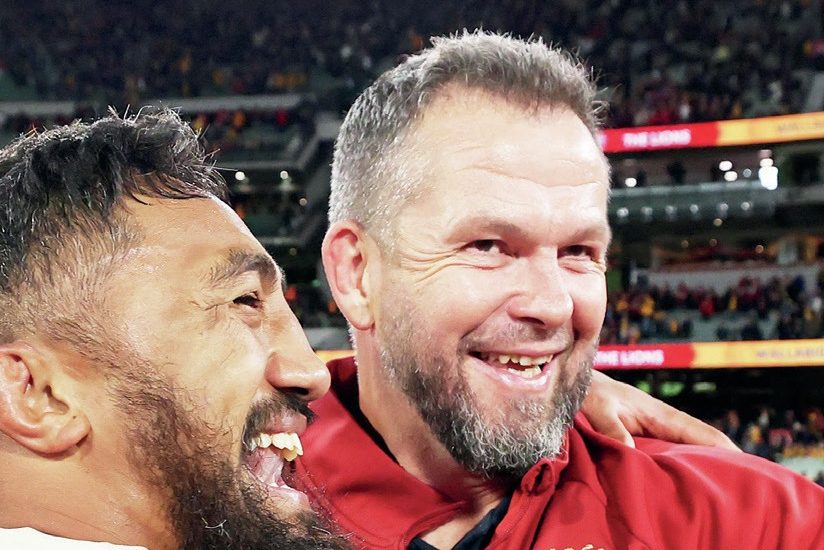
So it was that Andy Farrell, the head coach, followed the “devil you know” strategy of his forerunners, more or less to the last letter, comma and full stop – a condition that has been “catching” for decades.
Can we blame him for falling victim, given the compressed time scale of modern-day Lions tours? Probably not. But that doesn’t mean we should stop wishing for something less predictable.
Previous Instances
Here’s a quick resume. Clive Woodward picked eight of his fellow Englishmen for the opening set-to with a super-strong New Zealand side in Christchurch in 2005, even though Wales had just completed a Grand Slam and, on the coach’s own pre-tour admission, made a watertight case for mass representation in the Tests. (England, by the way, had finished below the fold in that Six Nations table.)
Spooling forward to the 2013 series in Australia, the uber-pragmatic Warren Gatland stuck like glue to the players over whom he was presiding in his day job as coach of Wales.
There were eight of them in the first Test, the number rising to double figures for the decider in Sydney.
Four years later in All Black territory, Gatland put more distance between himself and his charges, partly because they had found the 2017 Six Nations about as much fun as a bout of do-it-yourself dentistry. Even so, there was a significant Welsh presence in the games that mattered.
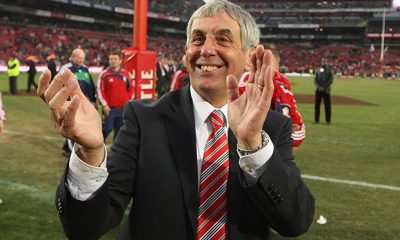
Hang on just a minute, you say: didn’t Ian McGeechan, the most revered Lions head coach since St Carwyn of Stradey, cast his net far and wide in 1997 and 2009?
Indeed he did, but as a Scot, he was hardly in a position to do otherwise. And remember this: in 1993, he included the entire Scottish tight five in his squad for the tour of New Zealand. Oh well. We all make mistakes.
“It was no surprise that the head coach followed the ‘devil you know’ strategy of his forerunners”
This time round, the vast majority of close selection calls went green. Was Bundee Aki really a better bet at No.12 than the vastly more sophisticated Sione Tuipulotu? Puhleeese.
(But then, Farrell was once part of an England coaching team who somehow came to believe that Brad Barritt and…er…Sam Burgess were a centre partnership made in heaven, so perhaps we shouldn’t be surprised.)
Was Andrew Porter, a long way short of his best just recently, truly worthy of more Test starts than Ellis Genge, the form loosehead prop on tour?
James Ryan rather than Scott Cummings? James Lowe ahead of just about anyone else? Nah. Not from where your columnist was sitting.
In fairness to Farrell – and there are very good reasons to be fair, not least because he flew home with a series victory in his hand luggage – he shows clear signs of growing into the Lions role, just as McGeechan and Gatland did.
Armed with a brutally competitive yet wholly engaging personality and blessed with a natural authority that might have been custom-built for an assault on the rugby citadels of New Zealand in 2029, the incumbent is so obviously the man for the job, the board may as well unveil him now.
Gregor Townsend
Yet those of us who insist that Gregor Townsend has much to offer – a Scot who more than earned his place in a Lions Test side under McGeechan and has since landed some meaningful blows as head coach of his national team – can still spend a fun few minutes imagining how he might have differed from Farrell in assembling his forces on Wallaby territory over recent weeks.
Darcy Graham, the Shane Williams de nos jours, would have been in the squad from the get-go despite his size, or lack of it.
The scrum-half Ben White would have been there too; the rejuvenated Jamie Ritchie would have been the subject of serious discussion at the very least; and Cummings would have won a Test cap.
But that’s the way of it. Scots for the Scottish amounts to the same thing as Irish for the Irish, even when the particular “Irishman” in charge is as English as Lancashire hot pot.
Will any future Lions side be picked on form alone, or will it forever be a case of who-you-know as much as what-you-do? There’s a question.
READ MORE: Jeremy Guscott – Once a Lions series is won, it’s hard to go again