Paul Rees talks to Lawrence Dallaglio about the crucial selection choices facing British and Irish Lions coach Andy Farrell

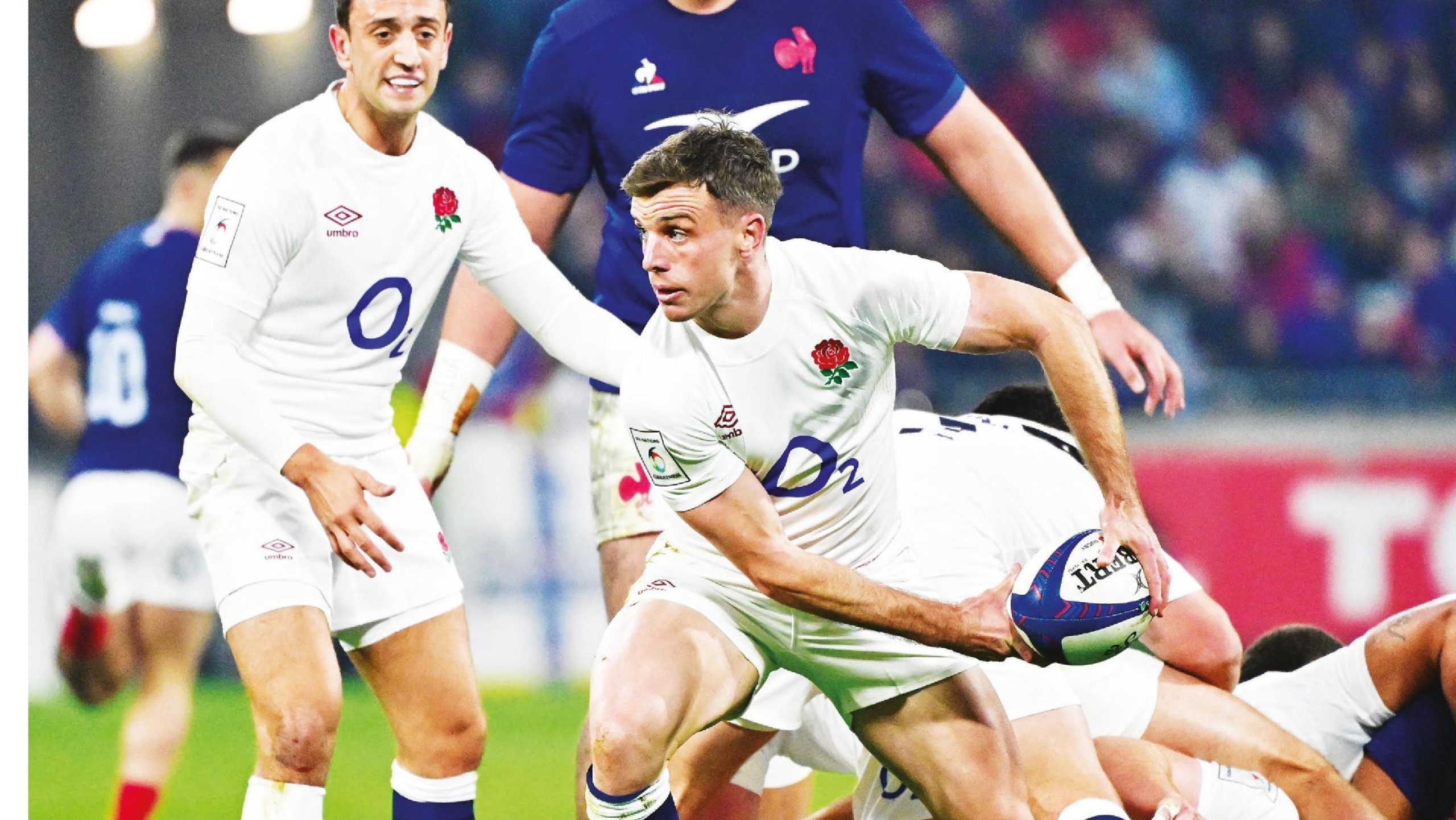
George Ford is one cap away from becoming the seventh player to reach a century for England, and the Sale outside-half will be hoping that he does not reach the landmark in Argentina this summer.
The Lions next month announce their squad for the summer tour to Australia and Ford, even though his only appearance in the Six Nations was off the bench against Wales in the final round, exactly a year since he last started a Test for his country, is a contender in what will probably be his last chance to pull on the red jersey having missed out in 2017 and 2021.
Thirty players in the four home unions have reached 100 caps for their countries but only two, England scrum-half Danny Care and Scotland full-back Chris Paterson, have not played for the Lions.
Is Ford, who showed his value to Sale in the last couple of rounds of the Premiership following his cameo in Cardiff, destined to join them?

He has a chance to show Andy Farrell, someone he knows well having been in the same rugby league and union teams as a boy with the Lions’ head coach’s son Owen, another contender at outside-half even though he has not played for England since the 2023 World Cup and is playing in France, that he merits inclusion.
Ford and Farrell Options
“I would not rule out George Ford or Owen Farrell,” said Lawrence Dallaglio, the former England captain who is now a television commentator and analyst, on duty this weekend for Premier Sports.
“It would be a shame for Ford if he finished what has been an outstanding career without a Lions tour.
“We’re going to have a hell of a squad and some great players will miss out.”
“Finn Russell is head and shoulders the best 10 in the northern hemisphere, if not the world, never mind the late conversion he missed against England in the Six Nations.
“After him, there comes a huge drop in experience when you look at the outside-half contenders who were involved in the Six Nations – Fin Smith, Sam Prendergast and Jack Crowley.

Other Fly-Half Options
“Smith was a bolter before the start of the tournament but his stock has risen dramatically in the last couple of months without him playing spectacularly well – he is someone who does what he does.
“There is also Marcus Smith, who was moved to full-back by England and so provides versatility, but Ford and Farrell bring a lot of experience.
“Farrell made the choice to step back from international rugby and things have not gone well for him at Racing 92 because of injury, but he has been on three Lions tour and he sent the 2017 series in New Zealand to a decider.

“Morne Steyn was 37 when he kicked two penalties for South Africa to clinch the 2021 series against the Lions. This tour is about winning the Test series, not developing players. The coaches know that and will be looking for Test match animals to drive standards.”
Squad Size
The Lions have picked a squad of 37 players on two of their last three tours, to South Africa in 2021 and to Australia 12 years ago.
In between, 41 went to New Zealand. The splits between backs and forwards were 21-16 and 22-19, but with many teams regularly opting for six forwards on the bench and South Africa often naming seven, it is more likely to be 22-15 this year.
That would place an emphasis on versatility behind and at outside-half, Marcus Smith and Farrell, who has considerable experience at inside centre, have an advantage: Russell, Ford, Crowley and Prendergast are specialist 10s.
Andy Farrell has gone for a 6-2 split on the bench in his time with Ireland, but rarely. They did so once in this year’s Six Nations, when Simon Easterby was in charge with the head coach on Lions duty, and the time before that was against England at Twickenham 13 months ago.
The tactic has become a talking point in the game following South Africa head coach Rassie Erasmus adopting it in 2018, but he was not a pioneer.
Australia had six forwards on the bench in the final Test against the 2013 Lions, not that it did them much good, and it was widely used in the 2015 World Cup, not least by Eddie Jones‘s Japan.
Versatility
If the Lions opt for 15 backs, players such as Blair Kinghorn, Elliot Daly, Marcus Smith, Tommy Freeman, Garry Ringrose and Tom Jordan would have an enhanced value because they have been capped in more than one position.
It would allow for two players to be chosen in six of the positions with three scrum-halves.
Four years ago, the Lions took two full-backs, four wings, four centres, three outside-halves and three scrum-halves. There was not much of an emphasis on versatility with only Farrell starting in different positions: Daly was picked at 13 throughout.
Kinghorn and Hugo Keenan are the leading contenders at full-back but with Toulouse at the head of the Top 14 and fancied to make the final, Kinghorn would miss the opening three matches of the tour.
Daly would provide the most experienced cover in the position, but would he be selected primarily as a wing or a centre?
Freeman, Darcy Graham and Mack Hansen are the leading right wings with James Lowe and Duhan van der Merwe heading the charge on the left.
Centres
Huw Jones should be nailed on at 13 but, with Ollie Lawrence injured, Ringrose looks the next in line, although Daly is an option.
At 12, Sione Tuipulotu, if fit, looks the Test starter ahead of Bundee Aki and Robbie Henshaw.
If only two outside-halves are taken, and assuming Russell is one of them, do the Lions opt for experience alongside him, Farrell or Ford, reward Fin Smith’s performances in the Six Nations, take a punt on Prendergast, first capped by Andy Farrell in the autumn, or opt for Marcus Smith given his ability to cover full-back?

Kinghorn would be an option at 10 having been capped there by Scotland, but if backs are chosen it is hard to see both Marcus Smith and Daly being selected with Freeman covering centre from the wing.
A lot will come down to whether the Lions will anticipate going 6-2 on the bench in the Tests, something they may well do given their expected advantage at forward and the options they have with so many players comfortable in both the second and back rows.
Bench Impact
“It is becoming a different game,” said Dallaglio.
“The way the benches are now, you need forwards who can play in the backs, as Ben Earl did against Wales, and Henry Pollock clearly has the skills and the pace to go there or on the wing.
“You are now looking for wing forwards to have the skills of three-quarters just as you want backs to be able to jackal.
“What is important to bear in mind in all this is that there are two types of Lions: there are Lions and there are winning Lions.
“There have been a number of tours since the first one in 1888, but how many have been winning ones? It is a unique challenge against one of the best teams in the world.
“Australia are not as strong as they were, but they are not to be underestimated. This is a one-off project for the current coaching team and it is 12 years since the Lions last won a series.
“That has to be a major factor in selection and no stone will have been left unturned in terms of picking the very best squad to win the series.
“On my first Lions tour, to South Africa in 1997, Ian McGeechan, Jim Telfer and Fran Cotton made up the management.
“They had been there and done it and had that understanding of winning, which is so important.”
Champions Cup Shop Window
This weekend’s first knock-out round of the Champions Cup gives Farrell and his coaches the opportunity to assess candidates in matches close to Test match intensity.
Prendergast and Marcus Smith were yesterday in opposition at Croke Park before Munster‘s visit to La Rochelle and Leicester’s trip to Glasgow.
“I know Ian McGeechan, Warren Gatland and Shaun Edwards very well and have had many conversations with them,” said Dallaglio.
“It is a shame that Shaun, who is at the peak of his coaching powers after a sixth Six Nations title, was not available for the Lions, with whom he has unfinished business this summer because of his contractual obligation to France.
“They all told me that ahead of a Lions tour they spent a lot of time looking at players when they were involved in matches away from home.
“Anyone can put on a decent performance at home, but to be a winning Lion you have to be able to do it away which is why there will be attention on how George Ford goes in Toulouse.”
Australia Challenge
The Lions have made four full tours to Australia, the first in 1899 and the second 90 years later when they lost the first Test, made multiple changes to the starting team and adopted a harder edge to clinch the series 2-1.
The reverse happened in 2001 when, after winning in Brisbane, refereeing decisions cost them in Melbourne before Justin Harrison’s lineout steal proved decisive in the closing minutes of the final Test.
The Lions won the first Test in 2013 and the Wallabies took the second when Adam Ashley-Cooper scored the only try of the match.
The tourists turned it on in the decider, muscling up to win 41-16, and three players involved that day, Owen Farrell, Taulupe Faletau and James Slipper may be involved in this year’s series: Leigh Halfpenny, Dan Lydiate, Mako Vunipola, Dan Cole, Richie Gray, Justin Tipuric, Conor Murray, Manu Tuilagi and Rob Simmons are the others involved that day who are still playing.
A year ago, the series looked a foregone conclusion.
Australia were reeling after failing to reach the knock-out stage of the World Cup for the first time and were on their third head coach in less than 18 months after the resignation of Eddie Jones.
Joe Schmidt

Joe Schmidt took over, and after a difficult Rugby Championship, when they finished bottom, they started their European tour with victories over England and Wales before going down to Scotland and Ireland after competing hard.
Schmidt achieved success with Ireland by adopting a highly structured gameplan in which risk was minimised, but with Australia’s strength lying behind the scrum his approach is now markedly different and they are at their most threatening when play becomes unstructured.
The Lions should have the advantage at forward where they are brimming with options and experience, from Andrew Porter, Ellis Genge and Pierre Schoeman at loosehead prop to Tadhg Furlong, Zander Fagerson and Will Stuart on the tighthead.
At hooker, Dan Sheehan, Jamie George, Dewi Lake, Rory Kelleher and Luke Cowan-Dickie are contenders and in the second row Joe McCarthy, Tadhg Beirne, Maro Itoje, Ollie Chessum, George Martin, Dafydd Jenkins and Grant Gilchrist are leading options with James Ryan, Will Rowlands and Jonny Gray on the undercard.

Beirne, Chessum and Martin have played in the back row, as have Itoje and Jenkins to a lesser extent, and that is an area worthy of a selection meeting on its own given the choice.
Back Row
Ireland have Caelan Doris, Jack Conan, Josh van der Flier and Ryan Baird and in the Scottish corner are Rory Darge, Jamie Ritchie and Matt Fagerson.
The back row is Wales’s one area of strength through Jac Morgan, Faletau, Aaron Wainwright and Tommy Reffell while England’s claimants are numerous: the Curry brothers, Earl, Tom Willis, Chandler Cunningham-South and Pollock all featured in the Six Nations which Sam Underhill missed through injury and Jack Willis was unavailable for.
There are other England internationals based in France including Farrell, Kyle Sinckler, Joe Marchant, Henry Arundell, Courtney Lawes, Dave Ribbans and Lewis Ludlam. Ben White, Jonny Gray and Kinghorn are three of Scotland’s Six Nations squad earning their livings in the Top 14 along with Wales’s Rowlands.
“Everything is open and we will see how the dynamics unfold,” said Andy Farrell.
“Who’s fit, who’s available, what do we need at the start? Are we able to miss a week or two? Will people coming in late add or detract from the dynamics of the squad? All these things come into play.”
Squad Make Up
When the Lions were last in Australia, Wales supplied the most players, 15, five more than England with nine from Ireland and just three from Scotland.
England and Ireland look set to dominate this year with Scotland well represented and only Lake and Morgan Welsh probables.
“The Six Nations tends to be the main criterion when it comes to selection for the Lions,” said Dallaglio, “but no stone can be left unturned in ensuring that the very best squad is picked.
“There have been very few winning tours for a reason beyond the quality of the opposition.
“You are playing away and four countries that do not spend a lot of time together and do not particularly like each other, until you do spend time together and you realise a lot of your DNA is the same, combine in a short space of time.”
Captaincy
And then there is the issue of the captaincy. Doris has long been the favourite given his association with Farrell and the value of relationships when preparation time is so short, but Itoje’s stock rose during the Six Nations when he led England with growing authority.

Farrell knows Itoje from his time at Saracens in the 2010s when the second row was coming through the club’s academy.
Itoje and Doris are both likely starters, although a feature of a Lions tour is how perceptions can quickly change with reputations waiting to be made.
“We’re going to have a hell of a squad,” said Farrell.
“Some great players are going to miss out and you are going to feel for them. Then we will see where the real competition is.
“Who will step up to the plate when they get the chance to put the shirt on. The competition that will be going on throughout the squad during the tour is what I am really looking forward to.”