
Connect with us

Features

Bloodied, bandaged but ready for battle

delves into some of rugby’s most enduring images, their story and why they are still so impactful

Iconic Rugby Pictures: PART 8 Jean-Pierre Rives injured March, 1983

What’s happening here?

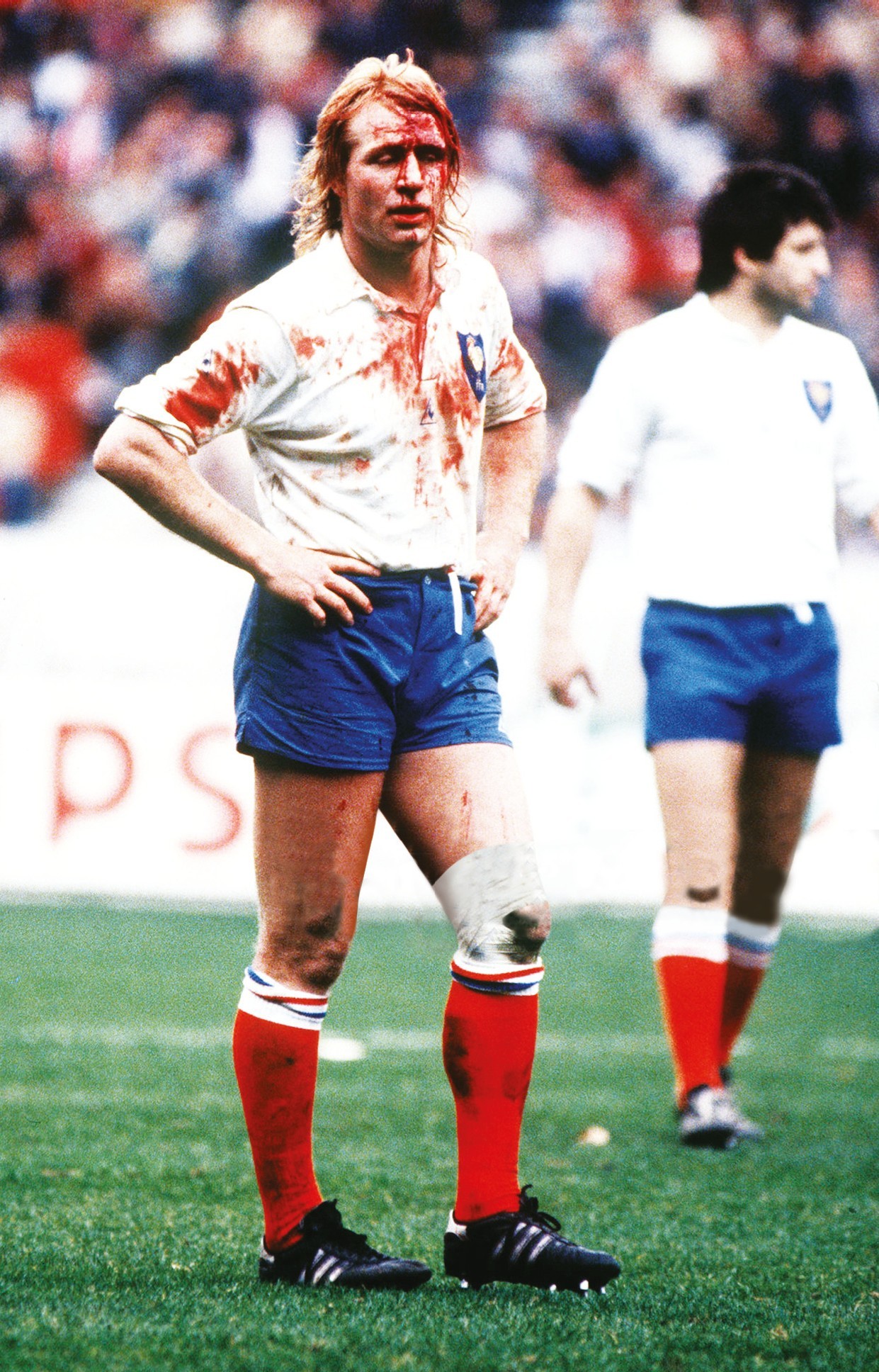
At first glance not a lot, it’s the ambience of this picture that is everything. skipper Jean-Pierre Rives is taking a ‘moment’ after a hectic start in one of his last games as France captain, against at the Parc des in 1983. He has picked up a cut to the head – more of which anon – and is bleeding profusely, but not for a second does he lose his French chic and cool.

Rives is France’s national hero, a strawberry blonde D’Artagnan who charges into battle with a smile and can never be conquered, never defeated. Early in his career he was dubbed Le Casque D’or – golden helmet – by French commentator Roger Couderc so ever present was Rives where the battle was fiercest.

What’s the story behind the picture?

JPR – yes rugby could boast two of them around this time – might have looked like a Parisian playboy or a summer deckhand crewing yachts around the Mediterranean but as a rugby player he was hard core.

To prosper as flanker for over a decade in the French when you are just 5ft 10 inches and barely 13 stone, well you have to be nails. It says much for Rives –my first rugby hero along with Fergus Slattery – that it never remotely occurred to me that he was sometimes the smallest guy on the pitch. He played like a giant.

Rives was born and raised in and initially his sporty parents pushed him towards athletics and tennis. He was exceptional at the latter and it takes no stretch of the imagination to picture him tearing it up at Wimbledon against Borg or McEnroe although in temperament and physicality I fancy he was a prototype Rafa Nadal.

But in that part of France, at least in the 70s, rugby exerted a huge gravitational pull. All the best sporting talent were drawn to rugby and soon he was playing for Stade Beaumontais, and then of course Stade Toulouse where he played during his halcyon years (1975-81) before moving to Paris, partly to pursue his sculpting career.

Rives won nothing with Toulouse – Beziers were the power in land during his pomp – and Rives played in only one French Cup final, in 1980 when they lost 10-6 to Beziers. His was a brutally hard slog in a middling Toulouse side but great preparation for Test rugby when he found hiself operating behind a much more dominant front five. Only then could the full glory of his back row combination with Toulouse colleague Jean Claude Skrela be appreciated.

What happened next?

A superb Test career spanning 59 internationals, including 34 as captain, which encompassed victories over every team except . Not only was he admired for his talent but also his sense of fair play on the pitch and comradeship off it. Very modern looking but old school, his was the first name on the sheet whenever a World XV or team were fulfilling a gala fixture. The world’s favourite Frenchman.

Why is the picture iconic?

This image is surely the ultimate depiction of Hemingway’s dictum of grace under pressure, nonchalance and even disdain in the face of pain and blood. A little bit of claret was never going to bother him. To use a boxing term Rives was a ‘bleeder’ – he cut very easily around the eyes and face. This was pas normal.

But there is more. Rives, subconsciously, has become his own work of art here, like one of the sculptures he shapes these days in a disused railway shed in a north Paris suburb that he uses as a studio.

The picture works particularly well because France, as they often did back in the day, were wearing white jerseys not blue, a hangover apparently from black and white TV days which demanded that at least one team wore a much lighter jersey than the other. The dramatic impact of the splattered blood would have been totally lost had that jersey been blue.

Look also at the contrast with the pristine white jersey of prop Robert Paparemborde in the background. It’s very early in the game yet already the skipper has been in the wars while ‘Paper’ looks like he is still completing his warm-up.

“It’s very early in the game yet already the skipper has been in the wars’”

There are other nuances. In an era when our shorts in Britain were virtually heavy duty tent canvass the French opted for the those ridiculously flimsy cotton things you wore to the beach, held together by a drawstring which JPR characteristically declined to tie, relying on the smallest of fastening buttons. Live dangerously.

And look at the left knee bandaged. By this stage of his career his body was in pieces despite outward appearances. Under that bloodied jersey is a heavily strapped right shoulder which had been giving him hell for years.

And finally a little detail you might not have known. That cut came actually from an accidental clash of heads with teammate Serge Blanco! Friendly fire. It says everything about JPR that even armed with that knowledge the impact of the picture remains.

Footnote: Rives finally bowed out a year later when, despite his chronic shoulder injury, he led France in their Grand Slam decider against at Murrayfield. It was not to be, Scotland prevailed and his day was done.


Tackle the News

- Sign Up for our weekly Rugby Newsletter
Your subscription could not be saved. Please try again.
Your subscription has been successful.

ticketmaster

The Rugby Paper

The best betting sites

Globusbet

BetpackUK casinos on Slotozilla

the best minimum deposit £5 casinos casinobonusesfinder

Full list of UK betting sites at BookiesBonuses.com kasyna akceptujące paypal

MAN-v-FAT-Rugby

free bets

online bookmakerFull list of UK betting sites at BookiesBonuses.com

GGBetBanner Depicting Therealefl.co.uk an affiliate site for Licensed UKGC Football bookmakers.

More in Features