
THE MAN TRULY IN THE KNOW

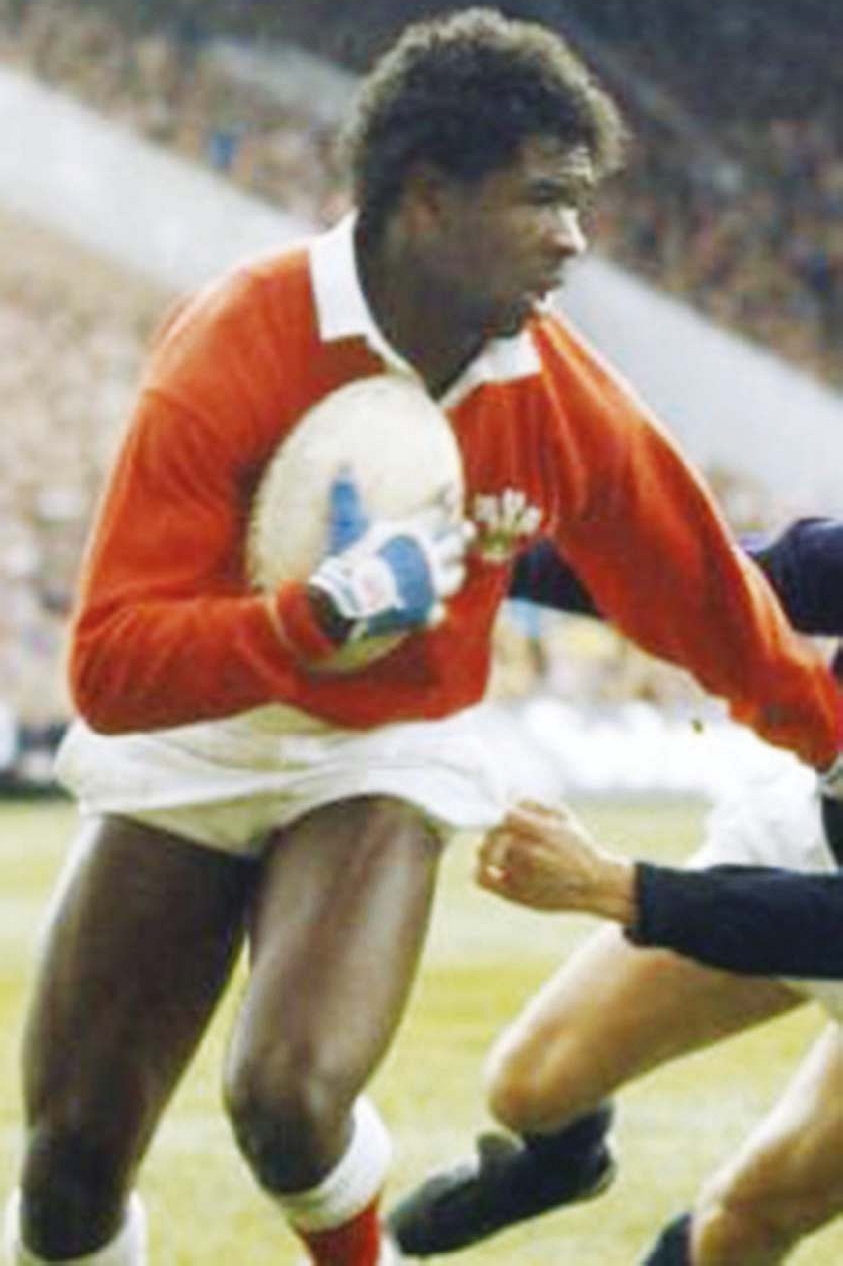
Glen Webbe will forever be remembered as the first British player to score a hattrick of tries at the World Cup which is just as well. The man himself is happy to take other people’s word for it.
More than three decades have come and gone since Webbe touched down in the history book on a crisp late autumn afternoon more than 12,000 miles from home. This is not another hackneyed tale of time dimming the memory but of a savage blow to the head shattering one man’s ability to remember what happened next.
The fate that befell Webbe on Wednesday, May 29, 1987 at the Showgrounds Oval in Palmerston North, as inflicted by a reckless Tongan opponent, shows how far rugby has come in its understanding of concussion. And not before time.
At that first World Cup, it was almost as if nobody had much of a clue, frighteningly so in Webbe’s case.
The full story is told by several of his team-mates in a new book, Behind The Dragon by Scrum V presenter Ross Harries, a 464-page social history of Welsh rugby as told by those who put their bodies on the line, the players.
A violent, head-first assault from Tonga full-back Tali Ere’aki demanded instant dismissal. The referee, David Bishop of New Zealand, allowed him to carry on as though nothing untoward had happened to the disbelief of Webbe’s colleagues.
How some of them remember the incident, as recorded in Harries’ enlightening book, captures their sense of relief at a highly popular player avoiding serious injury.
John Devereux, the Wales centre who went to League and became a dual Lion: “We had to pull this guy’s head out of Webbey’s chest. He’d speared him. Literally tackled him with his head. It was a brutal hit.”
Mark Ring, Devereux’s midfield partner: “Webbey and I were very close and I knew he wasn’t right. I told our captain, Dick Moriarty, that he was struggling and he said: ‘Just look after him. Keep the ball away from him.’
”We had to pull this guy’s head out of Webbey’s chest. He’d speared him. It was brutal”
“Tonga put an up-and-under up and I was back chasing it with the wind swirling all over the place. By the time I gathered it, I knew their defence was up so I instinctively rolled the ball out to one of our players.
“It was Webbey. Having just said I’d keep the ball away from him, I’d gone and thrown it to him. Moments later he’s gone and scored the most sensational individual try I’ve ever seen. He’s gone from the middle of the field in his own half and ended up under the posts.”
Ring: “I had to scream at him to ground the ball because his head was in the shed. I went up to congratulate him and he looked at me through narrowed eyes and said: ‘I know you. Where am I? It’s you Ringy. Who are all these other people?’
“Then he started crying. I’d never seen a grown man cry before. He was in a right state, properly traumatised. He had to go home.”
Adrian Hadley, given a close-up view from the opposite wing: “At one point he (Webbe) was running in completely the wrong direction and it was only when he saw Paul Thorburn, our full-back, that he turned round.”
Robert Jones, the scrum-half who would play for the Lions two years later:
“The fact that we were wearing green didn’t help. Glen got up from a ruck and went and stood in their defensive line. At one point someone said: ‘He doesn’t know who he is.’
“So I piped up: ‘Tell him he’s Barry John.’”
Jonathan Davies, substitute fly-half for Swansea’s Malcolm Dacey: “He kept asking me what the score was in the dressing-room. I told him he’d scored a hat-trick and he was just looking at me blankly. He broke down after a while. It was actually quite scary.”
Perhaps not as scary as Webbe being left on the pitch but that’s how it used to be. Only two substitutes were allowed at that first World Cup and Wales had used both theirs, hence the decision to leave a concussed player to fend for himself.
Mercifully, it would never be allowed to happen today.