“It’s hard to put into words what rugby means to me” – Leigh Halfpenny
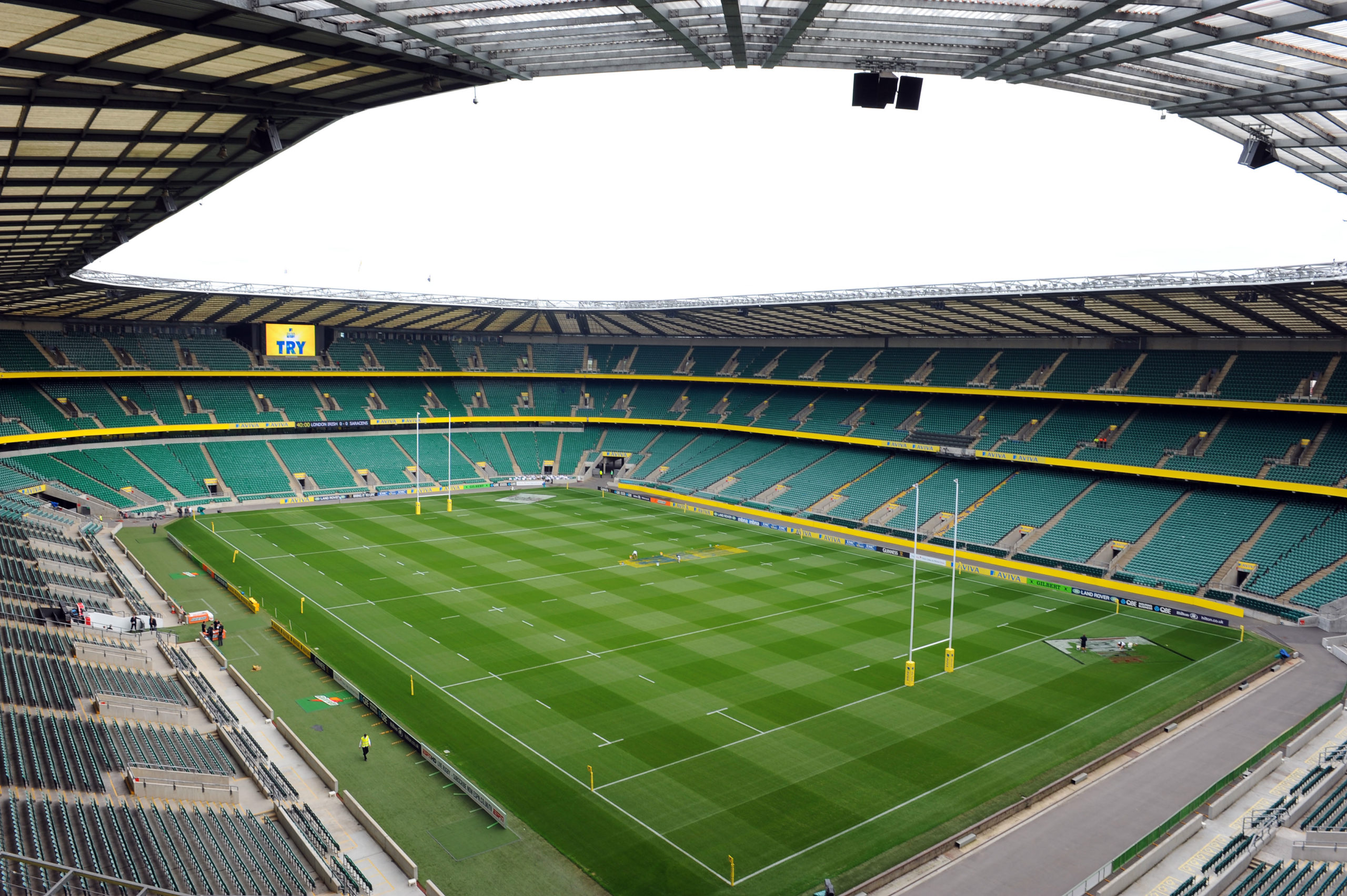
Red clock time at Twickenham, Saturday February 25, 2012 and the visitors are holding on for grim life.
England are about to stretch the red barricades beyond breaking point leaving Wales to fire the one missile left at their disposal.
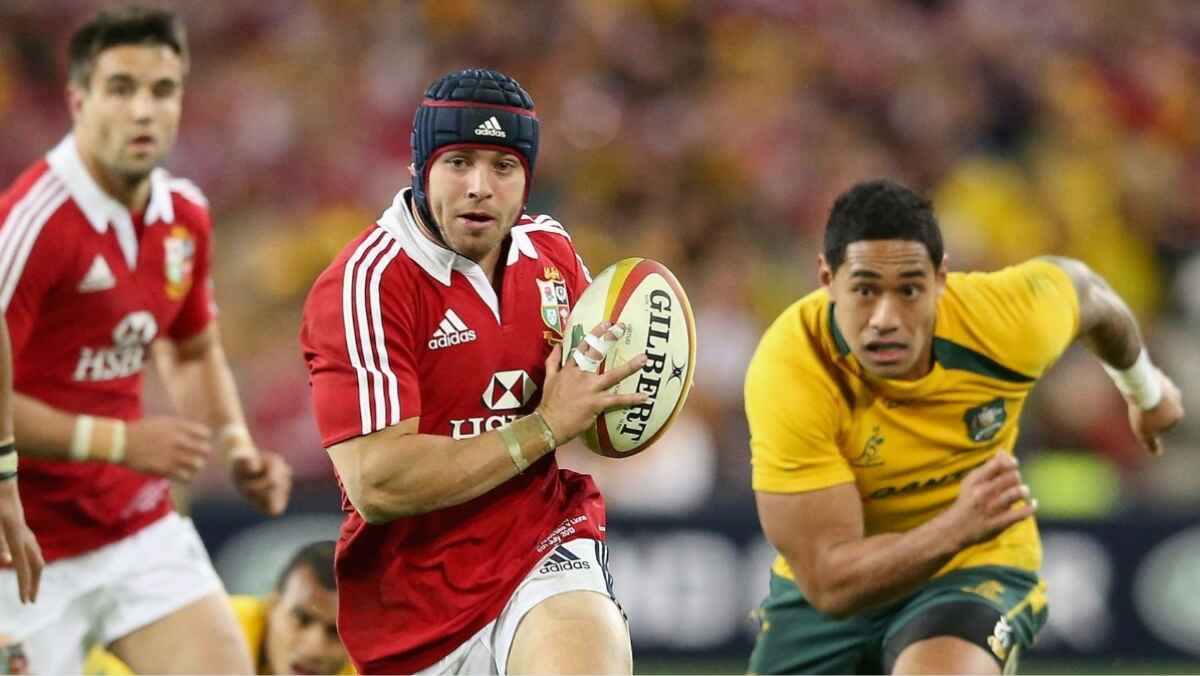
A slight figure in a red scrum-cap goes scudding towards the danger zone like a low-level drone and gets there just as David Strettle in full flight sees the try line gaping a stride or two away.
A second later England’s right wing doesn’t know what’s hit him.
Crumpled heap
Leigh Halfpenny, having made the tackle against overwhelming odds, lies in a crumpled heap.
Strettle crashes to earth close enough to the line for the referee, New Zealander Steve Walsh, to refer the try-or-no-try decision to the TMO.
The seconds tick by, each more tortuous than the one before.
The verdict – no try based on inconclusive evidence to the contrary – leaves Walsh clear to blow for time.
England curse their luck at being denied an honourable draw, Welsh relief bursts into the ecstasy of securing a first Triple Crown at Headquarters.
Everyone is out of his and her agony except for the one who has made it all possible.
Halfpenny is still in a crumpled heap when some of those whom he has rescued try to engulf their savior only to find a cluster of medics blocking their way.
Victory soothes his pain more effectively than a shot of pethidine.
Special
If ever one tackle embodied what rugby meant to Leigh Halfpenny, that surely was it.
Fifty years from now, youngsters eager to learn what it requires to reach the highest level should be shown the final play from Round Three of the Six Nations 2012.
It takes someone special to do what Halfpenny did that day, a mission above and beyond the call of duty which saved the Grand Slam duly clinched against France three weeks later from derailment at Twickenham.
Far from being a one-off, he kept doing it so that the salvage act virtually became par for the most perilous of courses.
The man himself always dealt with praise the same way, shrugging it off with a polite smile: ‘All part of the job.’
The game meant so much to him that far from being deterred by the dangers lurking in an ever more violent arena, he embraced the reality and never once complained about it, at least not publicly.
Heaven knows, he had plenty to feel aggrieved about when Wallaby centre Samu Kerevi’s hit, late and high at Cardiff in 2018, left his victim so badly concussed it took him nine months to recover.
During that bleakest of periods he gave a glimpse of what he went through: “There are times when you don’t know if you are going to come back the same. You have those doubts but you try to remain positive.”

Savage price
Halfpenny paid a savage price for his bravery, as Jonny Wilkinson had done before him.
The chunks taken out of their careers were measured not in weeks or months but seasons, a toll in the Welshman’s case which, at a rough estimate, cost him between 30 and 45 Tests.
He would be embarrassed at being thought of as exceptional, let alone as some kind of latter-day Defender of the Faith, mainly for Wales, of course, but also for the Lions, famously so as the man-of-the-series in Australia in 2013.
Failing to make the 23 for the last two Tests in New Zealand four years later hit him hard, another indication of how much the game meant.
A man of unfailing humility, Halfpenny learnt from an early age to take adversity on the chin.
Ospreys decided he was too small to survive in the jungle of pro rugby and released him from their academy.
Neath thought him worth a shot which led to Cardiff, Toulon, Scarlets, Crusaders, Harlequins and back to Cardiff.
Mastering an art
He began mastering the art of goalkicking as a small boy in Gorseinon, a town on the western edge of Swansea famous where all manner of sporting greats learnt their trades like champion boxer Colin Jones, footballer Leighton James, Welsh rugby captains Norman Gale and Richard Moriarty and the dual cross-code Lion, Lewis Jones.
Whenever confronted with a long-range goal to win a big match, like the semi-final against France in Auckland during the 2011 World Cup, Leigh had his own way of coping with the noise.
He’d visualise being back home on the pitch at Gorseinon rugby club, lining up a tricky shot and seeing his granddad Malcolm standing behind the posts.
For body-on-the-line devotion to the cause, Halfpenny emulates Wilkinson as the model professional.
Neither strutted Ronaldo-like in self-aggrandisement, nor did they stoop to the hissy fits thrown by some so-called superstars.
How fitting that in a week when his beloved Aston Villa reached a European final, the heir to the throne found time to pay glowing tribute to the boy from Gorseinon.
“Your dedication to Welsh rugby has inspired so many,” Prince William wrote in his capacity as Patron of the WRU. “Your achievements will long be remembered.”
READ MORE: Peter Jackson: Pair of Wasps on a collision course




The best betting sites