

The prospect of England facing Australia at Twickenham in just under three weeks with a backline in which their 2025 Lions contingent of Tommy Freeman, Fin Smith, Alex Mitchell, Marcus Smith, and Elliot Daly will have had very little game time, might be considered to be a difficult dilemma for Steve Borthwick.
However, head coaches like Borthwick plan so far ahead that they know what’s coming, and the pitfalls they need to avoid.
The only factors that cause a selection rethink are usually big shifts in form, or injuries.
Form is a variable, because when you have an old hand at international level, a coach knows what they can do, whereas a player who is not yet fully established at Test level does not have that track record behind them – and is often easier to drop.
Continuity
People can make what they want out of England’s short preparation time for this autumn series, but stipulated rest periods after a Lions tour are good news for players, so they can recharge the batteries.
It’s true that having only two weekends to get up to international speed will be a challenge for some of Borthwick’s core players, but those matches will give the head coach a register of whether physically and mentally they are ready to go again.
Ideally, you would want them to have a month of club action to get back up to the demands and pace of Test match rugby, but some players are remarkably adaptable, and Fin Smith has said publicly that he’s raring to go.
So, what will England’s new attack coach, Lee Blackett, want most at the start of this season?
Will it be continuity from what he did so successfully with the second string backs in the summer tour victories over Argentina, twice, and the USA – or will it be a desire to get all the big guns straight back in?
My feeling is that Blackett will want every bit of talent there is to hand, and having had such success with the backline against the Pumas, he’s got to be licking his lips at the prospect of working with a group which also includes the Lions stars.
Impressive
It’s very good news that Blackett is there to provide the continuity and contact from relationships with players you’re able to build on a tour, because it’s less easy to do during matches with the intensity of the Autumn Series and Six Nations.
I’ve said in previous columns how impressive Blackett has been in what he achieved at Rotherham, Wasps, and Bath, a very good man-manager who gets the best out of players.
It’s also encouraging that he and Richard Wigglesworth, who has now moved to the England defence post following his success as a Lions assistant coach, have known each other for years.
If attack and defence coaches are on the same page, it’s a match made in heaven – that said, coaches are always competitive and want their time, and more, on the training field.
As a player, I always liked the idea of backs working together in attack and defence as part of a combined session, but training was focused on each aspect separately in those days, so it rarely happened.
My feeling is that if you have collaboration as well as competition in your attack and defence training, it’s a good way of learning.
Good form
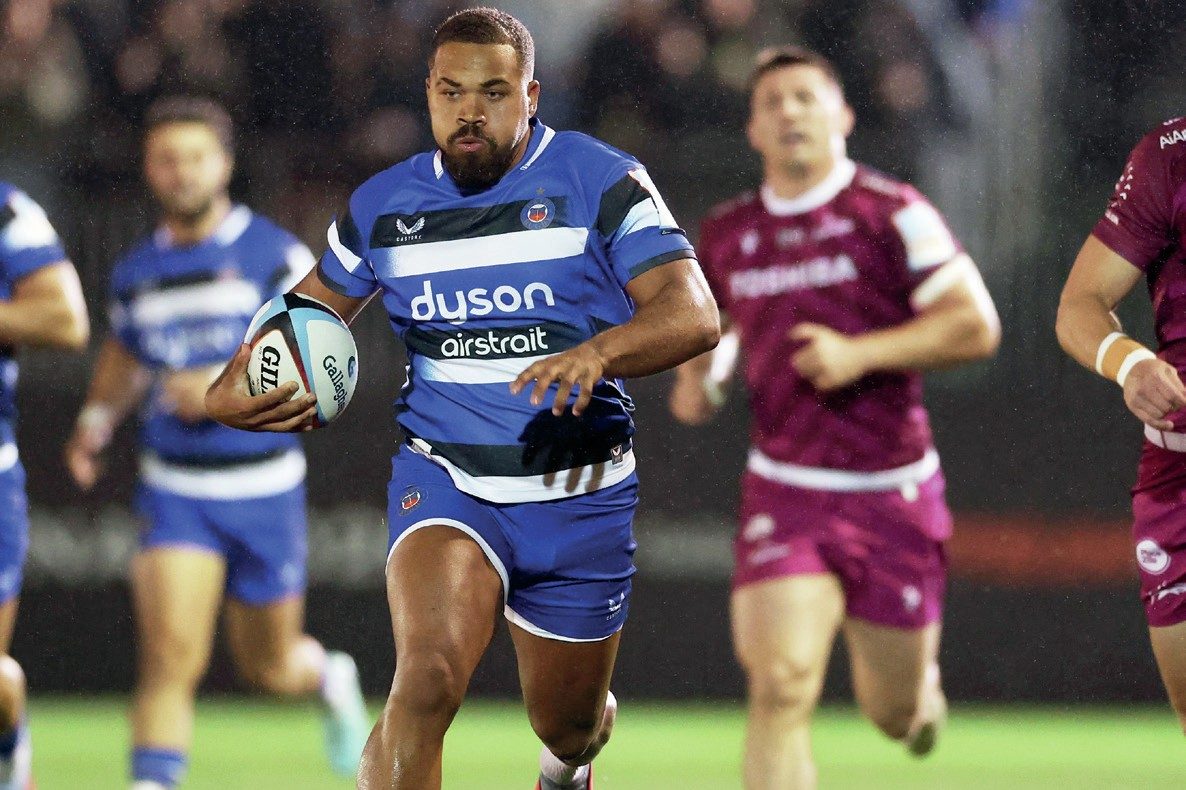
In terms of selection against the Wallabies, the return of Ollie Lawrence is a big plus for the England midfield.
Before his Achilles injury, he was playing top-notch rugby, and on his return for Bath so far this season, he’s been playing well, and his currency is high.
If Lawrence continues showing good form, he’s definitely there for selection and will deserve his spot, although it’s inevitable that if he’s straight back in the starting line-up, the guys who won the series in Argentina will feel disappointed if they miss out.
Max Ojomoh is one who is pushing hard and can play 12 or 13, although at the moment he’s showing his skills for Bath at flyhalf.
Blackett will know from his time at Bath how much potential the 25-year-old has.
However, England’s form since 2019 hasn’t been good, and centre partnerships disrupted by injury, or just not clicking, have been a major part of that story.
That’s got to change and it’s why I like the idea of Lawrence and Freeman, below, two of England’s most potent attacking players, combining together as a 12-13 partnership.
Consequence
There is no easy game this autumn, and it’s even more of a challenge with Australia, New Zealand, and Argentina arriving here only four weeks after the Rugby Championship, while playing Fiji has become a bruising assignment.
The consequence is some will argue that there’s no room for experimentation against such strong teams, unless, as a coach, you’ve got a skin thick enough to ride the criticism if it doesn’t work out immediately.
Picking Freeman at outside centre is an experiment that might not click instantly.
Even so, England have to find out if he’s got the ‘head game’ to adapt to a new role – and likewise the coaches must have the conviction to go all-in.
Lawrence-Freeman is a big choice to make, given that the Argentina tour went so well, but it’s worth remembering that if it hadn’t gone so well, very few would question Freeman coming back at 13.
I would go with that midfield pairing against Australia because, as good as the wins over Argentina were, the guys in those starting line-ups are not yet seasoned internationals, whereas Lawrence has 33 England caps, and Freeman 19 for England and three for the Lions.
Difference
However, if Blackett believes Freeman will make a difference, he will have to push hard for him to switch from wing to centre, because others on the coaching team might say it’s too much of a risk.
But it’s also important that Borthwick and Blackett agree on backline selection – with Fin Smith or George Ford at fly-half, another tricky call – because England can do without something that splits them at the outset.
Blackett is good at the smoke and mirrors manipulation from set pieces to unpick opposition defences, but when you get into phases, backline effectiveness is all about speed of ball, because it’s that, and skill-set, that evolves into an overlap or gap.
The key is quick ball, because that way, unless you butcher your opportunities, you are winning games.
At full-back, the choice is Freddie Steward or Marcus Smith, and if England opt for a George Furbank-type playmaker, Smith will probably start against Australia.
Elsewhere, Alex Mitchell was good enough on the Lions tour to reclaim the scrum-half shirt, although Ben Spencer should be in contention, while Immanuel Feyi-Waboso’s impressive return from injury and Tom Roebuck’s strong form makes them the leading wings.
The England backline I would pick against Australia is: 15 Marcus Smith; 14 Immanuel Feyi-Waboso, 13 Tommy Freeman, 12 Ollie Lawrence, 11 Tom Roebuck; 10 Fin Smith, 9 Alex Mitchell.
READ MORE: Jeremy Guscott: It won’t surprise me if Springboks land a threepeat