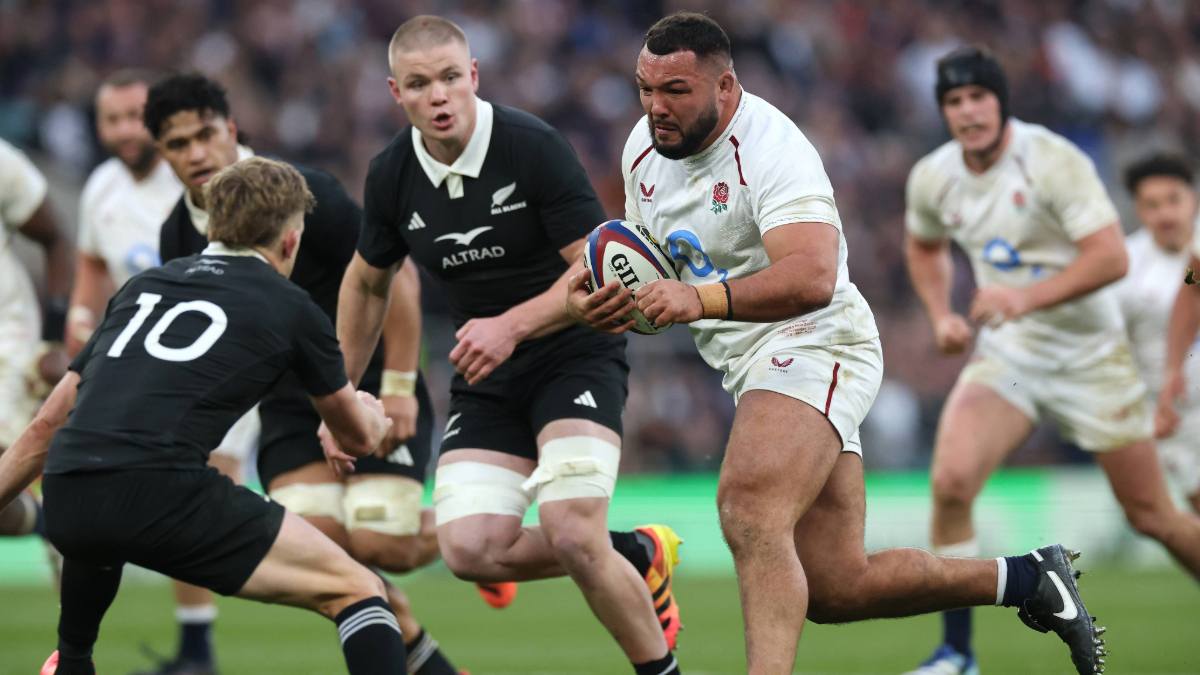
The stage was set for a comeback after an abject opening 50 minutes from a side expected to be frothing with intent after a rare defeat to Wales that had instead showed why their 73-year unbeaten run against them had ended.
The opening two minutes of the second half showed exactly why the All Blacks were so far behind England.
They lost two lineouts in their opponents’ half, the second palmed by Ollie Chessum who finished off the subsequent 60-metre move on the left wing.
Lacking ideas
They had blown three lineouts in the opening half in England territory much in the same way that tier two nations do when coming up against championship opposition.
The home side, fielding three second rows, had no such problems, even if the one part of the All Blacks’ game that did work well was their driving maul defence.
Having scored three first-half tries to one by prop Ethan de Groot at the end, not a high return for the time they had spent in the New Zealand 22, Chessum delivered the bonus point which meant that France had to bank five points against Argentina later on to top the group.
New Zealand had lacked ideas in attack, as Australia had been by England’s rushing up in midfield, and forced to kick having become narrow they tended to put too much distance on the ball and were unable to establish a foothold.
And then they scored a try out of nothing, rolling back the years after Pater Lakai broke from his own half, supported by Fabian Holland and Cam Roigard.
Beauden Barrett ran an outside channel to score from 35 metres and give New Zealand supporters in the ground a reason to hope.
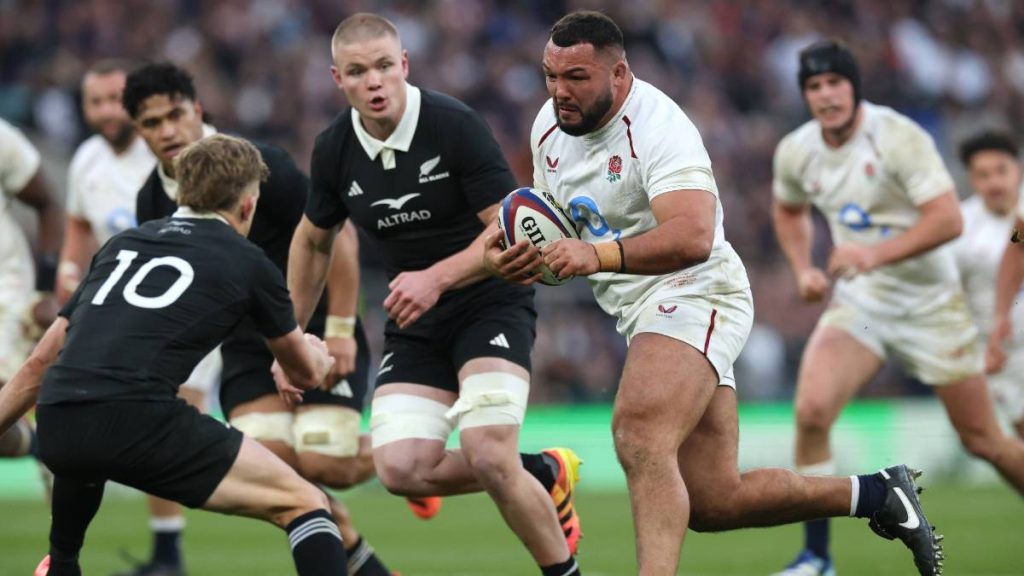 Rhino rage: Ellis Genge taking on all-comers for England
PICTURES: Getty Images
Barging into tackles
It lasted as long as it took the five forward replacements, who had been waiting to come on, to run on to the pitch.
The next time the All Blacks saw the ball with opposition territory in sight was to take the restart after Marcus Smith’s penalty stretched England’s lead beyond two converted tries again.
Ellis Genge had touched it any number of times, barging into tacklers as if he had a personal grudge against everyone wearing black.
It seemed to be his way of saying he should have started, but just as South Africa have under Rassie Erasmus used their replacements en masse to raise the intensity of a game, so England’s quickly snuffed out any New Zealand hopes of a riposte.
Genge was possessed while George Martin and Greg Fisilau were players that weary defenders did not want to see.
With Luke Cowan-Dickie and Will Stuart carrying on from where Jamie George and Joe Heyes had left off, England reasserted control and ensured they would finish no lower than second in the European table with a fifth try through Seb Atkinson after Genge had again laid waste to the defence.
Selective kicking and more risks
New Zealand had no one on the bench able to come on and make a material difference, which says everything about where they are.
Anton Segner did force a turnover and pilfer a lineout, but they had no one in reserve able to raise the level of their play and slipped to their heaviest defeat against European opposition in another humbling defeat.
Genge said afterwards that England’s gameplan was the same as it had been in the Six Nations when they lost their last four matches.
You have to take him at his word, but what has changed is that they are being more selective in their kicking, they are taking some liberties in their own half, as Chessum’s try showed, they are getting the ball away as quickly as they can from the breakdown and they have sorted out their defence.
England have not only won their three matches this month but they have not given up a bonus point try.
They are using their defence to create opportunities and what Chessum’s try showed was a willingness to have a go from deep when a defence was not prepared.
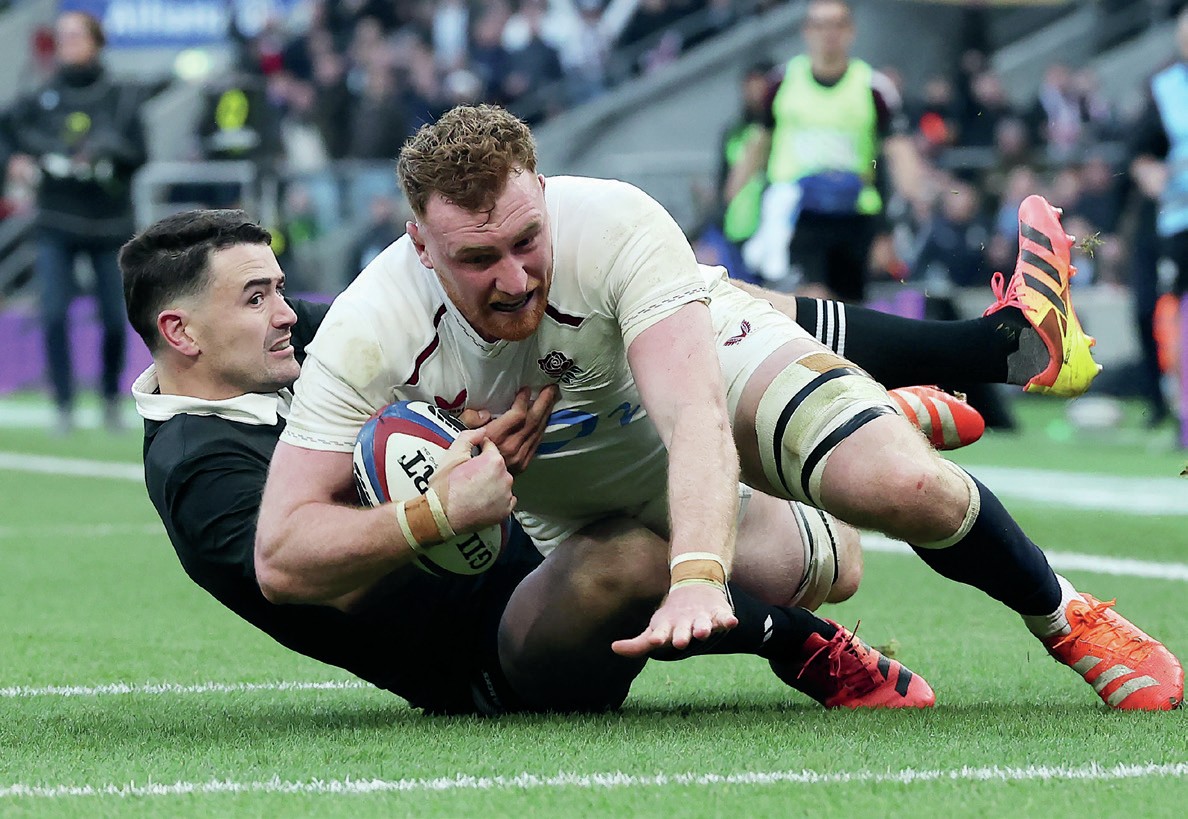 Touchdown: Ollie Chessum scores England’s fourth try
Depth
They may not have the bulkiest midfielders in the game, but Seb Atkinson, below, makes ground and has the admirable facility for one still feeling his way in the international game to keep mistakes to a minimum while another Test rookie, Will Joseph, has pace and the power to force his way over the gainline, as he showed in helping set up Chessum’s try.
England were without their first choice wingers Tommy Freeman and Immanuel Feyi-Waboso yesterday and their absence was not telling.
What England also have, when Sam Underhill and Tom Curry are fit, is two sets of forwards capable of starting a match with not one player weakening the whole.
It is getting to the same point behind when factoring in the two Smiths at outside-half, Atkinson and Max Ojomoh at 12 and Freddie Steward and George Furbank, a player New Zealand used to produce in abundance, at full-back.
Only at 13, where England dabbled with Ollie Lawrence and Freeman earlier in the year, is there no obvious alternative to Slade, although Ojomoh has played there regularly for Bath.
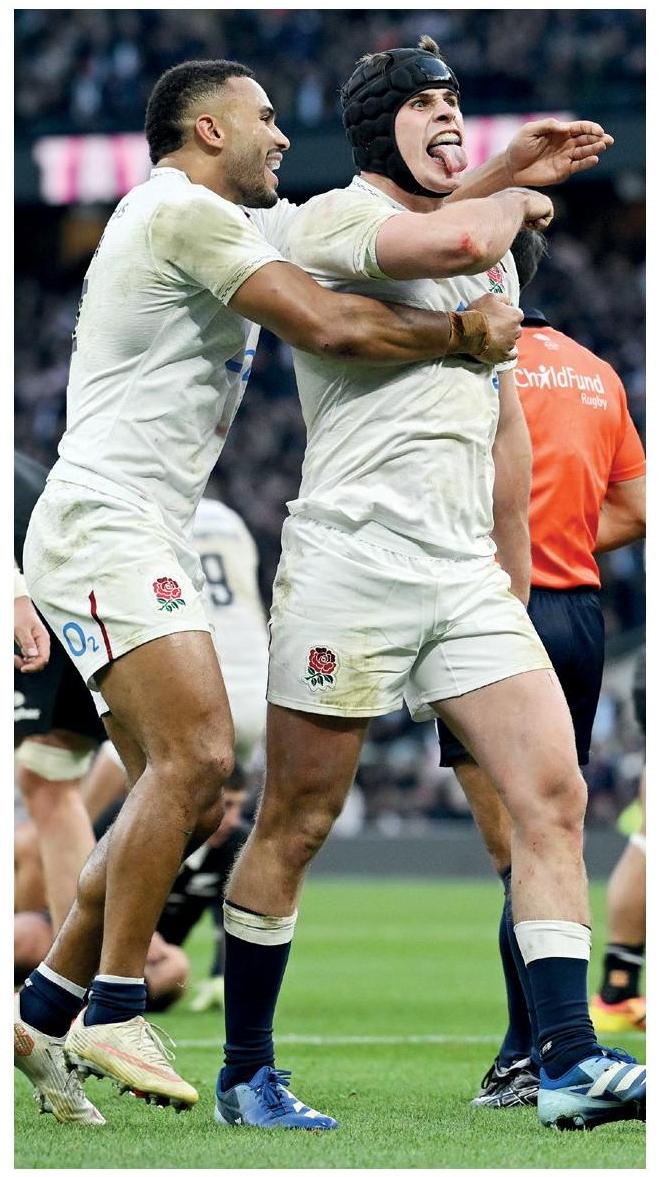
Rising from the ashes
England have risen from the ashes of the Six Nations, but given how their fortunes have flowed and ebbed since the last World Cup, no one will be assuming anything.
What they have started to do is realise their potential, showing more of themselves while not pretending to be something they are not.
As for New Zealand, it is the end of a long campaign and they were playing their 16th Test in little more than a year, but it is not something they are unused to.
They were outthought by England, confronted by questions they could not find the answer to, just as South Africa were later unable to douse Ireland‘s fury, and it is the descent from extraordinary that should concern all those who follow the game.
The unique are becoming run-of-the-mill.
READ MORE: England 37-12 New Zealand: Majestic Red Rose in sight of World Cup glory after All Blacks win


Autumn Internationals
Maro Itoje: Lewis Moody inspired England victory over New Zealand

Autumn Internationals
Ireland 20-17 South Africa: The Irish hit heights as Springboks lose again

Autumn Internationals
Wales 26-29 Australia: Dewi Lake’s double strike not enough as Wallabies hold on



The best betting sites