WHEN I became professional later in my career, you negotiated a club contract with the help of your agent, and then you signed it. At that time, there were no marquee players in the Premiership.
Then, by the time Saracens won their three European Cup titles from 2016-19, there were two marquee players who could be exempted from the salary cap. However, although they were rumoured to be Owen Farrell and Liam Williams, at that time clubs would not confirm any speculation.
That was not such a bad system, but since the marquee regulation has been reduced to a single player, there’s a tendency for some people to overthink the process.
This is because it’s mainly about marketing, and having a group of players who are exceptions to the overall rule because it makes good media headlines.
These days you can see fans in online forums discussing whether the marquee men are good value or not – because now we know who they are, and have a clearer insight into how much they are paid. It’s essentially a process of elimination, with the club’s top earner not listed in the player wages logged in the salary cap.
A recent list of the 10 Prem marquee players published online is as follows: Finn Russell (Bath), Ellis Genge (Bristol), Henry Slade (Exeter), Jac Morgan (Gloucester), Marcus Smith (Harlequins), Ollie Chessum (Leicester), Fin Smith (Northampton), Hoskins Sotutu (Newcastle), George Ford (Sale), Maro Itoje (Saracens).
Their annual wage packets are subject to speculation, with fly-half Russell being touted in the media as the top earner at around £1 million, and others on a pay scale ranging from just below that to about £500,000 for a couple of players at the lower end.
If there’s too much emphasis on the money they are paid, it starts to obscure the main point that the only way they can be a marquee player is if they are bloody good.
Another element to be considered is that they will all be on different levels of salary, with different lengths of contract, so every marquee player deal will be different. One of the few things that they all have in common is that the payments to them are outside the salary cap.
In many ways, the clubs have made a rod for their own back by giving them the name “marquee” rather than just saying, “the player outside the cap”.
One of the questions always asked about marquee players is whether it brings any more pressure than that on their teammates?

“The main focus of a ‘marquee’ player is what is going on in front of them on the pitch”
Not really. I don’t think it means that marquee players are thinking about their status during matches. Their main focus, like their team-mates, is what’s going on in front of them. Basically, if you’re a competitive sportsman at any level, your main drive is to succeed.
It’s worth considering a comparison with American football, because in the NFL who is on the playing squad and what they are paid is public knowledge. Everyone knows what each player’s salary is – but we’re British, and we don’t do that.


In America things tend to be much more clearcut where money is concerned. For instance, 50 per cent of the NFL budget is designated for player salaries. Maybe if we had a similar system in English club rugby we might not be as dependent on the support of wealthy benefactors!
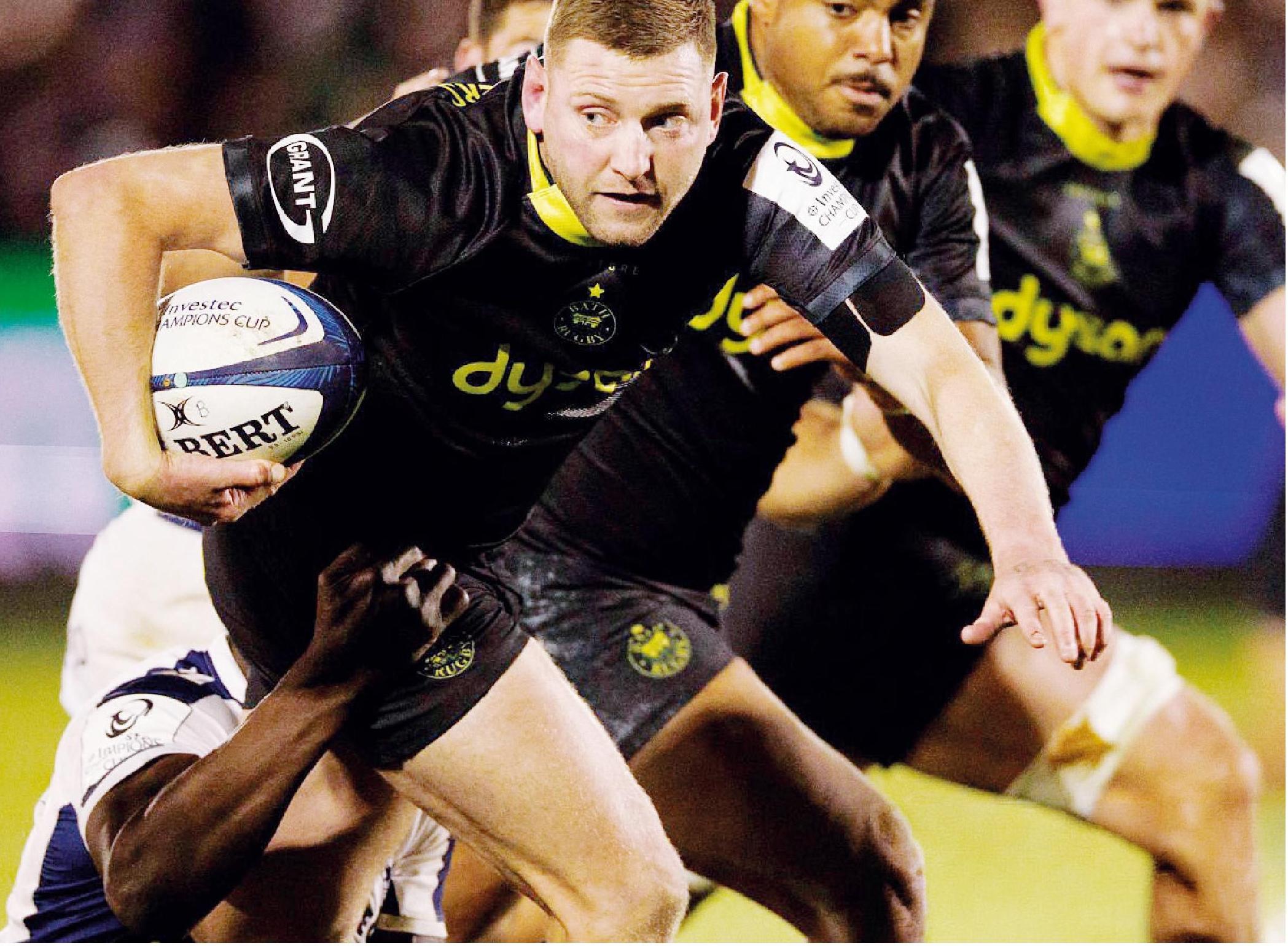
When you look at the list of Prem marquee players it’s obvious how important each of them is to their club. Since Russell arrived at The Rec after the 2023 World Cup the fly-half ‘s contribution has been key to Bath’s revival.
After reaching the 2024 Prem final and losing narrowly to Northampton, they went one better in the 2025 Prem final by edging past Leicester to win their first English club title for 29 years.
However, although the Scotland 10 has had a big impact at Bath,the idea that marquee players are out on their own does not add up – even for an outstanding playmaker who signed a contract extension until 2028 a few days after they became champions.
“Since Finn Russell arrived at the Rec back in 2023, he has been key to Bath’s revival”
For example, until Thomas du Toit left Bath to return to South Africa over the summer, in terms of impact it would be difficult to separate whether Russell or the Springbok tight-head prop was the marquee player.
It’s no surprise that loose-head Ellis Genge is Bristol‘s marquee player, because he’s an all-action prop and a big persona who has made a difference since he returned to his home city after winning a Prem title with Leicester in 2022.
It means that there has been no room for Louis Rees-Zammit’s salary to be outside the cap since the high profile Welsh winger signed for Bristol in 2025. His return to rugby union followed an 18 month experiment in NFL.
Some people might find it surprising that Henry Slade is still a marquee player at the age of 33, but the Exeter and England centre is still a few months younger than Russell.
Slade has been around at Sandy Park for a long time, but last season his form was outstanding. It’s also good to see loyalty rewarded, because he resisted the temptation to go to France like other Chiefs regulars did.
Jac Morgan’s summer arrival at Gloucester from the Ospreys was a bit of a coup, because there will have been plenty of competition from other Prem clubs for the Wales and Lions flanker.
Morgan is very impressive on the ball, and over the ball at the breakdown, and his tackle count is always high. He has shown his qualities as a leader when captaining Wales in adversity, and that range of abilities is why he always seems to be in the running for man of the match awards.
At Harlequins fly-half Marcus Smith might be in his last year as their marquee man, mainly because their struggles in the Prem make the club likely to be
in the market for a couple of high profile players.
Ollie Chessum fits the marquee mould at Leicester because the lock commands the respect of his team-mates for usually being one of the most potent forces on the field. The same still applies to Maro Itoje at Saracens, who is real quality and whose consistency at 31, still stands out.
Playing at either fly-half, or scrum-half, are positions that lend themselves to marquee contracts because half-backs touch the ball more often than any other players on the pitch. That tactical influence on the game is why fly-half Fin Smith, 24, is the linchpin player at Northampton, and likewise it’s why Sale’s George Ford, at the other end of the age spectrum at 33, is still rated as one of their most valuable players.
The last of them is Hoskins Sotutu, Newcastle’s imported All Black No.8, who at 28, should have plenty of appetite to prove his worth in the Prem.
Inevitably, marquee players attract attention, but it’s clear that with the emergence of young players like Henry Pollock, with big social media followings, they may not necessarily be the highest profile players.
They are also not necessarily natural captains or leaders. However, what marquee players do is lead by being consistently the most influential players on the pitch.


Latest News
Resurgent Tigers cut loose to slay Saints

Latest News
England get set for World Cup blast off

Latest News
WRU in financial crisis as losses hit £18.2m


The best betting sites