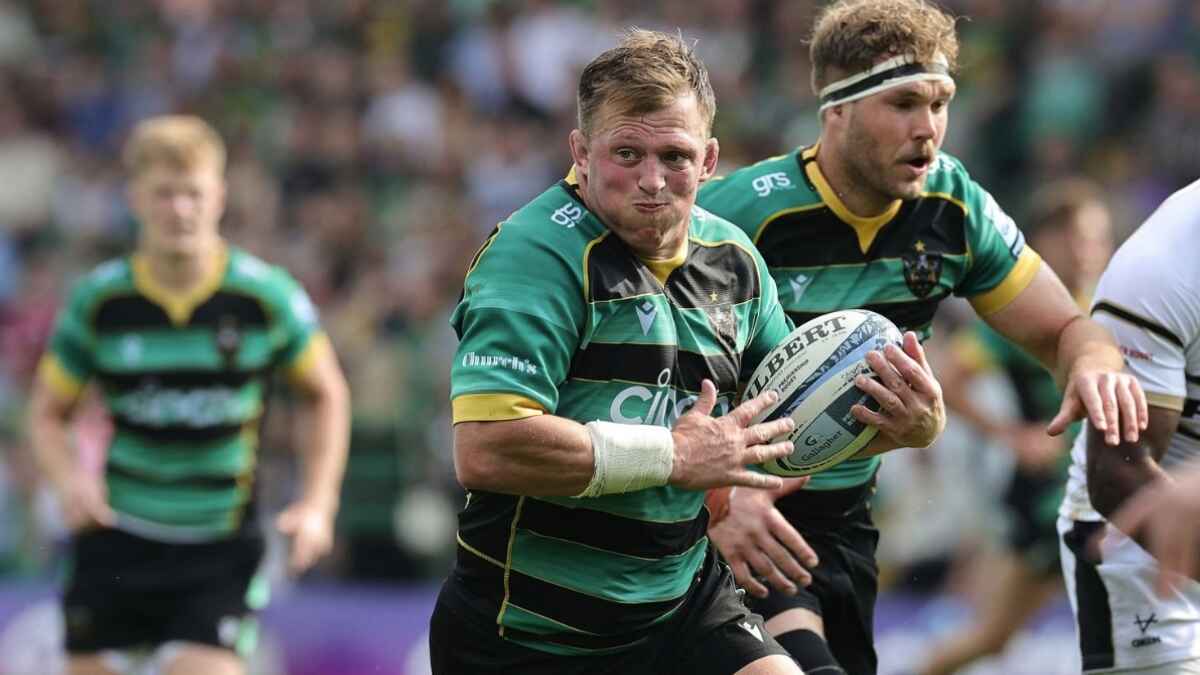

ONCE upon a time the old game specialised in breeding the one-club player, thousands of them who thundered around England and Wales like a herd of buffalo on The Great Plains.
The one-club brigade used to be found anywhere and everywhere, men whose strict adherence to the laws of the jungle meant they never changed their spots or their stripes. Instead they stayed at their local club through thick and thin, a custom that survived from the early post-war years to the end of amateurism half a century later.
Men who played for the hell of the game and a few free beers, whose loyalty to their club and the amateur ethos, invariably spanning the best part of 20 playing seasons and many more thereafter, knew no bounds.
Mighty Englishmen like Ron Jacobs and Vince Cannon (494 and 438 games for Northampton), David Matthews, John Allen and Paul Dodge (502, 457, 437 for Leicester), Alan Brinn (574 for Gloucester), Alan Morley and Dave Watts (519, 504 for Bristol), Bob Hiller at Harlequins, Alan Black at Wasps to name but a few.
The Welsh were more than a match for them: Graham Price (567 for Pontypool), Alun Priday and Alan
Phillips (518 and 481 for Cardiff), Boyo James (550 for Bridgend), Ray Gravell (481), Andy Hill (451), Phil Bennett (414) and Delme Thomas (411) for Llanelli, Keith Poole (483 for Newport), Roger Blyth (409 for Swansea), Ray Gladwyn (494 for
Abertillery), Bob Penberthy (877 for Pontypridd).
Twenty players and a grand total of more than 10,000 matches, all in the service of one club during an era when transfers were rare events largely prompted by a change of job. The Paris Summit, 31 years ago last weekend, put a stop to all that.
Some soldiered on in the one-club cause with careers spanning the dog days of amateurism and the chaotic early years as professional, most notably Martin Johnson and Graham Rowntree at Leicester, John Hall and Jeremy Guscott at Bath, Lawrence Dallaglio at Wasps.
As agents poured in, so players began to move around. The death knell to the one-club man at the highest level has taken such a toll that few have survived. George Furbank’s switch to Harlequins after 11 years at Northampton and Luke McGrath’s relocation to Perpignan after 14 at Leinster makes them fewer still.
It leaves one man high and dry with a number which acquires a greater degree of untouchability with the dawn of each new season.
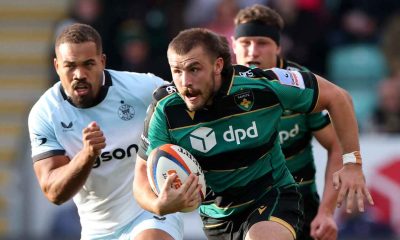
“Club loyalty often spanned 20 playing seasons – and more after that” Alex Waller’s 370 matches over 15 years at Northampton elevates him to a special place in the communion of Saints.
No one-club British or Irish player can match that in the professional era. Alex Goode topped 400 matches for Saracens over 17 years but his one-club status had been broken by a season in Japan with the Green Rockets, likewise Owen Farrell’s due to his ill-fated move to Racing.
“Money talks in rugby more and more,” Waller tells The Rugby Paper. “Other clubs were interested but the offers came at a time when we were either champions of England or I was captain of the club.
“I’m pretty proud to have spent my time with one club. I was lucky to have Tim Lopez who was like an extended member of my family as well as my agent. I always valued his opinion.” Waller played his first match for the Saints against Ospreys in 2009 (‘A baptism of fire in the Welsh valleys, a bit more violent than usual but I survived.’) His last, the 2024 Premiership final triumph over Bath, was the stuff of dreams.
“Had we lost that match, a bit of me would have wanted one more season. I could have gone on but I’d played against a lot of lads who went on a season or two too long. I wanted to go out with a bit left in the tank.”
The nearest challenger to Waller’s record, Jamie George, 36 next month, is 59 club matches short on 311 and running out of time. Of other high-profile one-clubbers, Maro Itoje, about to embark on his 14th season at Sarries, is a long way behind on 209.
As for Waller, he runs a booming bespoke furniture business with former England team-mate Tom Wood as in Waller and Wood, Woodworks. From the muscular art of propping on the loosehead of the scrum to the delicate craft of making a coffee table…