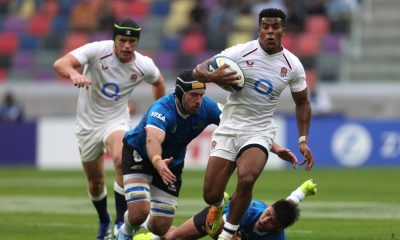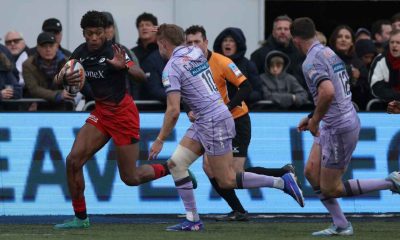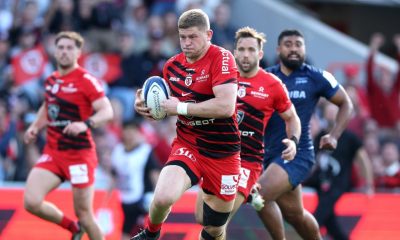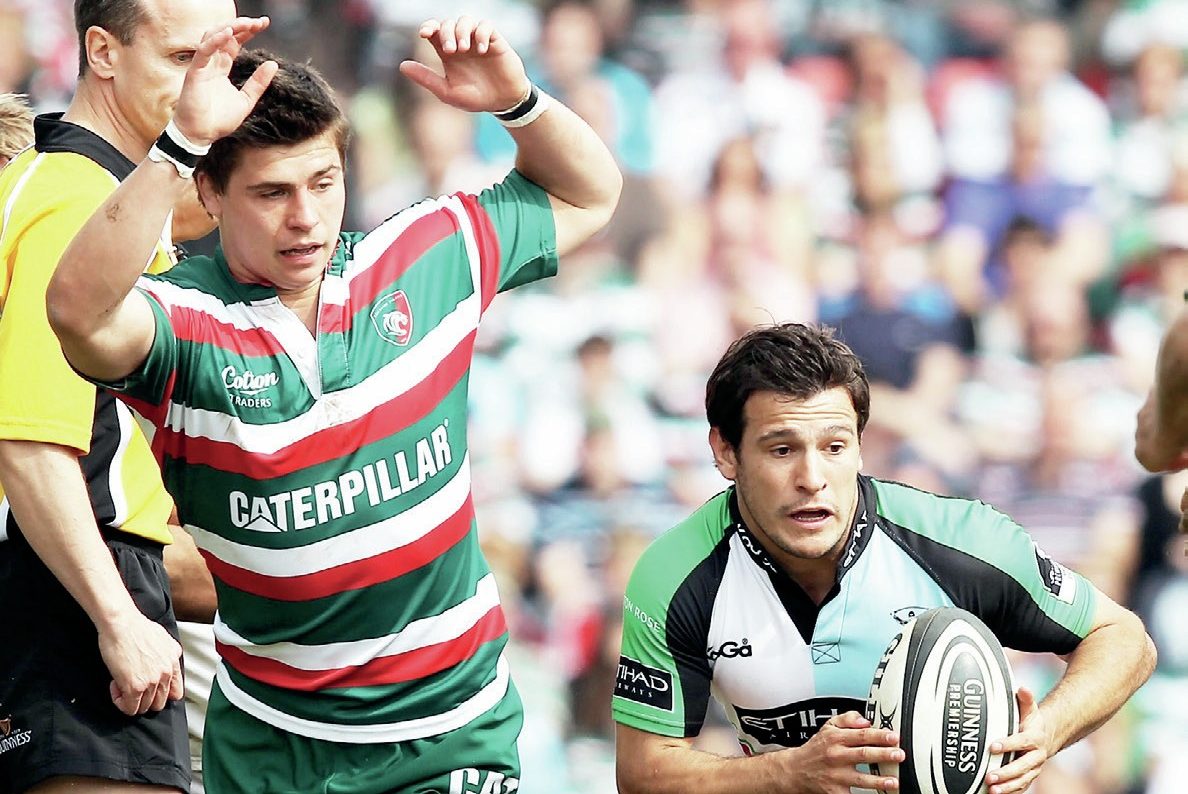














It’s very rare that two players dominate as international scrum-halves for as long as Ben Youngs and Danny Care have for England.
Both centurions announced their retirements from the club game over the last couple of weeks, with Leicester‘s Youngs finishing as England’s most capped player on 127, and Harlequins‘ Care notching 101 caps, and that longevity at the highest level of the game demands respect.
Care’s Test career spanned 16 years from his first cap in 2008 to his last in 2024, while Youngs’was slightly shorter at 13 years from his first cap in 2010 to his last in England’s third-place victory over Argentina at the 2023 World Cup.
The only England scrum-half rivalry that compares with it in the pro era was that between Matt Dawson and Kyran Bracken more than two decades ago, when it appeared that Dawson edged it by becoming the 1997 Lions Test scrum-half and being given the No.9 shirt for the 2003 World Cup final.
In a similar way Youngs, 35, eventually had the edge over Care, 38, because, having lost favour with Eddie Jones, it was a long time between drinks for the Quins scrum-half when he was dropped from the England squad for three years (2018-2022).
However, of the two, Care managed to have the last appearance in an England shirt after being recalled for the 2024 Six Nations by head coach Steve Borthwick, winning his 100th cap in the 23-22 victory over Ireland before bowing out after the narrow away loss to France.
Care’s Strengths
Care is seen as a scrum-half who could attack from the base very quickly, often making breaks by darting across and then cutting back inside.
The only surprising thing, given that he’d been an apprentice at Sheffield Wednesday, was that early on in his career his box-kicking wasn’t that good – although it improved significantly later on.
However, Care’s real strength was his ability to spot a gap, and then go through it to stress the defence.
He was difficult to pin down, and his ability to make clean breaks suited him, and suited the way Harlequins wanted to play.
When it comes to style of play, Youngs was probably a better fit for the structure England wanted because of his game management and tactical understanding.
He was also steadily consistent in his distribution, and in international rugby the fewer risks you take the fewer errors you make.
For Test level scrum-halves having a quality pass and high level of fitness are givens, and Care and Youngs tick those boxes.
Nines are always among the fittest players in any team because of the miles they have to run, and although it’s now more about how quickly they move the ball from the breakdown, often with a short pass, I still believe the ability to make a bullet 20 metre spin-pass is essential.
Similar Skillsets
My read is that Care and Youngs had very similar skill sets, and although Danny was probably slightly quicker, edgier, and fitter, Ben’s pass and box-kick was slightly better – although Richard Wigglesworth’s box-kicking was better than both of them.
When it came to reading the game Youngs and Care were both pretty effective, and, although neither stood out in defence like all-time scrum-half greats Joost van der Westhuizen and George Gregan, they made their tackles.
In the Home Unions the key factors in how you are regarded at Test level is the calibre of the national team you played in, the quality of the opposition, and whether you were a Lions number one in your position.
“The pair are both legends at their clubs, Danny Care at Quins and Ben Youngs at Tigers”
Care had a hand in three Six Nations titles, including his biggest triumph in an England shirt as the starting scrum-half in their 2016 Grand Slam final round victory over France in Paris, when he scored the opening try.
Youngs was also part of that Slam, and won four Six Nations titles in all with England, as well as finishing as a runner-up in the 2019 World Cup.
Youngs was selected for the 2013 tour of Australia, winning a cap off the bench in Brisbane, and another as the scrum-half starter in Melbourne, to play his part in a winning series.
He was also selected for the 2017 tour of New Zealand but remained at home to support his family when his brother Tom’s wife, Tiffany, was diagnosed with terminal cancer.
They are both legends at their clubs with Youngs, a one-club man with Leicester since making his debut at 17, going on to win five Premiership titles.
Care played a key part in Harlequins winning two Premiership crowns in 2012 and 2021, as well as a European Challenge Cup in 2011.
With those track records it’s not surprising that they are both highly regarded and respected, and can be justifiably proud of how they have played at such a high standard for so long.
Adaptability
Adaptability has been a big part of their success. This England duo has played during a time when the physical demands have never been greater for scrum-halves, mainly because the number of breakdowns has increased so much, as has the speed of the game.
In the pro-era, scrum-halves like Care and Youngs have had to become progressively fitter – because if you can’t keep up you get left behind.
The same is true of certain skills. If you can’t box-kick accurately in the modern game your chances of playing at elite level are close to zero, because it is as much a requirement now as having a good pass.
They also played all their careers, until this season, under the old law where scrum-halves could be challenged at rucks, mauls, and scrums as soon as they had their hands on the ball, as long as you were onside.
It used to be a good battle, and sometimes got a bit niggly – but now the opposition cannot touch the No.9 when they’re within a metre of the breakdown, and must stay behind the centre of the scrum tunnel, you could argue they are overprotected.
I’m not sure how much of a negative it is when it comes to watching the game, but it might affect the skill level of scrum-halves, especially in terms of no longer needing the strength in your wrists, or sharp footwork, required to get a spin pass away under pressure.
Ben Youngs and Danny Care were scrum-halves of such quality they didn’t need that level of protection to make their mark.