

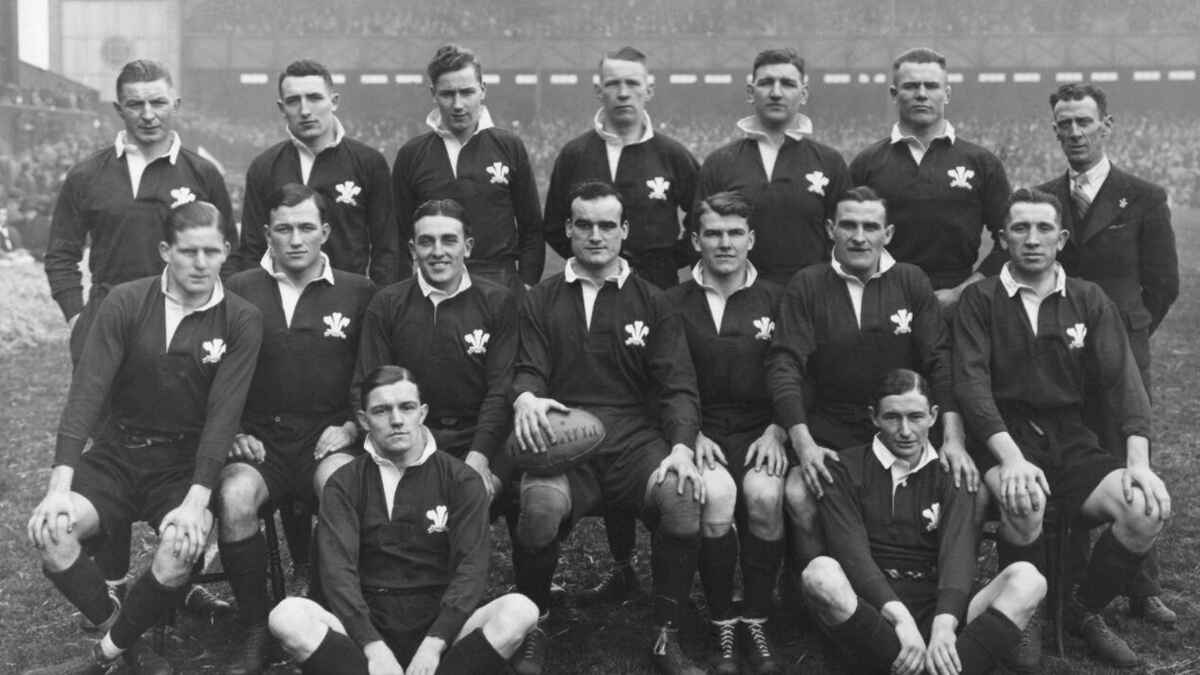
More than 80 years after he was killed attacking a Panzer tank division in Normandy, Maurice Turnbull still reigns supreme in the annals of Anglo-Welsh sport.
He is the only England cricketer to have stumped England in the Five Nations at Twickenham and shall forever remain so.
Nobody else has played Test cricket for England and Test rugby for Wales, let alone a winning one on debut on each occasion.
In doing so, Turnbull achieved another unique double which will never be matched: winning Test matches at the celebrated homes of English rugby and cricket in a matter of months; at scrum-half for Wales against England at Twickenham in January 1933, reappearing the following June against West Indies at Lord’s.
Entrance
The son of a Cardiff ship owner at a time when coal made the city’s docks the busiest in the UK, Turnbull made his entrance to cricket’s HQ at No.6 in the batting order, one behind the skipper, Douglas Jardine, he of ‘Bodyline’ notoriety.
Remembrance Sunday is the perfect occasion to recall what happened in late August 1932 at Cardiff Arms Park when Nottinghamshire turned a routine county match against Glamorgan into an experiment in ‘Bodyline,’ short-pitched fast bowling aimed at the batsman’s leg stump.
Harold Larwood and Bill Voce, the fastest pair of fast bowlers in the game, let rip, no doubt under orders from on high with that winter’s Ashes tour in mind.
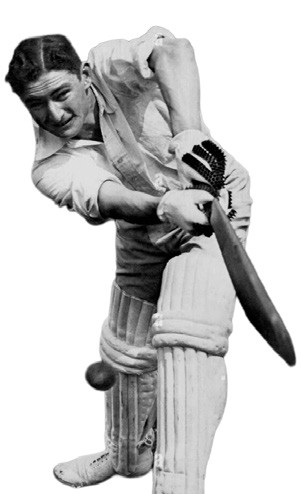
Turnbull, above, no fan of a tactic which he condemned as destroying the spirit of the game, reacted by hitting them for an unbeaten double century.
A young John Arlott witnessed the onslaught, describing Turnbull’s ‘quite brilliant’ innings as ‘punishing those two England bowlers as no other batsman ever did’.
A few months later the same bowlers began terrifying Don Bradman and his Australians, a physical battering of such sustained hostility that some feared for their lives.
Sacrifice
John Edmonds wrote his revered when-you-go-home epitaph after the Battle of Kohima in April, 1944
Major Turnbull of the Welsh Guards made the supreme sacrifice four months later, leading his men in an attack on a German tank unit on the outskirts of Montchamp, a small town in Normandy.
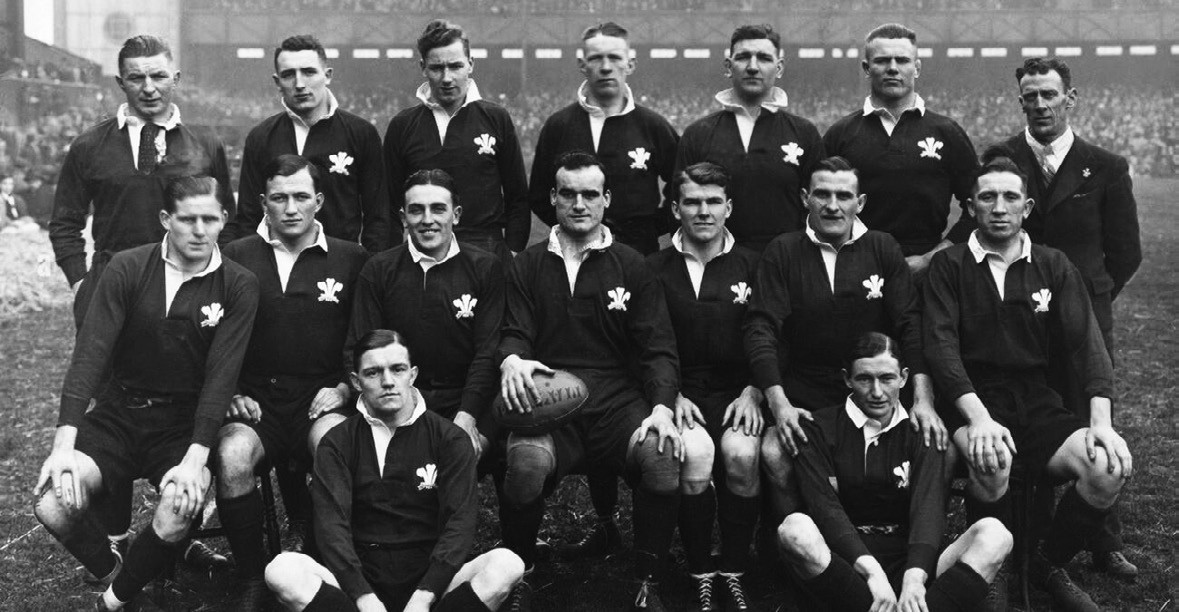
He was the last England Test cricketer to die for King and Country in the Second World War but not the last member of the England-Wales teams for that historic 1933 match at Twickenham when Wales won at HQ for the first time.
Ronnie Gerrard, England’s Bath centre who captained Somerset’s rugby team for most of the 1930s, was another rugby player who aspired to playing county cricket, unlike Turnbull, a cricketer first and foremost who used the rugby season to keep fit for the perennial task of keeping Glamorgan afloat through the summer.
A civil engineer by profession, Gerrard played a bit of first-class cricket, bit being the operative word given that his career with Somerset spanned all of three matches in 1935.
The following year he captained a combined Gloucestershire-Somerset team against the All Blacks and was alongside Alexander Obolensky when the Russian prince put the same All Blacks to the sword at Twickenham.
The men who never came home
It has been said of Gerrard that ‘no opponent every wriggled out of ‘Gerry’s’ tackle or forgot one of his hand-offs’.
Like Turnbull, Gerrard went to a different theatre of war as a major: North Africa with the Royal Engineers.
Awarded the Distinguished Service Order, Major Gerrard showed the ‘character, courage and determination in his leadership which was an inspiration to all who saw it’.
He was killed three months later in January 1943 at the age of 31.
Gerrard is buried in the Tripoli War Cemetery, Turnbull (38) in the Bayeux War Cemetery alongside a few thousand more who never came home, among them a swift Yorkshireman from Leeds capped by England on the day Wales capped Turnbull: January 21, 1933.
Headingley wing Lewis Booth lost his life nine years later as a Pilot Officer in the RAF, shot down off the Dutch coast on his way home from a bombing raid over Bremen. He was 32.
The death toll of international rugby players during the First World War included a pair of British Lions of such rare quality that their names will surely live for evermore: Ronnie Poulton-Palmer of Harlequins, Liverpool and England, John Lewis Williams of Newport, Cardiff and Wales.
Popular figure
A more popular player than Poulton-Palmer would be hard to imagine.
His sheer love of the game was such that, win or lose, it was said of Ronnie that he never failed to play without a smile on his face.
Even opponents smiled in bewilderment at trying to tackle him.
“How can you stop someone like Poulton-Palmer?” one asked.
“His head goes one way, his arms go another way and his legs keep going straight on.”
As England captain, he finished the last match before the Great War, against France at Stade Colombe, with four tries from centre and the Grand Slam to boot.
He was killed on the Western Front the following year, aged 25.
Bravery
John Williams, a late convert to rugby after spending his childhood years playing football at Cowbridge Grammar School, won three Grand Slams for Wales in four seasons during the same era as Poulton-Palmer.
Revered as ‘Johnny Bach,’ he remains the only Welsh wing to do so and the only one to score a hat-trick on debut at Cardiff Arms Park.
Having scored some 200 tries at almost one-a-game for Newport, Cardiff, Wales and the Lions, Williams retired at 29 to go into the coal-exporting business.
At 31 he enlisted in the Cardiff City battalion whose soldiers paid a terrible price for bravery above and beyond the call of duty six days into the Battle of the Somme in July, 1916.
‘Johnny Bach,’ now Lieutenant Williams, died alongside his men.
Another Welsh international, Company Sergeant Major Dick Thomas from the Rhondda who learnt his rugby at Ferndale, was killed during the same attack on Mametz Wood, a dense forest over 200 acres heavily fortified by German machine guns.
Never forgotten
So many, many more international players endured the same fate:
Dave Gallaher, an Irishman from Ramelton in Co. Donegal who captained the All Black ‘Invincibles’ on their first tour in 1905.
Killed during the third Battle of Ypres in 1917.
Freddy ‘Tanky’ Turner, captain of Scotland, and Percy ‘Toggie’ Kendall, England scrum half, both raised on Merseyside.
Both commanded troops on the Western Front, both fell to a sniper’s bullet within days of each other in 1915 since when they have lain side by side in a Flanders field.
Dave Watts, a coalminer from Maesteg, hooker in a pack ever ready to show opponents that they hadn’t been christened The Terrible Eight for nothing.
Killed at the Somme, aged 30, two days after ‘Johnny Bach’.
Their names, and countless more, liveth for ever more…
READ MORE: Peter Jackson: All Blacks poised to lose a winning battle in the Nations Championship


Autumn Internationals
Steve Borthwick explains how England predecessors helped him block out the noise


Autumn Internationals
Steve Borthwick: I know vast majority of my England selections for 2027 Rugby World Cup


The best betting sites


















You must be logged in to post a comment Login