The heavenly grapevine has been abuzz all week with rumours of a dearly departed RFU president dancing in the celestial streets over Arsenal’s coronation as Premier League champions.
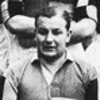
Word from the Elysian Fields claimed that Ken Chapman, below bottom, of Harlequins fame had been spotted alongside an Irish Olympian venerated for a unique double: on the wing for Arsenal one week and in the centre for Ireland against Australia the next.
Both belong to Gooners’ royalty.
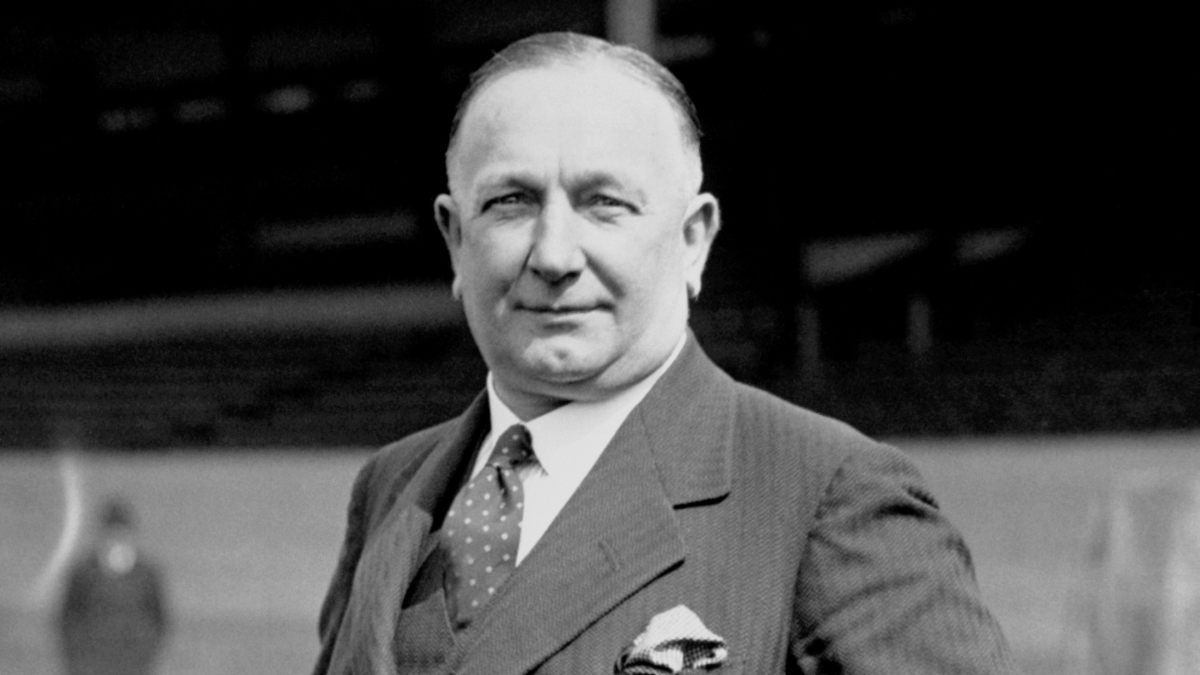
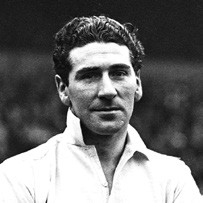
Chapman was the eldest son of Herbert Chapman, below top, lauded as the Godfather of Arsenal FC, whose life-sized bronze statue stands outside the directors’ entrance at the Emirates Stadium, a permanent reminder of a Yorkshire miner’s son whose innovative management made the Arsenal of the early Thirties the club’s first champion team.
Finest ambassador
As an amateur over three seasons spanning the Siberian winter of 1946-47, Dr Kevin O’Flanagan, below, a newly-qualified doctor at nearby Ruislip, played 16 first-team matches for Arsenal and one for his national rugby team while a member of London Irish.
A national sprint and long-jump champion, he served on the International Olympic Commttee.
Chapman junior chose not to follow his father, preferring to deal in goals of a different kind, as a centre for Quins in the early stages of a 50-year career ending with his elevation to the presidency in succession to ‘Wakers’, Lord Wakefield of Kendal.
One historian has described Chapman as ‘probably the finest ambassador the Harlequins ever had’.
Another historian, lauding his 20 years’ devotion to Stanmore Cricket Club, wrote of ‘the complete cricketer, an Oscar Wilde without the bitterness, a Bernard Shaw without the self-esteem’.
Chapman senior’s anointment as ‘the greatest manager in the history of this club’ came from the most distinguished of his successors, Arsene Wenger.
“Herbert Chapman is the greatest because he had a vision and he had the strength to push it through,” Wenger said at the statue unveiling ceremony in 2011.
“He was a pioneer, a revolutionary whose team won the League four times in five years.”
Dream
His achievement in creating Huddersfield Town’s title hat-trick during successive seasons in the mid-Twenties, persuaded Arsenal to give him a golden handshake of ‘some £2,000′ worth north of £150,000 today.
It meant he could afford to send Ken and his younger brother Bruce to a public school, St Peter’s in York where Rugby Union ruled the roost.
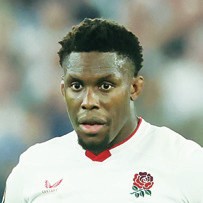
The legions of Arsenal devotees celebrating their club’s ruling of the ultimate roost include a pair of English Lions from different eras, Stuart Barnes, a member of the 1993 tour of New Zealand, the last of the amateur era, and Maro Itoje, captain in Australia last year.
A change of school brought about by his family relocating from Essex to Newport shattered Barnes’ boyhood ambition.
“My dream was to play for Arsenal but there was no soccer at the school (Bassaleg, famous for its rugby).
“I was a stroppy little s*** and at first I said I wasn’t going to go there.
“The first moment I touched a rugby ball, I bloody adored it.” Itoje tells of how Arsenal made him cry, when, at the age of 14 ‘as a devout fan for many years,’ they lost 3-2 to Liverpool.
“I went back to my room that night and started crying.”
Obsession
He has remained firmly on-side ever since, support reinforced by the advent of his 17-year-old cousin Andre Harriman-Annous as part of the Arsenal Academy.
The match which made the teenaged Itoje, above, weep would have left the only England captain to win the World Cup feeling rather pleased.
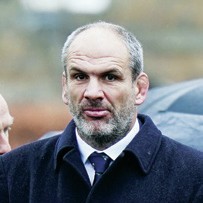
Martin Johnson, below, was seven years old when he ‘bowed to the inevitable and joined my dad in his obsession with Liverpool FC’.
All too soon his allegiance meant the seven-year-old Kopite having to endure ‘one of the worst days of my life’: Kevin Keegan’s transfer to Hamburg for £500,000 in 1977.
“He was my idol and I just could not understand why he would leave us, to go to Germany of all places (remember I was still fighting WWII, like some lone Japanese soldier left behind on a Pacific Island).
Inspirational
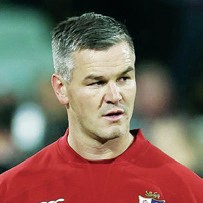
Johnny Sexton, below, so good for so long that he was still playing Test rugby for Ireland at 38, cites a Scot and a fellow Irishman at England’s biggest football club for giving him the inspirational stamina to out-last every international fly-half of the professional era.
He has spoken of being “obsessed with Sir Alex Ferguson and Roy Keane, obsessed with teams that win consecutively.
“Anyone can win once but how can you win five, six, seven times? That’s what I’d been attracted to.”
“As a kid I dreamt of playing for Man United,” he says in Obsessed, his autobiography written by Peter O’Reilly.
“On week nights we were allowed to stay up past bedtime if United were on the box. We took Dad over to Old Trafford a few years ago as a treat for his 60th birthday. We’ve always been a Man U family.”
Storied history
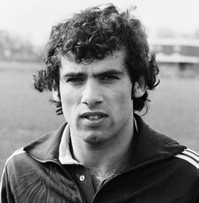
When it came to supporting an English club, another Dublin fly-half, Tony Ward, had beaten him to it and done so, what’s more, as a member of the Republic of Ireland’s U15 schoolboy soccer team.
There he played alongside another Dub who would sign for Arsenal and become one of the most venerated figures in their storied history: Liam Brady.
“We had a horrendous journey by boat to play England at Bramall Lane in Sheffield,” Ward says, spurning the risk of feeling sea-sick at dredging it up from the depths.
“We were absolutely shattered and England beat us 11-0. 11-0! Believe it or not, Liam got dropped.”
Ward, below, still stands out on his own, the only international rugby player to play European club football, for Limerick United against Kevin Keegan’s Southampton in the UEFA Cup, September 1981.
Born in Leeds, he has been a lifelong supporter of his home-town team despite leaving there aged six with his Dublin mother after the sudden death of his father, a photographer on The Yorkshire Post.
A season-ticket holder at Elland Road until recently, he starts rattling through the champion Leeds United team under Don Revie.
“Gary Sprake, Paul Reaney, Terry Cooper, Billy Bremner, Jack Charlton, Norman Hunter. Now you’ve really got me going. Great memories of a great team.”
Chapman family
Harlequins’ president Bob Hiller, like Ken Chapman, Stuart Barnes and others, is another of those converted from football at a rugby-playing grammar school.
The future Quins, England and Lions full-back supported another London football club when he enrolled at Bec School in Tooting.
“I was really upset because they only did rugby,” he says. “Anyway, I got stuck into it and I’m rather glad I did.
“As a young lad I was brought up on Chelsea. My father took me to see them play. Roy Bentley, England international, was my favourite player, a superstar. I’m still a Chelsea fan…”
The Chapman family did more than create Arsenal FC, as Hiller, Harlequins and the RFU will readily testify.
READ MORE: Peter Jackson: Flood of tries may put Noah on alert


Latest News
Top clubs slump in European washout


Latest News
Former Sale lock Andrews dies suddenly, aged 31

Latest News
Malins: New signings made the difference


The best betting sites