Connect with us

Jeremy Guscott

Jeremy Guscott: Why I’m right behind this new Nations Championship

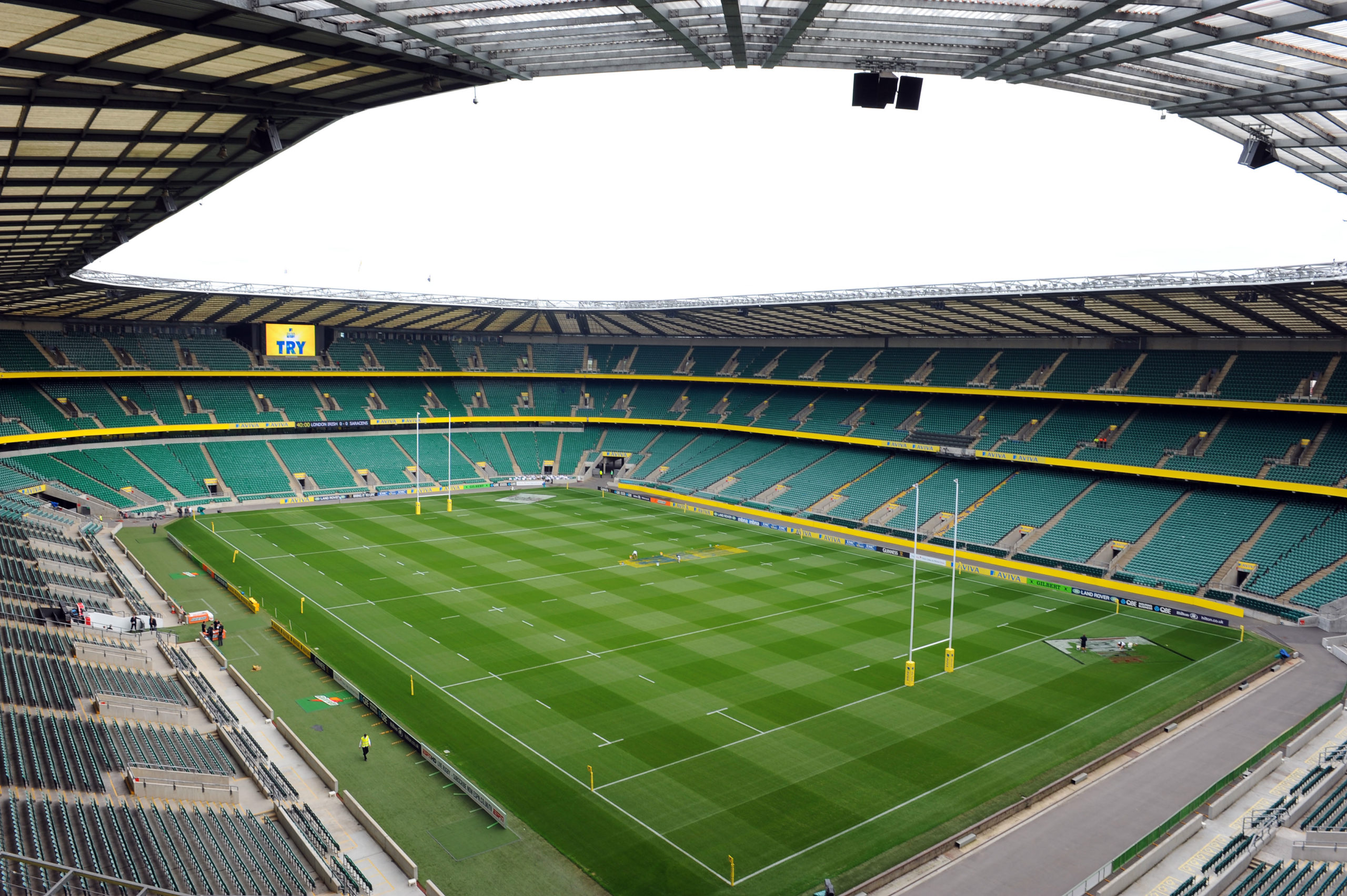
The Nations Championship, which will be contested by the world’s top tier international teams for the first time this year, is a welcome idea.



The Nations Championship, which will be contested by the world’s top tier international teams for the first time this year, is a welcome idea.

It puts some order into the international calendar by bringing European and southern hemisphere competitions into one entity.

The inaugural tournament starts in July with southern hemisphere sides hosting their northern hemisphere counterparts in three rounds of single tests, which replace summer tours.

It continues in November in Europe with a further three rounds of matches, plus a finals weekend – this time at Twickenham – replacing the autumn series.

Competitive

While a competition with a long mid-season break which is played every two years is a bit of an oddity, and will take some time to get used to, ultimately is trying to add credibility to the international fixture list by giving a more formalised competitive structure to existing fixtures.

That doesn’t strike me as being problematic because in the northern hemisphere the Nations Championship will not supersede the with its depth of traditions and rivalries, and it will also put a supporting structure around , , Australia and Argentina until they decide what to do with the Rugby Championship, which has been mothballed this year.

However, although the Rugby Championship is a much newer tournament than the Six Nations, it has been of sufficient importance to southern hemisphere teams competitively and financially that they probably won’t want to see it disappear.

The 12 teams included in 2026 happen to be the top 12 in the current world rankings, with all the Six Nations and SANZAAR teams plus two invited teams – Fiji, who are ranked ninth, and , who are 12th. Like every sport, if fans see credibility as well as jeopardy in the format it will attract support.

One of the aims will be to increase the global TV audience, and even tournaments as well-established as the Six Nations had to start somewhere.

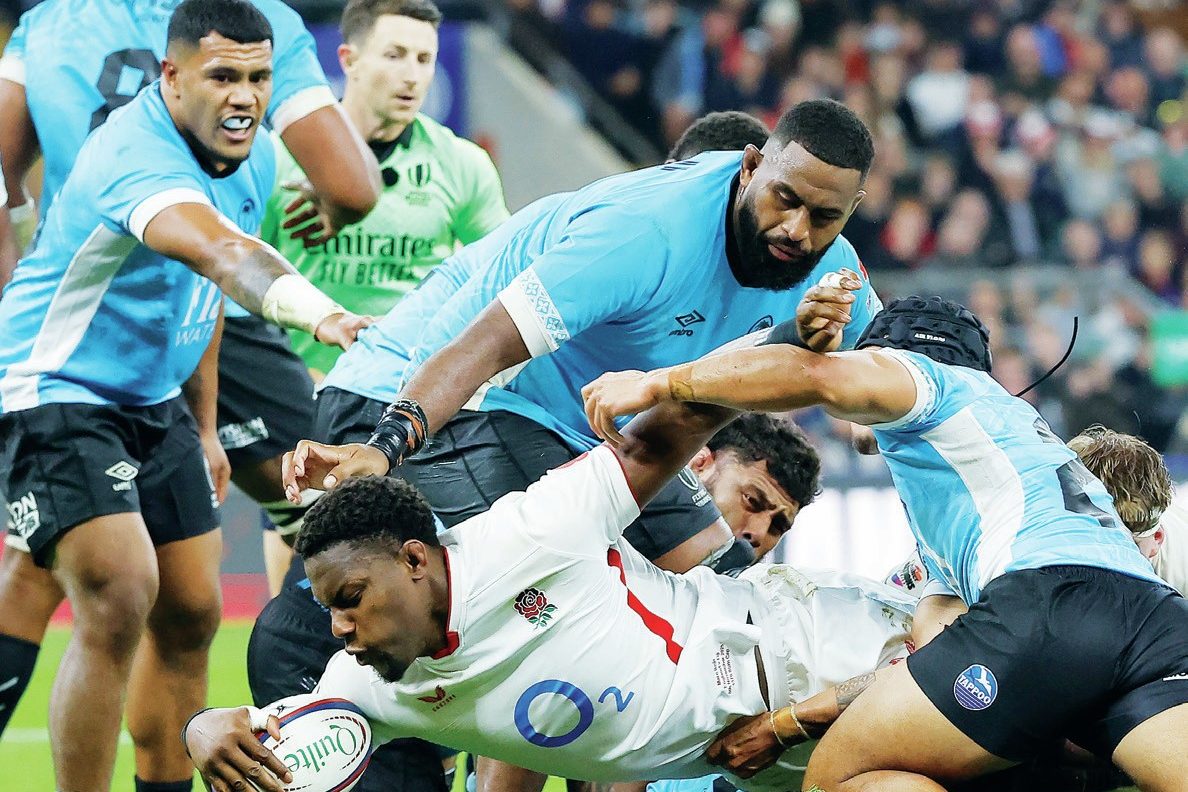
Leader: Maro Itoje scoring for against Fiji at Twickenham last autumn
PICTURE: Getty Images

Benefits

I used to love the summer tours because of the challenge of playing the teams who were usually first, second, and third in the world, but that dynamic has changed to a significant degree since 2020.

Ireland and have been number one in the world rankings, with England also pushing at times, so it is much more competitive now.

One of the benefits of the Nations Championship is that there is little chance of the best avoiding the best, which is what tends to happen in boxing.

It is essential in rugby that the best teams have to accept the challenge from all-comers – although the main challengers tend to be a pretty consistent handful of teams.

The travel element is important to give teams an equal amount of home advantage, but it could become a major issue because of the amount of air travel and the number of different time zones, with the example of England travelling twice to the southern hemisphere in three weeks to play South Africa and Argentina making it tougher.

But it might even out, so let’s look and see initially, and change it if it requires changing.

Travel

How the travel impacts player welfare is an important issue that can’t be ducked, but ultimately it has to be answered by players, conditioning specialists, and sports scientists.

There is also the difficulty of players wanting to play every game at international level because of the career and financial incentives involved.

Players know that the international game is the biggest shop-window they have to advance their reputation and marketability, and they also know you have to perform for your club, because it is not only your bread-and-butter as a pro player, but also your springboard to international recognition.

It often puts players in a club versus country dilemma, although in the past I don’t believe the balance was so much wrong, as that club and country did not communicate well, and were not always on the same page.

There’s been talk in recent seasons of some elite players being involved in as many as 36 matches, which is an impossible number – in the same way, coaches cannot expect players to make 20 consecutive starts.

I suspect that the overall average for an international player is around 25 matches of 80 minutes a season.

That is made up of 10 domestic club matches, five in Europe, and 10 international games – and although players might be able to play more, it’s a balancing act between bench appearances, rest and recuperation, and career and financial decisions.

Ultimately, player welfare should be front and centre, and that’s all about good management and communication by player, club and country being joined-up across the board.

Questionable

On the fixture front the argument for holding the entire final round at one venue, with play-offs between north and south from sixth up to first (the final), scheduled over three days at Twickenham at the end of November, is debatable.

Why limit yourself to having them all played at Twickenham, or Eden Park when New Zealand host, or Cape Town when it is South Africa’s turn, when there are other stadiums that might be better for players, supporters, or broadcast / commercial?

For example, if and Fiji were to meet in one of the play-off finals wouldn’t it make sense to hold it in ? There may be a counter argument, and, if so, let’s hear it.

Another questionable element is Fiji playing all their ‘home’ games in Europe in the opening three rounds, starting against in Cardiff, then England at the new Everton stadium, and finally Scotland in Edinburgh.

The reasons are most probably financial, with Fiji earning more gate and broadcast revenue in pounds than they could from a full house at home – however, it would be amazing if they could hold at least a couple of games in Suva, in the same way that Japan have two matches in Tokyo.

The criticism that is wide of the mark is that the Nations Championship devalues the World Cup because it is too similar.

Acclimatise

The format doesn’t resemble the World Cup in any way, because what it does mainly is put a wrapper around fixtures that are already in the calendar in summer and autumn.

In a World Cup there is also only one home team, whereas in the six rounds of Nations Championship action home advantage changes hands.

All the matches facing Six Nations teams in the first three rounds to be held in the southern hemisphere next month will be hard, because they will have to acclimatise and get up to speed almost instantly.

Yet, Ireland have a good chance to get a win against Australia in Sydney, and the same applies to France if they take their best team to play New Zealand in Christchurch.

By comparison England look up against it when they face South Africa in Johannesburg, and it’s a similar story for Scotland against Argentina in Cordoba.

We don’t know whether the Nations Championship will be successful, but I hope so – and if the final involves teams in the top six of the world rankings, it will be sold out and should have a big broadcast reach.

The World Cup and the Six Nations are huge well-established tournaments, whereas this is a first, and if the Nations Championship has established its own status by the time of the final it will be good news for the game.

READ MORE: Summer break could be ‘right thing to do’ for Maro Itoje

Click to comment
 

Tackle the News

- Sign Up for our weekly Rugby Newsletter
Your subscription could not be saved. Please try again.
Your subscription has been successful.

The Rugby Paper

The best betting sites

Globusbet

BetpackUK casinos on Slotozilla

the best minimum deposit £5 casinos casinobonusesfinder

Full list of UK betting sites at BookiesBonuses.com kasyna akceptujące paypal

MAN-v-FAT-Rugby

free bets

online bookmakerFull list of UK betting sites at BookiesBonuses.com

GGBetBanner Depicting Therealefl.co.uk an affiliate site for Licensed UKGC Football bookmakers.

More in Jeremy Guscott