Welcome to the “Yeti Syndrome”, a vivid way of categorising the many things we seek in rugby but no longer expect to find – a New Zealand defeat at Eden Park, or a “Television Match Official” unaffected by verbal diarrhoea.
We could even use “yettiness” as a collective noun for the missing wonders of the union world: the 15-man game (as opposed to the 23-man version); the old-fashioned ruck; England props with everyday haircuts.
“Bomb squad” benches, game-plans built around scrum penalties, off-field “bunker” reviews: the age of machine rugby has been upon us for a while and shows no sign of loosening its grip.
But some still cling to their flights of fancy – yes, even Steve Borthwick, who is rarely mistaken for a daydreamer in the usual run of things.
Sporting alchemy
If the Red Rose coach presses ahead with his studies in sporting alchemy and doubles down on the idea of turning Ben Earl from base metal back rower into midfield gold, many will feel that the accepted norms of the union code have been scattered to the four winds.
Yet this kind of experimentation has a history. We’ve seen it all before.
When the Springboks found themselves face down in the dirt against Willie John McBride and his Lions in 1974, the home selectors were panicked into choosing the uncapped Gerrie Sonnekus, a highly effective if comparatively diminutive No.8 from the Free State, at scrum-half for a must-win Test in Port Elizabeth.
It was the polar opposite of a conspicuous success. When Sonnekus was picked for his country a second time, a full decade later, it was in his rightful role as eighthman.
Spool forward 40 years and what do we see?
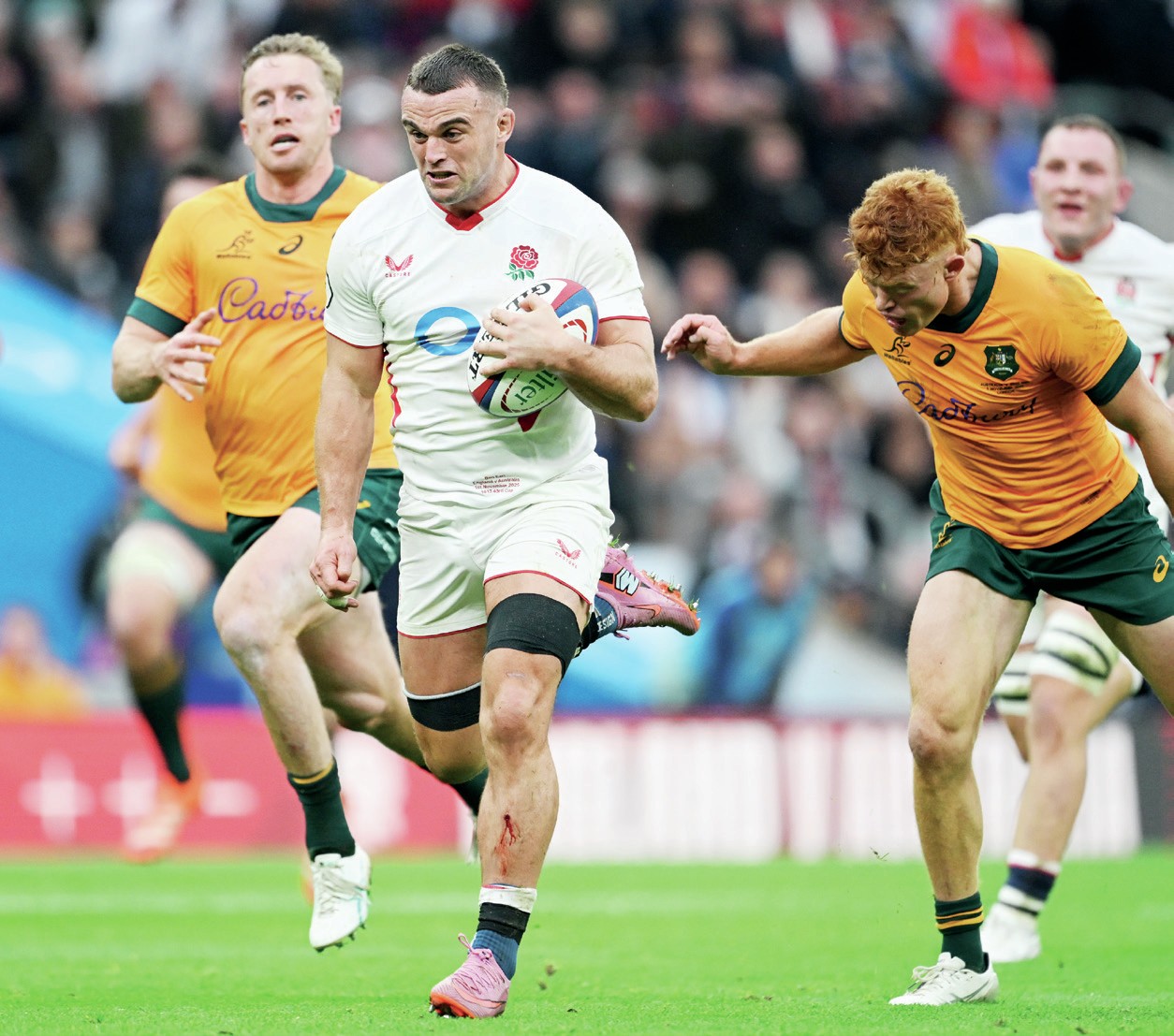
Breaking free: Ben Earl speeds in to score against Australia last Saturday
PICTURE: Getty Images
Transition
Richie Vernon, a 6ft 6ins manifestation of athleticism from Dundee, playing big World Cup games for Scotland as a starting outside centre, having won the bulk of his caps as a loose forward.
Counter-intuitively, it was not a complicated transition, as Vernon later recalled.
“I turned up one day at Scotstoun (he was a Glasgow player at this point in late 2013) and Gregor Townsend asked for a meeting after training.
“Scott Johnson (then the head coach of the national team) was there and they said I had a great chance to transfer my skills to centre, looking towards the World Cup.
“I was going to have their backing to do something that hadn’t really been done before.
“I went home, spoke to my mum and dad, spoke to my agent, and the next day I was in the backs’ meeting rather than the forwards’. It was as quick as that.”
Reassignment
A good story, well told by the man himself. But for every Vernon, there have been multiple Sonnekuses: we need only to reflect on the Sam Burgess farrago to understand how badly things can go wrong. (On second thoughts, let’s not dwell on it. The least said about Burgess, Bath and England, the better.)
By way of underlining the scale of the challenge, it is worth looking at the All Blacks, who generally know a good thing when they see one.
On the one hand, it is true that Jolly Jonah from the Land of Lomu started life as a back row forward before shifting – or rather, being shifted – to the wing and knocking the union game clean off its axis.
On the other hand, forwards with God-given skillsets like Zinzan Brooke and Michael Jones remained firmly entrenched among the grunt-and-groaners up front.
Even for players as ridiculously good as them, there was no guarantee of a successful reassignment.
Positioning
Earl is no Zinny or “Iceman”, let alone a Jonah, so we are entitled to wonder why, what, when, where and how.
Would he be a truck-it-up merchant at No.12 – one of those Tuilagi-esque inside centres whose kicking gene was removed at birth? This cannot be the way ahead in the age of Jordie Barrett.
“What about Will Greenwood?” you say. “He didn’t kick either and he didn’t turn out so bad.”
Very true: in fact, he was the finest England player to have filled the position in the professional era.
But Greenwood’s rugby instinct – his mastery of positioning and sensitivity to the dynamics of a contest – were off the scale.
Defensive demands
You don’t learn what he knew playing in the back row of the scrum.
Okay then: how about a hard-running 13 with a strength-speed combination that might have the great Danie Gerber of South Africa doffing his Springbok cap?
You can just about see it, because the Saracens player has both the pace and the top-gear immediacy to rip up opponents in the more exposed areas of the field, but the defensive demands of the position are now so extreme, they cannot be met without a proper paying of the dues.
Borthwick should be congratulated for broadening his thinking at this point in the World Cup cycle: if he waits until this time next year, the ship will have sailed.
But Earl the back rower has been such an eye-catching success, Earl the midfielder seems like an idea too far.
READ MORE: Chris Hewett: ‘Finishers’ need to be put in their place



The best betting sites