

Connect with us

Brendan Gallagher

John Eales, the quiet man who became an inspiring skipper

Brendan Gallagher looks back at the players who shone on the biggest stage, this time focusing on John Eales’ leadership in ‘s 1999 RWC triumph

JOHN EALES is a modest, understated, kind of guy but there is no question that the Queenslander qualifies as a icon with Australia’s 1999 tournament victory being his crowning achievement although he was also an outstanding winner eight years earlier at Twickenham as well. Factor in his 55 Tests as Australian captain, Bledisloe Cup wins over and inspiring Australia to a comeback series win over the 2001 Lions and you have a bone fide rugby legend for the ages.

Despite his unflashy, reticent nature, Eales stood out in many ways. You can never disguise talent. He could by common consent probably have made it as a first class cricketer as well but on the rugby pitch he defined the role of the big, tall lineout specialist with his athleticism elsewhere around the pitch and his studious goal kicking which won many a match for Queensland and Australia.

Some media would have you believe his ironic nickname was “Nobody” – because nobody is perfect – but that was always complete nonsense, a mystifying fiction. Nobody – at home, Marist School Ashgrove, the Brothers club, Queensland University or in the Queensland Reds or Wallabies changing rooms – called him Nobody. Ever. Sorry, it just didn’t happen.

Eales was hard to pigeonhole, a million miles away from the archetypal Aussie larrikin sportsman. He was not part of the big drinking crew although he certainly enjoyed a few beers when the time was right and was also a committed Roman Catholic prone to disappear on the night before a big match and attend a Bible reading session. As with David Campese, Eales boasted impeccable Italian antecedents, his mother’s parents had emigrated from Piedmont and indeed his grandmother had been interned in Australia during World War 2 because she ran the Italian club in Brisbane.

The Eales’ were a devout family, John was generally a serious guy, a committed Republican which could ruffle a few feathers, but also a natural diplomat by nature. An odd mix.

His World Cup career encompassed three tournaments, 15 matches, 13 wins and two Webb Ellis trophies. He was a brilliant fast-emerging rookie in 1991 when he was probably best remembered for a try-saving tackle from behind on Rob Andrew in the final when he caught the fly-half as he broke dangerously but then, four years later it, was Andrew who broke Aussie hearts in Cape Town. On that occasion, Andrew’s late dropped goal sent them tumbling out at the quarter-final stage but Eales finished his World Cup story in style as captain in 1999 when he came back from injury to prove an inspiring skipper.

Who knows what drives sportsmen on but, by his own admission, an early family tragedy was an important moment in Eales’ life, sporting or otherwise. It was in 1989 that his talented elder sister Carmel died of lung cancer aged just 20 which was a devastating and very profound moment for Eales, who was just 18.

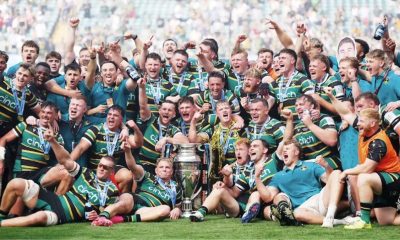
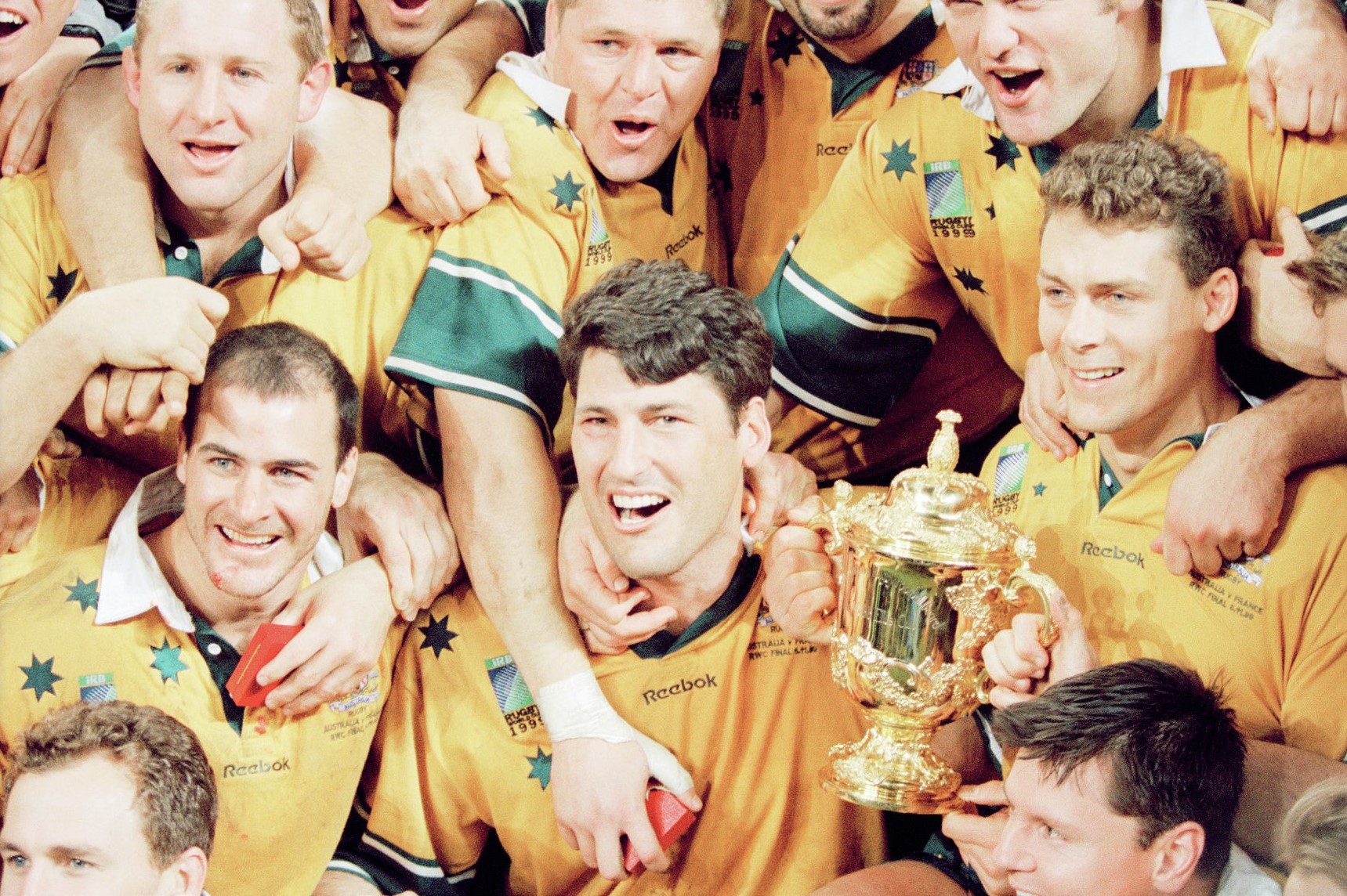
Champions: John Eales and his team-mates celebrate after winning the 1999 World Cup
PICTURES: Gettty Images

Until then he had been a talented but carefree sporting all-rounder at school and his reaction to his sister’s death was to suddenly go into an almost manic overdrive to fulfil his potential, an opportunity that she had been denied.

The result, after a schools career that had strangely seen him miss out on representative honours, was a meteoric rise through the ranks. On attending university, he joined the Brothers club in Brisbane and improved almost week on week and was soon a regular in the Queensland Colts side and by the following year was playing for the Reds. And a year on from that – the summer of 1991 and having just turned 21 – he caught Bob Dwyer’s attention and made his Australia debut in their thrilling 63-6 win over . Further Tests followed against England and New Zealand that summer before he travelled to Britain for the World Cup.

Still wet behind the ears for a forward by conventional standards, Eales was nonetheless an ever-present starter in all six World Cup games for the Aussies. He played No.8 against and Samoa but was then switched to lock for the final pool game against Wales and stayed in the boiler house for the quarter-final with , semi-final against New Zealand and, of course, the final against England.

Eales was in his absolute pomp in 1999 although hampered earlier in the year through injury. He had grown comfortable in his role as captain, in complete harmony with coach Rod McQueen and hell bent on making up for RWC1995 when, although ballpark, Australia couldn’t produce the goods in the two games that counted – the tournament opener against and then that quarter-final against England.

The Aussies were based in Dublin in 1999 – well at the Portmarnock Golf Hotel to be precise – which suited them perfectly, seemingly a step removed from the beating heart of the competition. Dublin had been a home from home in 1991 and was to prove so again in 1999.

There was time for some old fashioned bonding – rounds of golf and a big night on the thrash by order of the management who in fact led the way – the night before their press day when we were greeted by a rather quiet squad who shuffled their way through media duties. The following day the hard work recommenced and Australia hit the tournament running, recording big wins over Romania and the and winning comfortably in an unexpectedly lowkey and muted affair against Ireland who had been expected to provide the biggest early test.

Eales wasn’t over happy with his form though and pored over tapes of the Ireland game in particular with veteran assistant coach Alec Evans. The modern way for the lock was to hit every ruck and breakdown with maximum force and Eales had been doing that but, ever the perfectionist, was aware that much of the time this was to little effect. The tapes confirmed his gut instincts. He needed to pick his moments much more judiciously, stand off when the cause was lost but pile in when the breakdown was live and contestable. The Aussie skipper took it on board and adapted accordingly which was also a lesson for those he led.

Onwards. Australia reluctantly took their leave of Ireland and headed for Cardiff with a quarter-final against Wales who were pumped up and energetic but scarcely able to land a blow on such a classy Australian side. Complacency was the only thing that could have tripped the Aussies up and to counter that the canny Eales asked Tim Horan to address the team before kick off at the Millennium Stadium. Horan had been crestfallen at Australia’s quarter-final defeat in 1995 and spoke with real venom to his colleagues about how that could not be allowed to happen that afternoon against Wales.

Horan featured again in the semi-final against South Africa, having woken up as sick as a dog in the morning and seemingly unable to play. Eales advised Australia to take their time before ruling him out and spoke to Horan about how Dean Jones had scored a memorable ton for Australia while crook in a recent Test match in India. He badly wanted his Queensland colleague on board and the tough centre eventually started to come round a little and took his place in the line-up. In fact he did more than that, he enjoyed a stormer in a very tight contest.

It was a classic of sorts although short on running rugby, just a massive arm wrestle up front and two goalkickers – Jannie De Beer and Matt Burke on top of their game. De Beer landed two late penalties to make it 18-18 so we had the drama of extra-time. Eales gathered his troops, he felt they had been much the better team which was probably fair comment, they were the only side that had threatened a try and as they lined up for the restart for that extra period Eales mentioned to Steve Larkham not to forget the dropped goal. Larkham at that stage had never kicked a dropped goal in his life at any level.

De Beer and Burke swapped another penalty apiece before Larkham, seemingly moving to the right at pace on halfway to launch another attack, suddenly straightened and launched a peach of a dropped goal from 48m that comfortably made it over the crossbar. Australia were ahead and a final penalty – his eighth – from Burke saw them home 27-21.

And so to the final. Eales was wary of the French, of course he was, but also felt Les Bleus had got away with too much foul play against New Zealand, not least incidents of gouging. He fully intended to use his position as skipper to alert referee Andre Watson to any such incidents and during the game itself, when were threatening to boil over out of control, he had a word with Abdelatif Benazzi who he knew of old and the French warrior had a word with his colleagues. The art of captaincy!

The truth is though France were resorting to foul tactics because they were getting outplayed, they had nothing left after their semi-final win, and ultimately Australia ran out comfortable 31-12 winners. John Eales was a world champion again.

Click to comment
 

Tackle the News

- Sign Up for our weekly Rugby Newsletter
Your subscription could not be saved. Please try again.
Your subscription has been successful.

The Rugby Paper

The best betting sites

Globusbet

BetpackUK casinos on Slotozilla

the best minimum deposit £5 casinos casinobonusesfinder

Full list of UK betting sites at BookiesBonuses.com kasyna akceptujące paypal

MAN-v-FAT-Rugby

free bets

online bookmakerFull list of UK betting sites at BookiesBonuses.com

GGBetBanner Depicting Therealefl.co.uk an affiliate site for Licensed UKGC Football bookmakers.

More in Brendan Gallagher