

By Chris Collyer
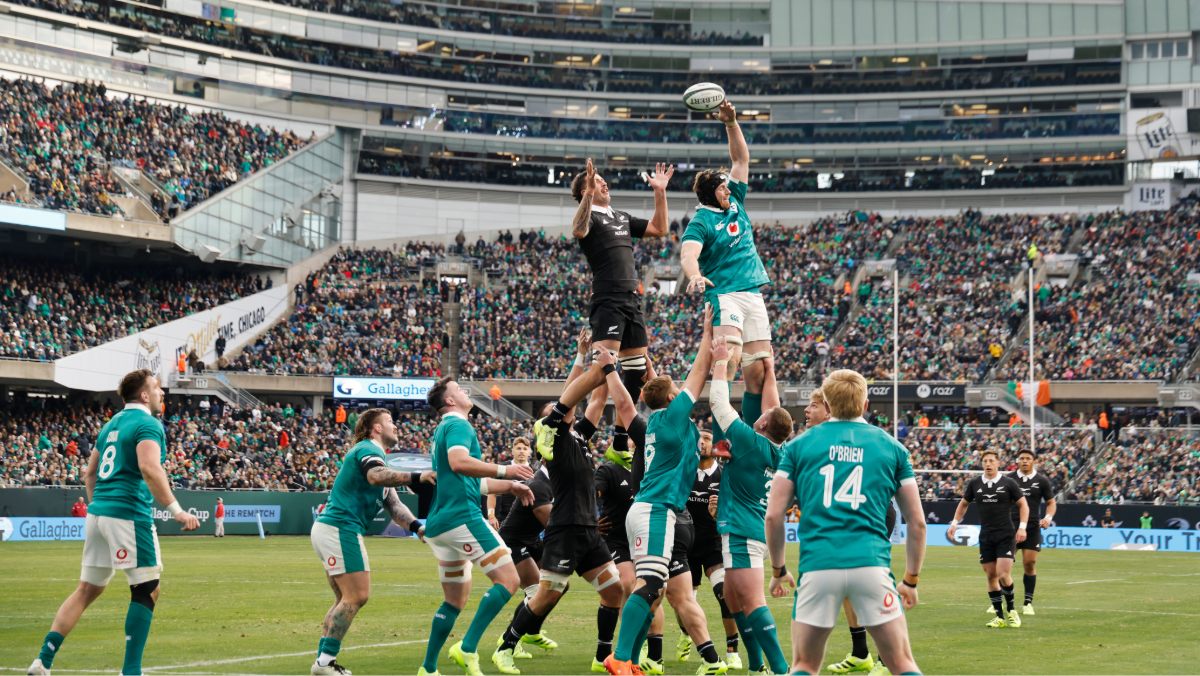
For all the build-up and hype surrounding the long-awaited rematch between Ireland and New Zealand in Chicago, a game many believed history would repeat itself in the very place Ireland got their first ever win over the All Blacks, the technical side of the game and match preparation resulted in a game that failed to fire on all cylinders.
Slow to start, the All Blacks’ skill, speed, and clinical execution at key moments propelled them to a fifth win in the last ten meetings against Ireland.
They now head to Scotland, hoping to complete a Grand Slam tour of the Northern Hemisphere.
They will, however, have to do so without ex-Leinster player and phenomenal talent Jordie Barrett, who will miss out on the remainder of the tour.
For exclusive stories and all the detailed rugby news you need, subscribe to The Rugby Paper website, digital edition, or newspaper from as little as 14p a day.
WATCH THE RUGBY PAPER ROUNDUP HERE
Improvements
Ireland did well to adapt to the now receded Tadhg Beirne red card and led the game for 60 minutes before the All Blacks clicked into gear to deliver a dominant victory over their new northern hemisphere rivals.
Ireland had not played since March; however, Andy Farrell’s men did not use it as an excuse and are looking to make things right in Dublin on Saturday against Japan, who shocked the world in the 2019 World Cup by beating Ireland for the first time in the pool stages.
World Rugby is up against the hardest of competition in trying to break America with its vast and rich culture for sport, and as long as the NFL, MLB, NBA, golf and many other thriving sports continue to captivate the American public, big improvements are needed on the Soldier Field game before America hosts the 2031 World Cup.
Decisions
In order to capture American audiences, the games need to be officiated slicker, decisions clearly explained, and video footage available on demand for the referees who possibly have the hardest job of them all on the field.
From the Beirne red stoppage, it took five minutes to deliver a verdict, including a VAR-style run to a monitor for referee Pierre Brousset. All for what turned out to be the wrong decision.
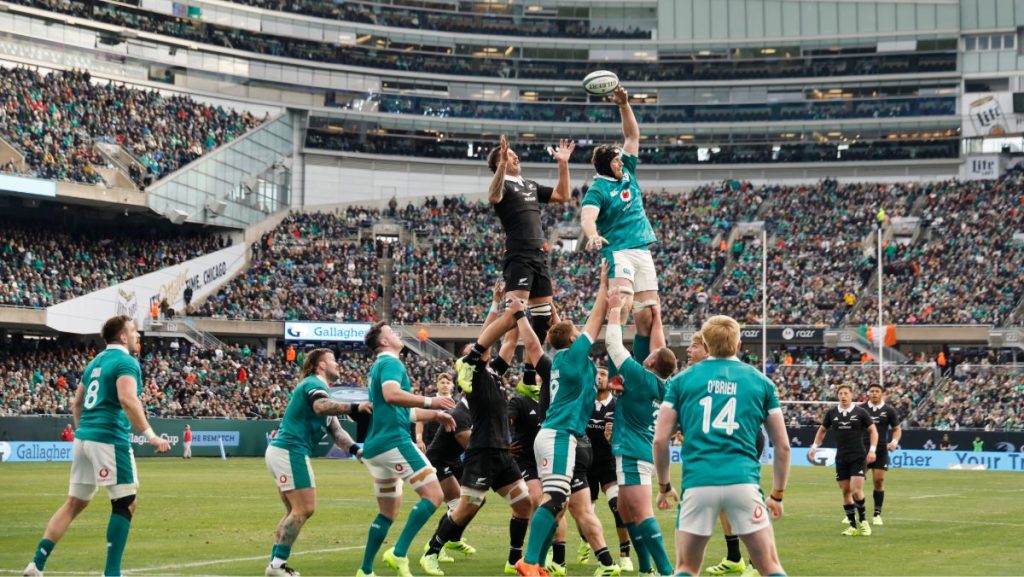
The ground itself was shorter than the specific required size for international rugby, which would have made a difference in key set pieces, and it was reported that the ground itself was unnaturally hard and ill-prepared for such a big game.
Confusion
When the teams lined up for the national anthems, parts of the Māori lyrics were sung incorrectly, and during the legendary Hakka, the footage focused too much on close-ups as opposed to the magnificent team spectacle that has made it so iconic.
Normally, for international rugby, the footage is recorded, monitored and displayed by World Rugby; however, in this game, the technical side of the footage was done “in-house”.
This led to confusion and delay in getting the required information and stalled decision making.
Intolerable
Before the game had started, it was reported that Soldier Field had in fact run out of Guinness and that the queues to the facilities were bordering on intolerable.
All of these issues that led to a disappointing game in Chicago can easily be sorted before the World Cup in 2031, and not only is it important to get things right next time, but the USA needs more backing and support for their national team, the Eagles, who slumped to a record loss of 85-0 in Scotland this week
Ireland and New Zealand are the only two teams to have pledged to play one game a year in America in the hope of raising support for the game, but also possibly to get an advanced lay on the land for when the time comes for rugby to conquer America in six years’ time.
READ MORE: Tom Farrell handed Ireland debut at 32 against Japan


Latest News
Red Roses keep calm and carry on winning ning

Latest News
Youngs: Wrong time to extend Borthwick’s deal

Latest News
Blackett: We aim to start like we finish

Latest News
Smith relishing link-up with Furbank at Quins



The best betting sites






















You must be logged in to post a comment Login