BRENDAN GALLAGHER turns back the clock to 1938 when the Lions spent the summer train-hopping
Rugby teams on the move and ‘on tour’ have been much in the news recently. Hong Kong headed down to the Cook Islands for a World Cup play-off before dashing back for the return six days later; Germany unexpectedly found themselves in Apia; and Zimbabwe headed up to Tunisia where the accommodation was not much to their liking. Nor the result as it happens, with Pieter de Villiers’ side slipping to a shock 18-14 defeat.
Rugby is often played on the hoof with the dirt and grime of travel still in the nostrils, it’s part of the culture, and never more so than on the early Lions tours. Yes, they enjoyed leisurely cruises out to South Africa and Australasia which replenished body and soul but once they arrived at their destination life on the road could be very challenging.
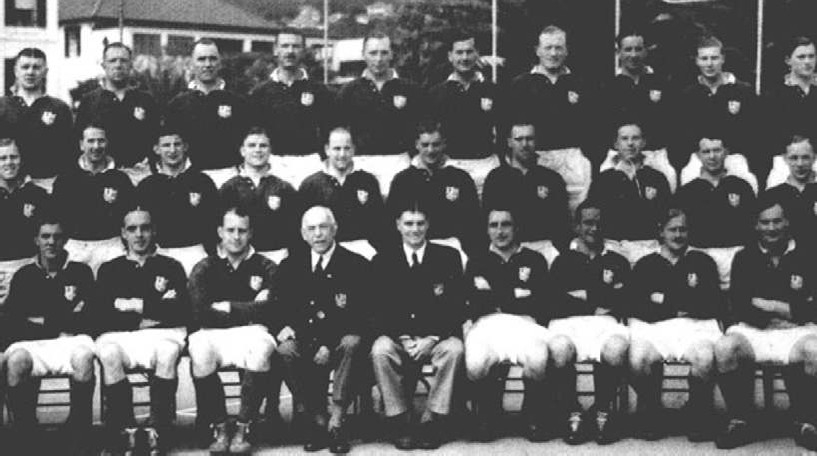
Exactly 80 years ago this week the 1938 Lions – the so-called Blue Lions on account of the jerseys they wore – were slowly rattling their way around South Africa at about 15mph with virtually the entire tour conducted by train, and very slow ones at that. It didn’t do to suffer from travel sickness and there was little relief for those with dodgy backs and aching muscles from the day before not to mention sore heads from the night before.
Working to an itinerary clearly put together by administrators who thought Southern Africa was about the size of Surrey, the Lions crisscrossed the country in a random fashion, often backtracking on themselves, alternating wildly from coast to High Veldt, and nudging their way up small branch lines to rugby outposts. Occasionally they struck lucky and the train had a dining carriage and bar but mostly that was just a dream as they shuffled around on hard wooden seats and tucked into sandwiches and snacks hurriedly purchased at the last stop.
One such came mid-tour when, having beaten Cape Province 10-3 in Kimberley, there was just time for the briefest of post-match functions and a beer before rushing for the 9.25pm train for Rhodesia via Mafeking, Pisani, Gaberones, Bulawayo and finally Salisbury (now Harare) where they were due to arrive at breakfast time on the Tuesday.
There was a long stop at Bulawayo waiting for their connection which was spent lunching at the Grand Hotel and training at a local ground, before they continued their journey north.
The welcome in Salisbury was rapturous with a reception and then a dinner to attend before the match the following day. Rhodesia were useful but this was the Lions’ 12th match of the tour and by now they were in full swing as they moved towards the first Test. They eventually won 25-11 and after another big night – this was a play hard, party hard group – they were back at Salisbury station the following morning to journey back to Bulawayo for a second game when they cruised to a 45-11 win.
There then followed a 600-mile round trip by train to take in the Victoria Falls before another 40 hours of train travel – with a short pit stop at Bulawayo – saw them arrive back in Johannesburg on the Thursday night ahead of their game against Transvaal on the Saturday. Nobody would contemplate such a schedule these days.
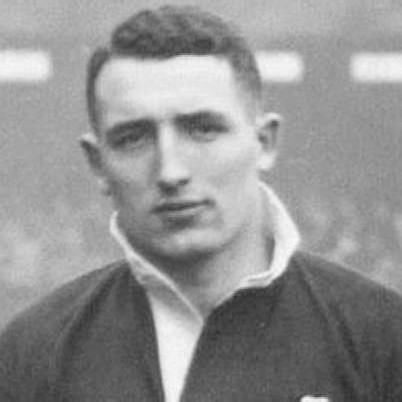
As Viv Jenkins – a star performer at full-back when not injured – later wrote: “I recall spending no fewer than seven nights out of eleven on trains during the Rhodesian part of the tour.”
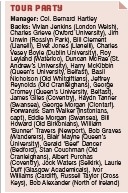
The 1938 tour party were a resilient bunch who seemed to hugely enjoy each other’s company which was probably just as well given their itinerary and the time they spent together.
With 27 bachelors among the 29 players they were a lively crew who, when not playing rugby or dozing on trains, were apt to let off steam in spectacular fashion. Which was all the more amusing as the local papers went through the PR fiction of describing the party as largely teetotal and abstemious. The so-called “wreckers” from the 1968 tour had little on this lot.
Jenkins once told me his first task on arriving at a new town was to locate the nearest florist or failing that confectioners in the sure knowledge that at some stage in the coming days an apology would be needed for some reason or other.

Blair Mayne was at the epicentre of most things. The Ulsterman made 20 appearances in all on tour – without scoring a point incidentally – and was the rock around which the pack was built. He was the player who above all others took the fight to the imposing Boks forwards while he also caused a fair degree of chaos off the pitch.
His big ‘oppo’ was Bunner Travers, the Pill Harriers and Newport hooker, a coal trimmer by profession, and son of George who was the Lions hooker in 1910, and together they caused a fair bit of carnage in the bars of Cape Town and Durban looking for, and enjoying, fights.
On other notable occasions Mayne, dressed reportedly in a white tuxedo for the official function, disappeared into the night after a match in Pietermaritzburg with some Boer friends for a nocturnal hunting expedition.
He returned in the early morning with a freshly killed Springbok which he showed off to his skipper Sam Walker as the latter rose from his bed for another dawn train journey. Mayne then climbed on to a ledge outside the room of the South African rugby team manager and left the Springbok impaled on railings with a note that read: “A gift of fresh meat from the British Isles touring team.”
On another occasion he and Bunner struck up a conversation with some labourers – prisoners from the local prison –who were helping to erect the vast temporary stands at Ellis Park ahead of the first Test. It was round-the-clock work; the prisoners were chained and slept under the stands until it was finished.
During a friendly chat with one prisoner in particular they learned he had received a seven-year sentence for stealing chickens. Mayne and Travers christened him Rooster and swore to return that night to free him and his colleagues, which is exactly what they did, managing to liberate Rooster and one other prisoner by using bolt cutters, while they also brought some clothing for the cold nights including their Lions jackets.
Alas for Rooster and the dynamic duo he was recaptured 24 hours later and given the distinctive jackets – and papers found in them – it was soon apparent who had helped engineer the escape. Not for the first or last time on tour the manager Colonel Bernard Hartley contemplated sending Mayne home but his skipper Walker knew the Lions only had half a pack without him and intervened.
Of course, Mayne eventually found an outlet for his excessive behaviour in World War II when he was amongst the most decorated Allied soldiers with the DSO and three bars, a founding member and influential figure in the SAS and a man who was recommended for a VC only to have it controversially turned down.
Mayne might have been the most high-profile member of the tour party but they were – despite appearances – a pretty distinguished bunch generally. England centre Bail Nicholson, a Lieutenant Colonel in the Royal Engineers, helped plan the Normandy Landings in 1944, Irish wing Vesey Boyce became a pilot and was awarded the DFC, while Wales wing Bill Clement and Scotland centre Duncan McRae both earned an MC.
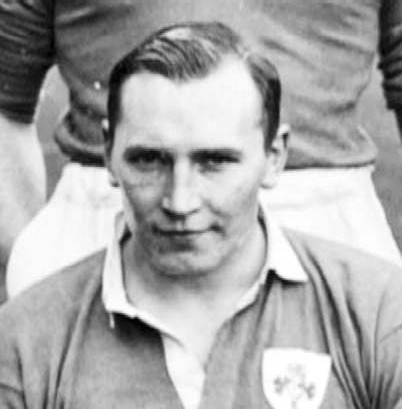
Clement went on to become secretary of the WRU while centre Harry McKibben become President of the IRU and England lock Stan Couchman was a future President of the RFU. Ireland utility back George Comey was an ordained vicar and Jenkins a noted journalist. Not bad for a bunch of lads on tour.
As a tour party they bonded brilliantly but the travelling eventually got even to them. Towards the end of the tour, faced with a slow passage home, they agreed to stay an extra week and play two meaningless matches to pay their way to ensure they could wait for the speedy new Athlone Castle that would get them home in half the scheduled time.
On the pitch they had done well considering a number of top players had been unavailable and pulled off the difficult trick of winning the last Test back in Cape Town after losing the first two matches of the series.
That was notable a achievement against a particularly strong Boks side who had recorded historic series wins in New Zealand and Australia the previous year and could rightly claim to be the strongest team in the world.